Stage 1 of 6 · Origins (c. 1326)
Instituted under the Karnat dynasty
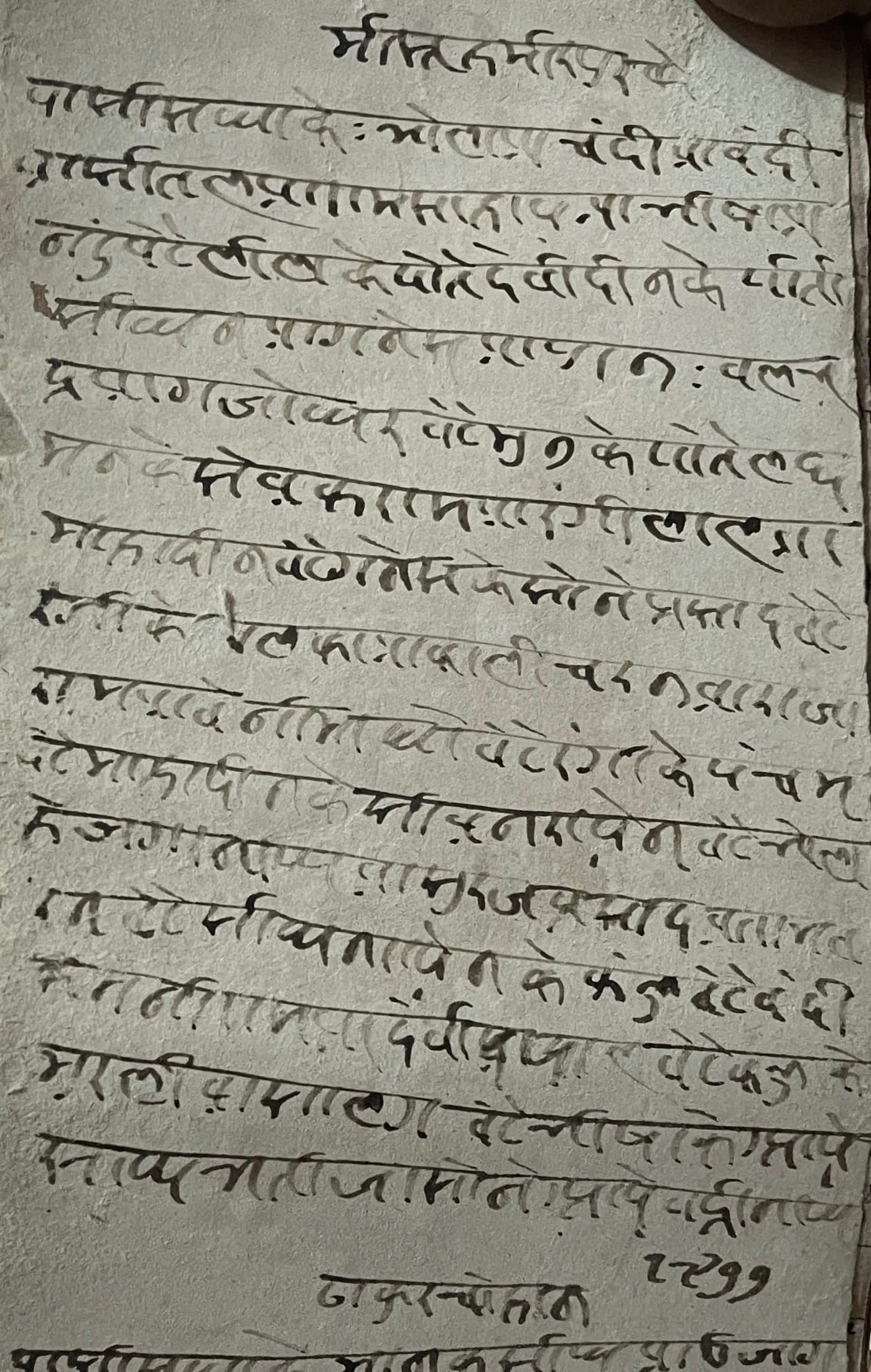
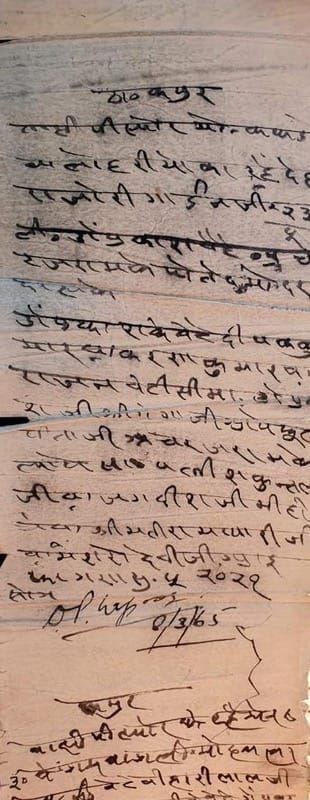
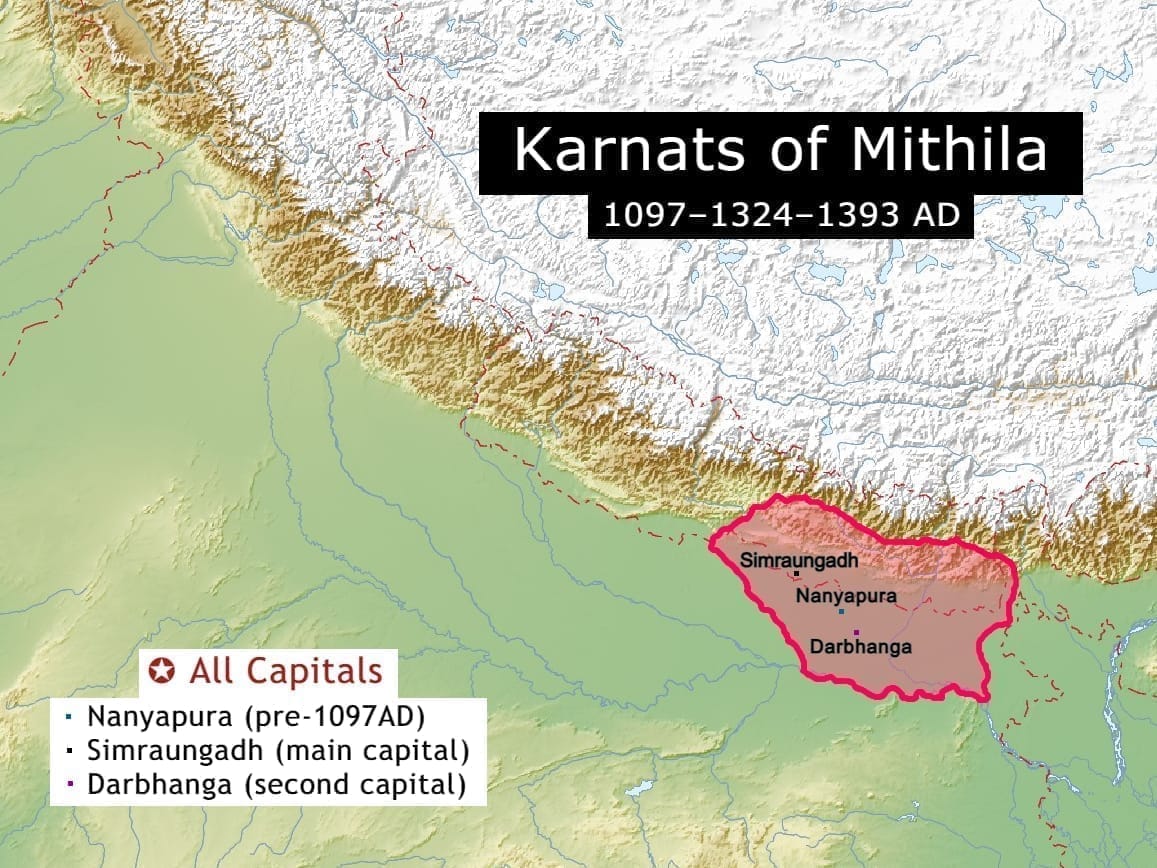
The Panji Prabandh registration system is dated to around 1326–1327 CE, in the era of Harisimhadeva, the last ruler of the Karnat dynasty of Tirhut. The popular account is that a near-marriage between distant relatives exposed how hard it was to trace blood-relationships across Mithila’s scattered villages, so the genealogies of all the region’s Brahmins and Kayasthas were registered to prevent such sapinda unions.
Some name Gunakar Jha as the first registrar and place the inaugural assembly at Jamsam, Pandaul; a more cautious scholarly account credits the compiler Raghudeva and treats the king’s reign only as a time-marker rather than the active founder. Either way the institution is now reckoned roughly 700 years old — often called the world’s oldest living genealogical marriage-archive.
Across communities The founding date is genuinely contested — 1310, 1326 and 1327 CE all appear, and Harisimhadeva’s reign is given variously (c. 1304–1325). Whether the king instituted it or merely dates it is itself disputed. The system served both Maithil Brahmins and Karna Kayasthas, and travelled with them into the Nepal Terai.
What is used
The Karnat court of Tirhutthe founding registrationthe inaugural assembly at Jamsamthe Darbhanga Raj’s later patronage
Meaning
c. 1326 CEthe Karnat dynastyan anti-sapinda safeguard~700 years old