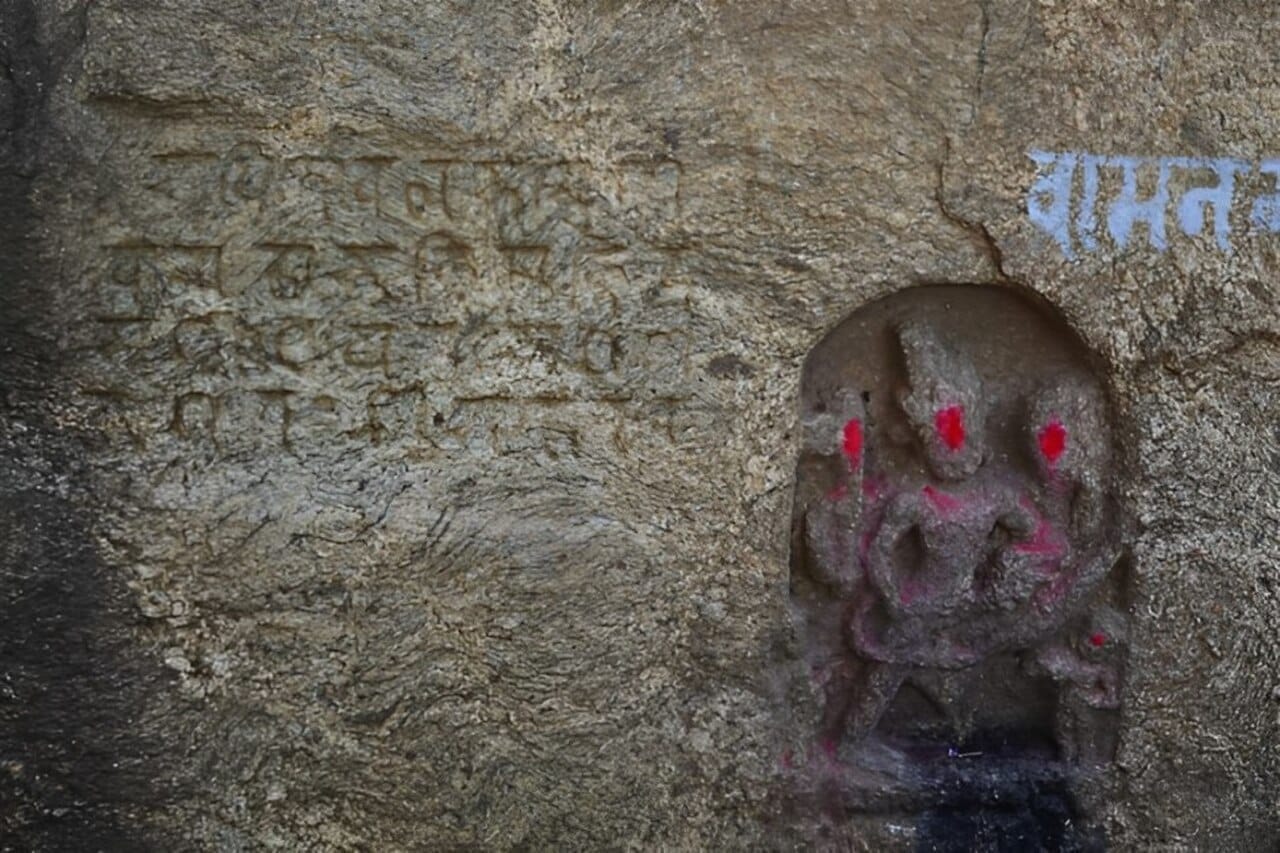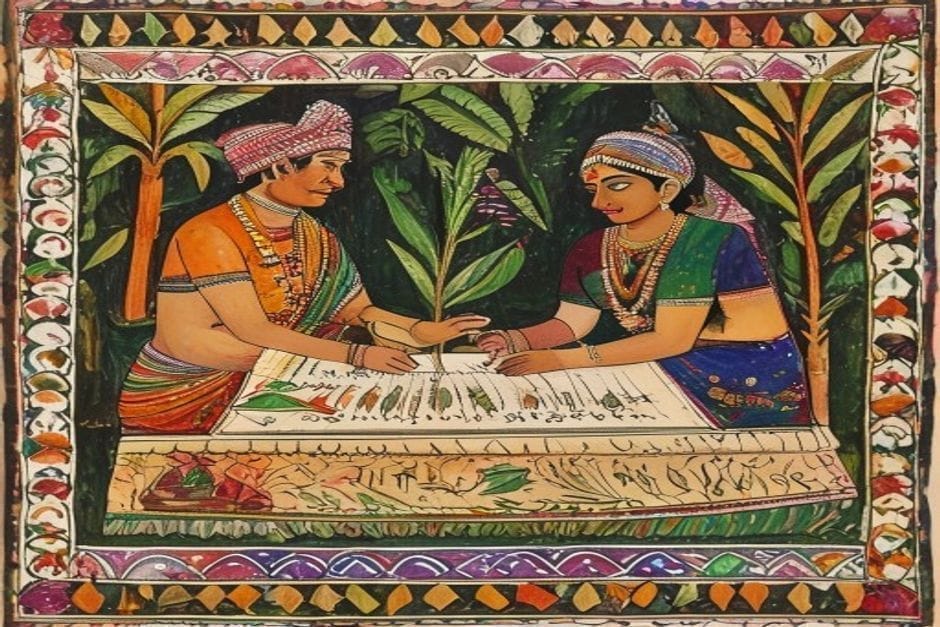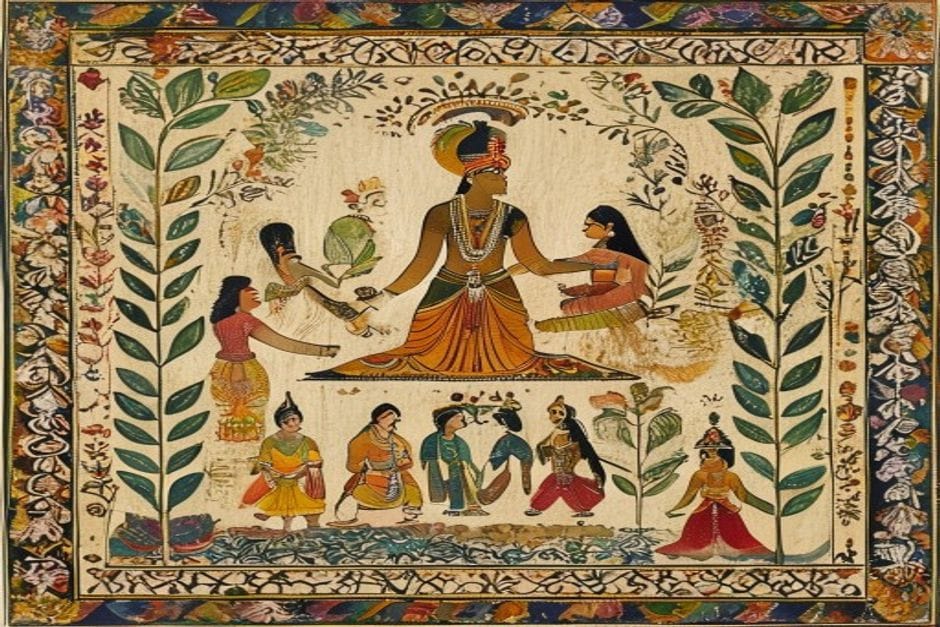
The Panji Prabandh (often simply Panji, “register”) is one of the world’s oldest continuously maintained genealogical systems — a written archive recording, generation by generation, the family lineages of Mithila’s Maithil Brahmins and Karna Kayasthas. By tradition it was instituted around 1326 CE under Maharaja Harisimhadeva, the last Karnat king, and it has been kept ever since by a hereditary class of professional genealogists. As a system of social record-keeping it is essentially unique to Mithila.
The origin story, preserved among the genealogists themselves, holds that a marriage dispute exposed the need for reliable lineage records, prompting Harisimhadeva to order that the descent of every family of the literate castes be written down and maintained. Whatever the literal accuracy of that account — the 1326 date and royal-decree narrative come from tradition rather than from contemporary documents — the institution that resulted is very real, and a near-continuous run of Panji manuscripts survives.
The records are kept by Panjikars, hereditary custodians who track each family by its mul (ancestral village) and gotra, noting births, marriages and deaths across centuries. Their primary practical purpose is the regulation of marriage: before a match, the Panjikar performs the siddhanta check to confirm the bride and groom are not too closely related and that the union respects the traditional grades of Maithil Brahmin families — Shrotriya, Yogya, Panjibaddha and Jaibar. The great occasion for this work was the Saurath Sabha, a centuries-old marriage assembly in Madhubani district where families and Panjikars gathered each year to arrange and verify matches.
As a historical source the Panji is invaluable: because it fixes individuals to dated generations and named villages, scholars have used it to reconstruct medieval and early-modern Mithila’s social history, the spread of Brahmin mul settlements, and the chronology of families otherwise invisible in formal records. It is, in effect, a vast distributed census of the literate castes maintained for seven centuries — though it documents principally Brahmins and Kayasthas, not the wider society.
The Panji’s legacy is a Maithil culture of extraordinary lineage-consciousness, the survival of a manuscript archive of genuine historical depth, and a living (if declining) institution — the Panjikars and the Saurath Sabha still function, even as registration and digitisation projects now supplement the old palm-leaf and paper registers.