Mithila painting — known to the world as Madhubani — began on the mud walls and courtyards of the region’s homes, painted by women for weddings, festivals and worship. Discovered beyond Mithila after the 1934 earthquake and carried onto paper during the droughts of the 1960s, it earned a GI tag in 2007. These are its principal styles.
-
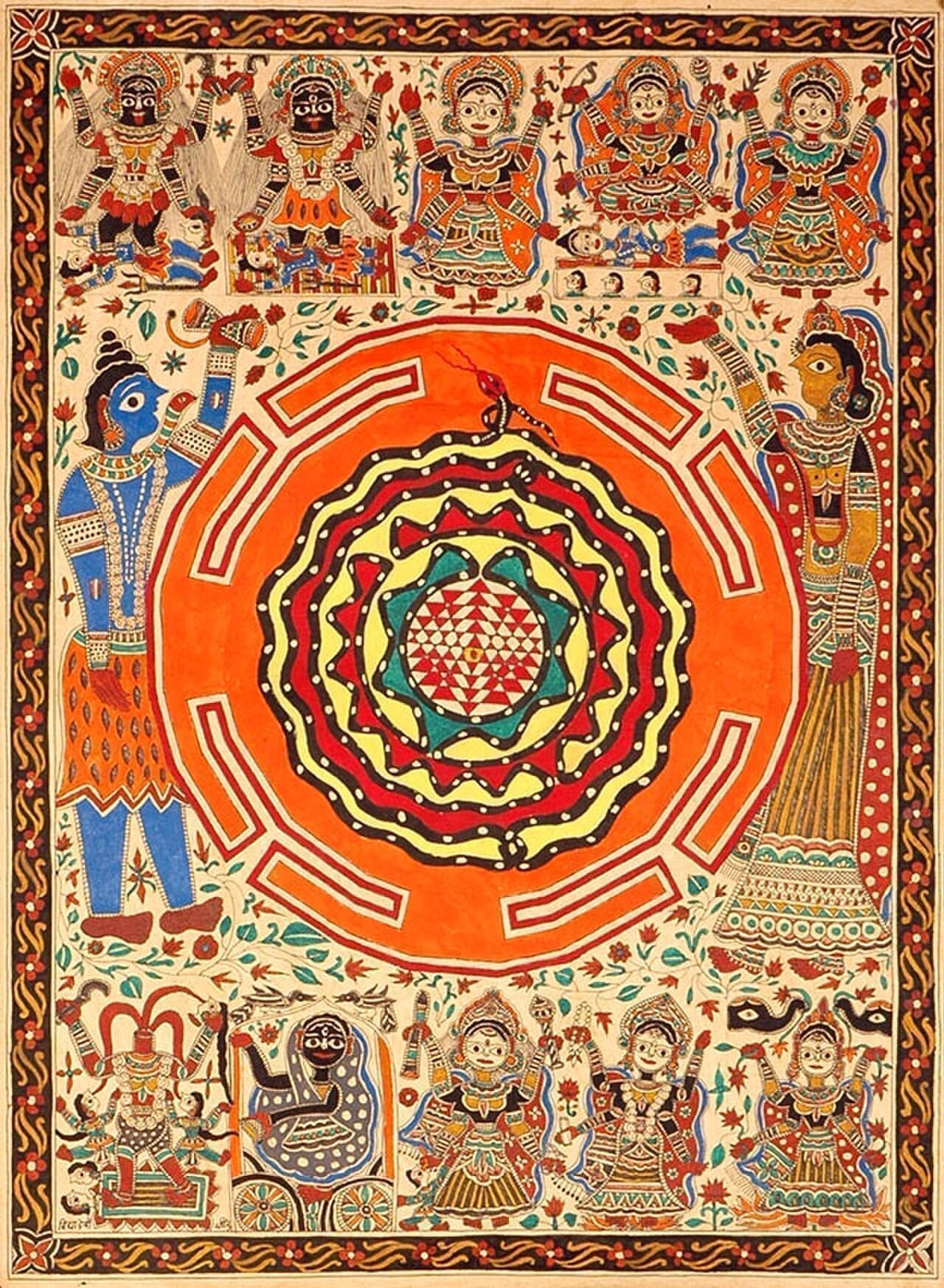 Traditionally Brahmin women
Bharni
The "filling" style of Madhubani — bold outlines flooded with vivid natural colour.
-
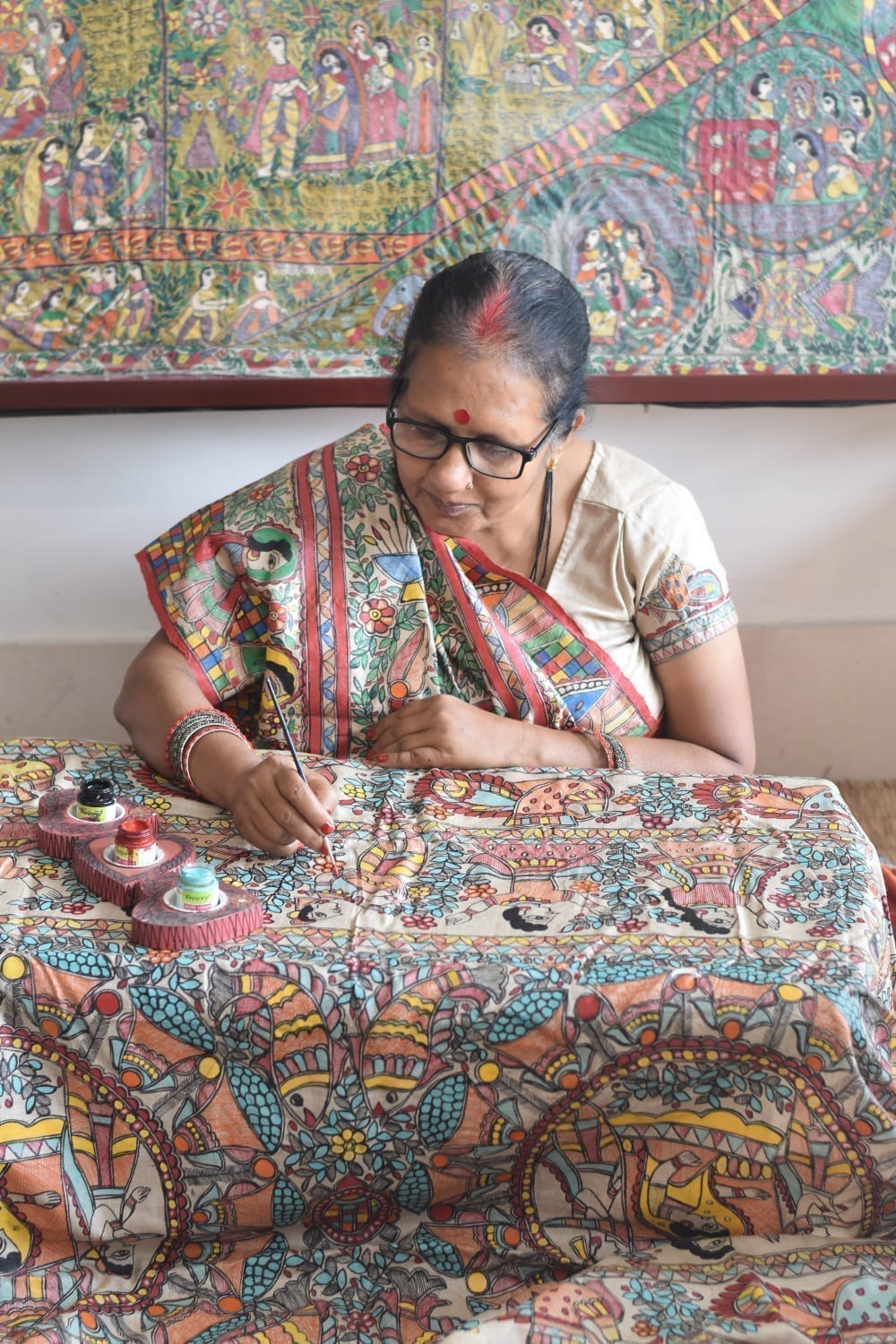 Traditionally Kayastha women
Katchni
The fine line-work style — delicate cross-hatching in one or two colours.
-
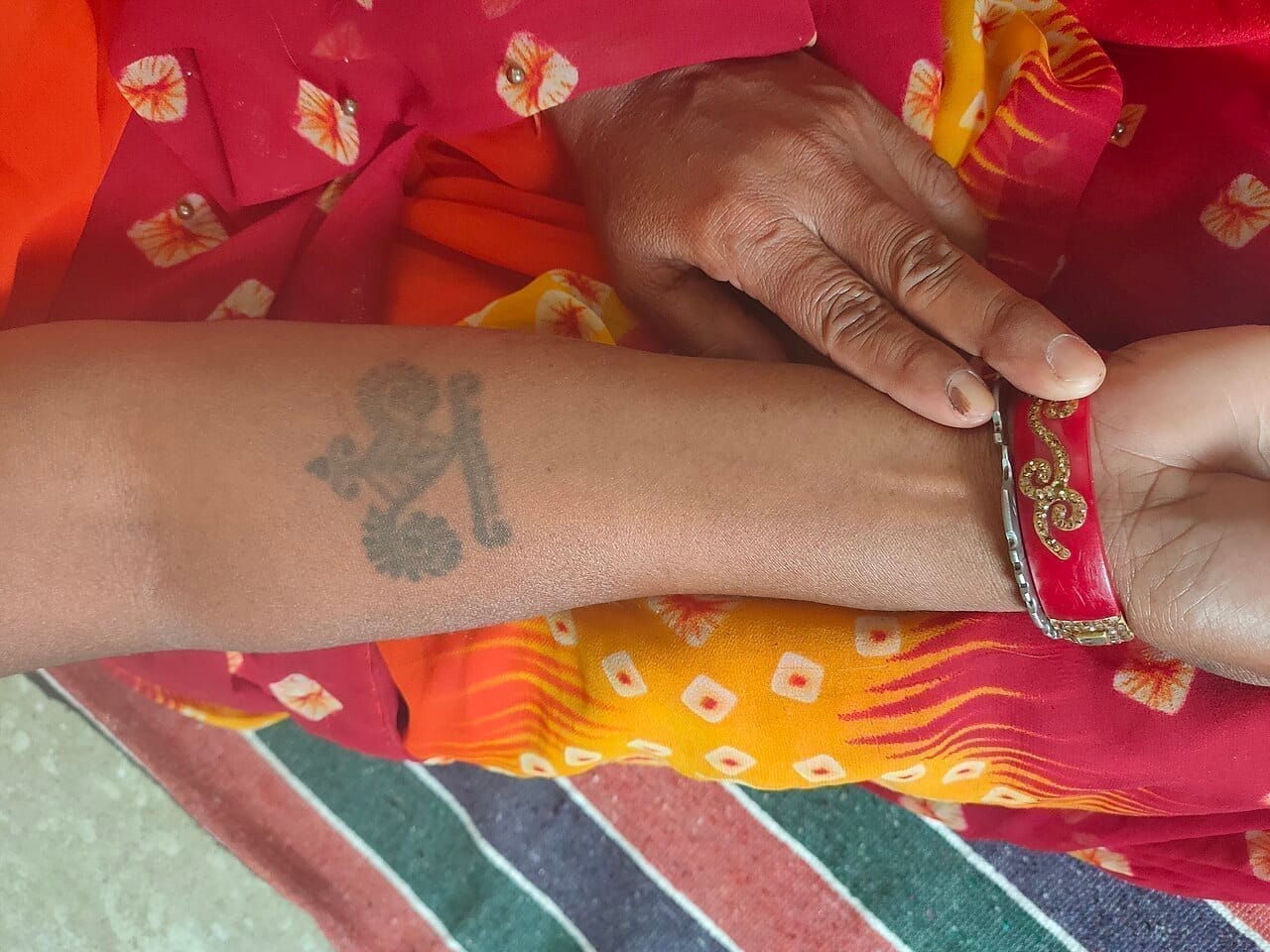 Dalit (Dusadh) communities
Godna
A tattoo-inspired style of repeating motifs, born among Mithila's Dalit communities.
-
 All communities (wedding rite)
Kohbar
The painting of the wedding chamber — lotus, bamboo and fish woven into a prayer for union and fertility.
-
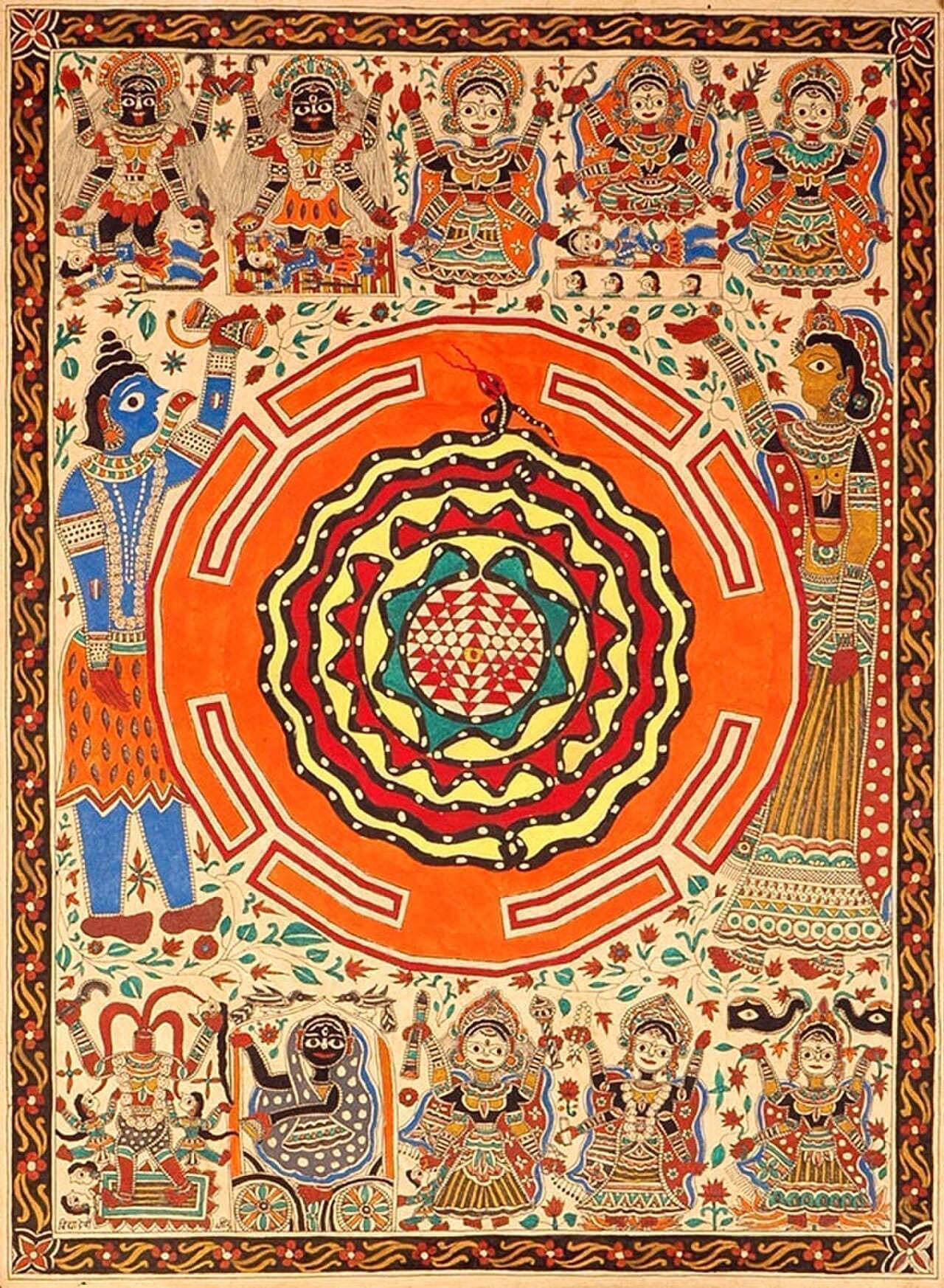
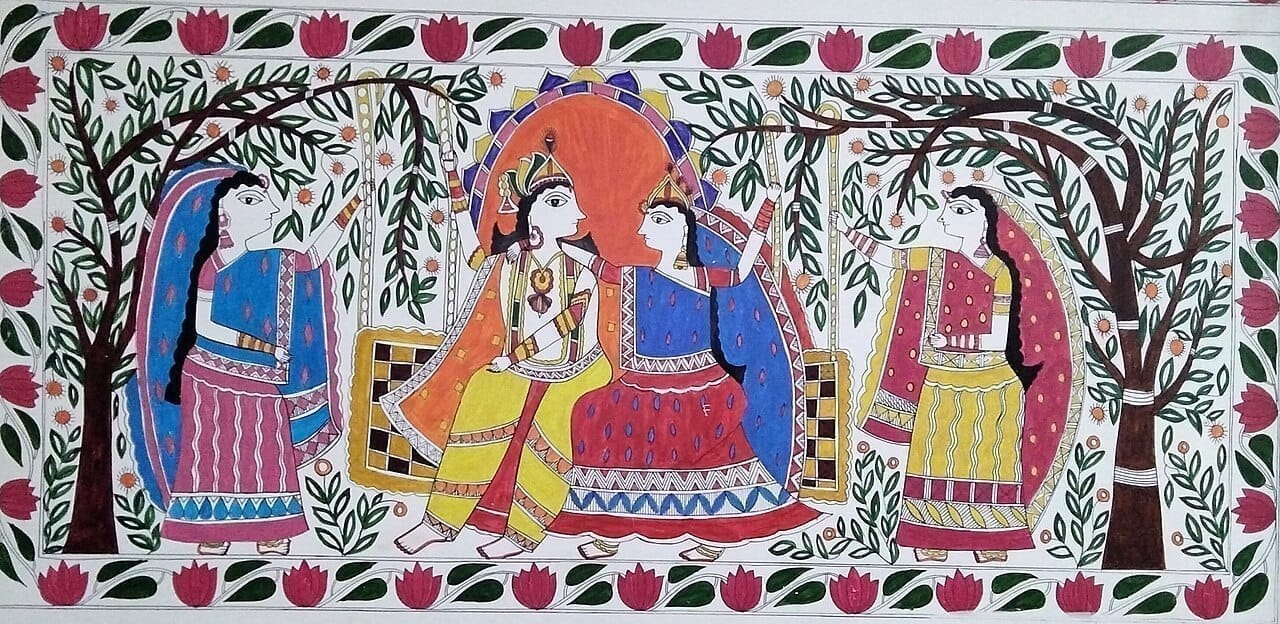 Traditionally Brahmin practitioners
Tantrik
The esoteric Madhubani style of mandalas, yantras and the cosmic diagram.
- Dalit / Harijan communities
Geru
The earth-toned people's style, washed on cow-dung paper in bold lines.
-
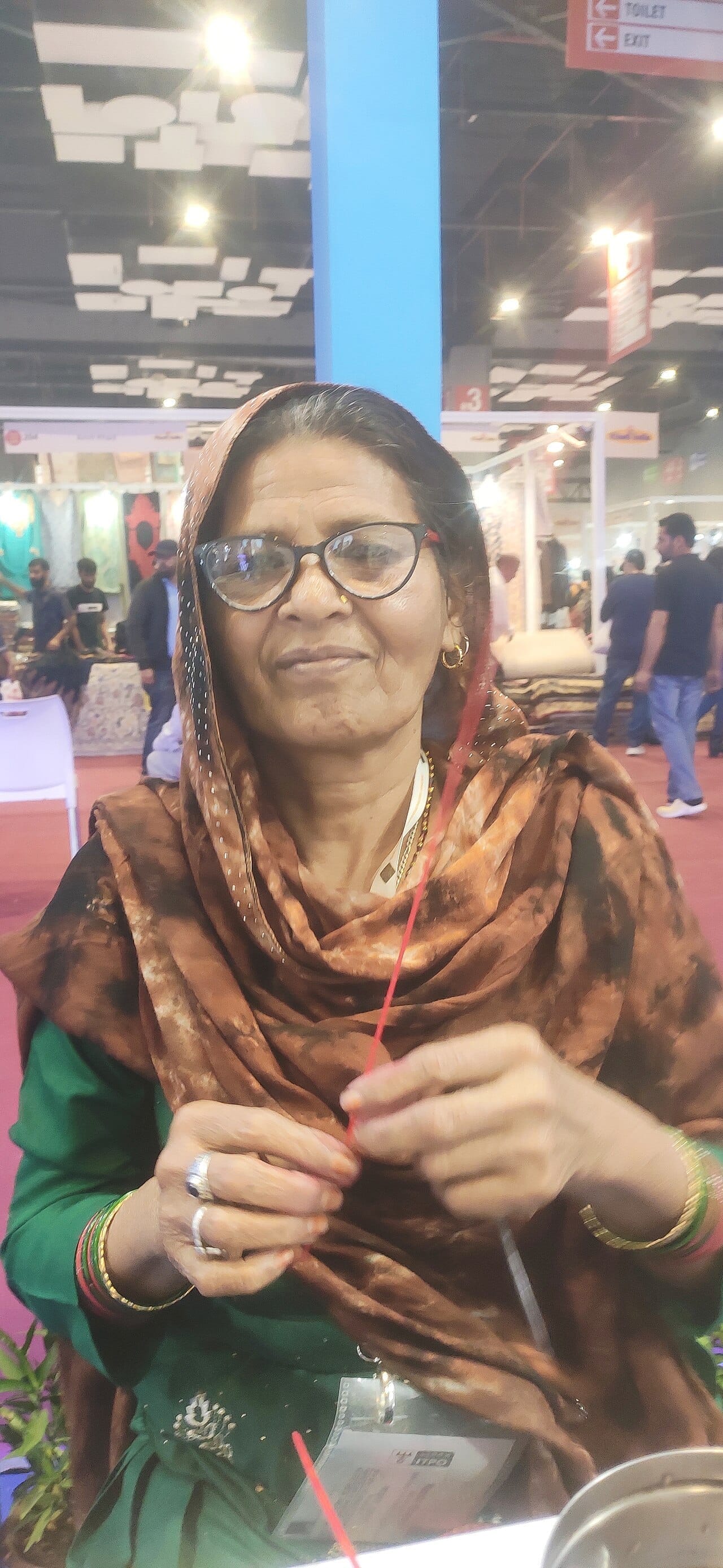 Women of Mithila
Sikki Grass Craft
Golden marsh-grass coiled by Mithila's women into baskets, boxes, toys and ritual ware.
-
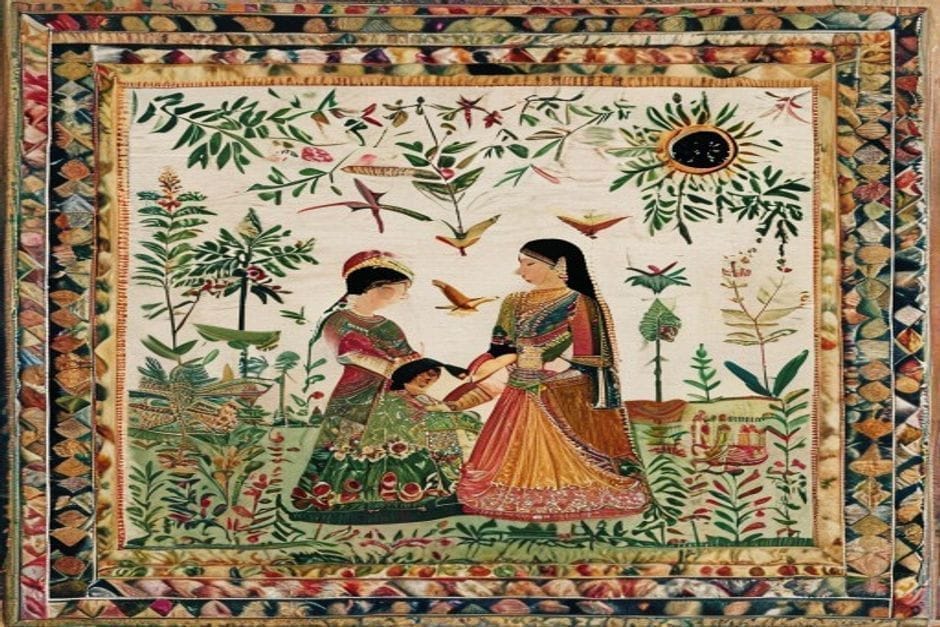 Women of Mithila & Muzaffarpur
Sujani Embroidery
Story-telling quilts stitched from old cloth — a women's textile art of Mithila and beyond.
-
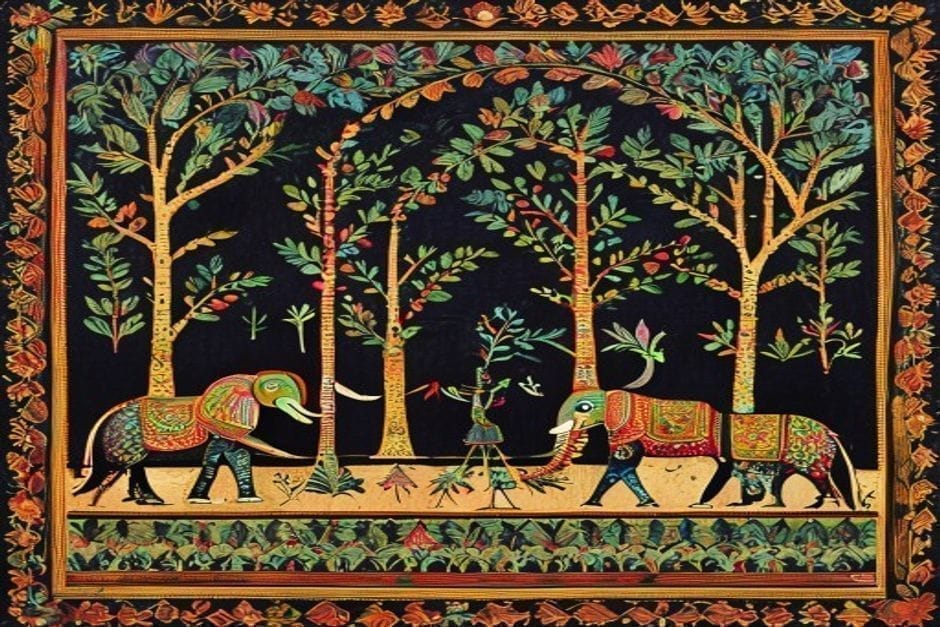 Tailors and women of Mithila
Khatwa Appliqué
Cut-and-stitch cloth art — bold figures and borders appliquéd onto canopies, tents and hangings.
-
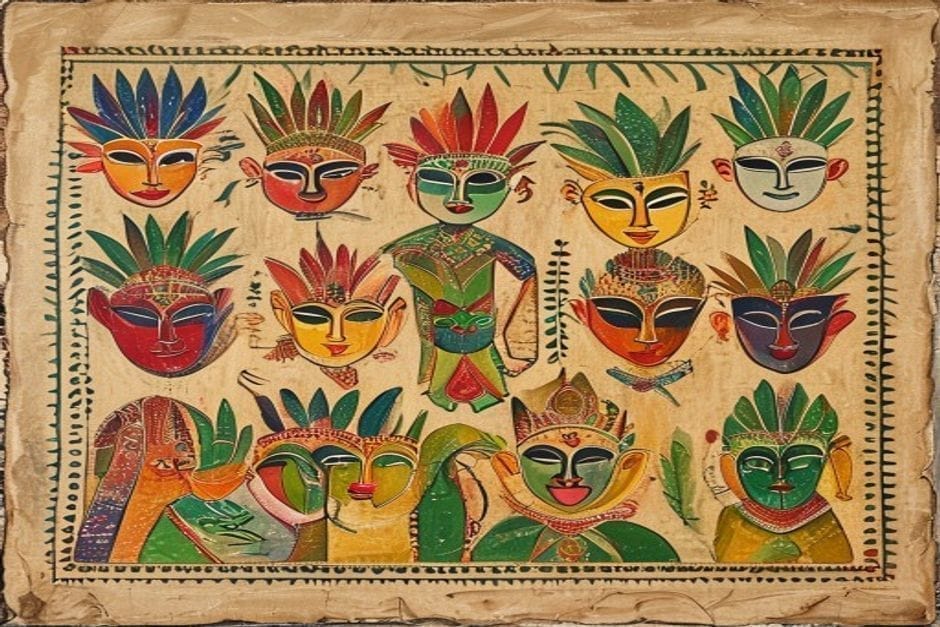 Artisans of Madhubani
Mithila Masks
Painted papier-mâché and clay masks that bring gods and folk-heroes to life in ritual and theatre.
-
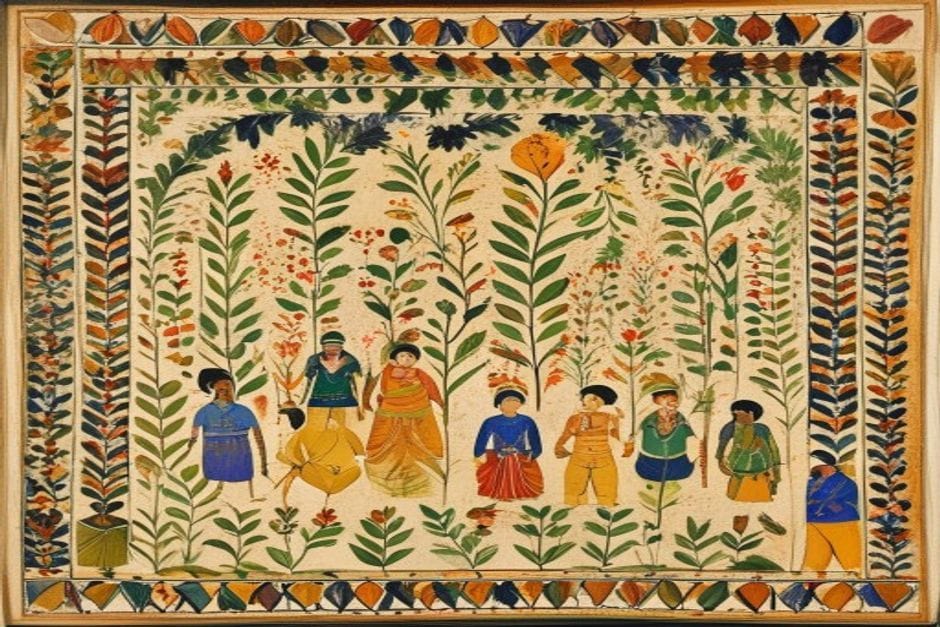 Women of Mithila
Aripan
The ritual rice-paste floor-and-wall drawing that consecrates every Maithil threshold, courtyard and shrine.
-
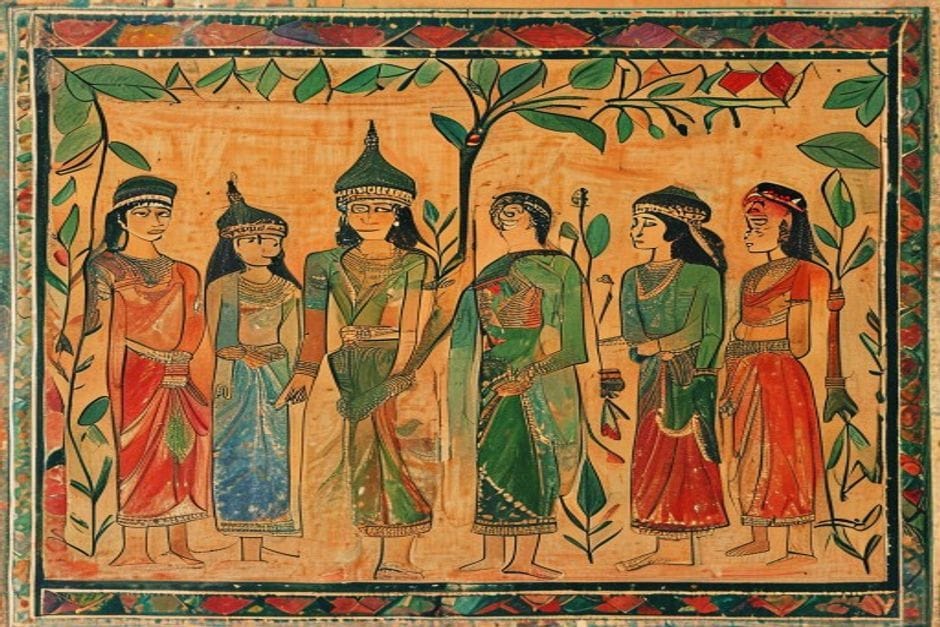 Women & girls of Mithila
Sama-Chakeva Clay Figurines
Hand-moulded, brightly painted clay idols of the Sama-Chakeva festival, made by Maithil women to enact a brother-sister legend.
-
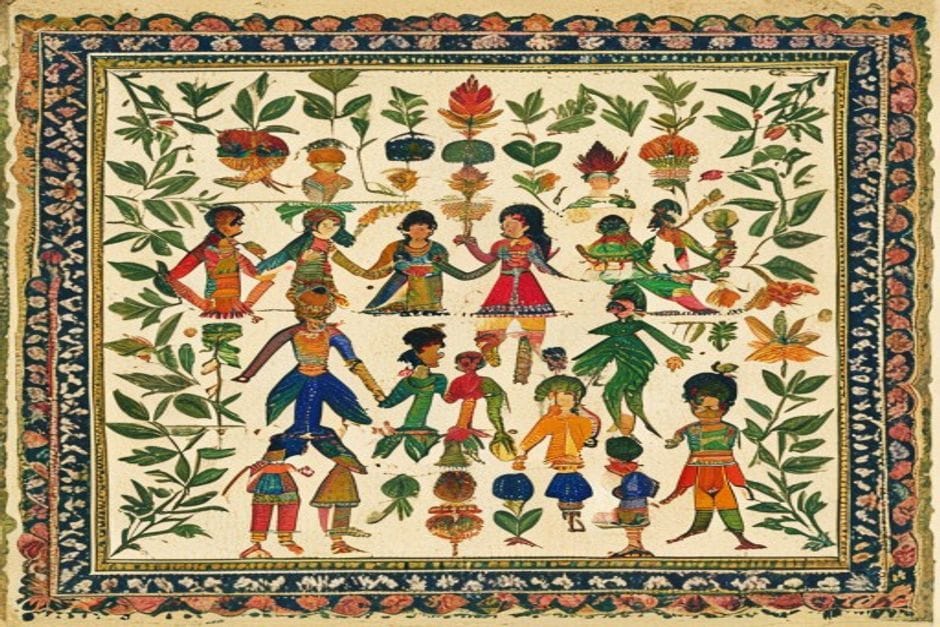 Laheri / Lakhera
Lac Bangles (Lakheri Craft)
Glossy resin bangles and vermilion caskets worked by Mithila's Laheri artisans — the bright ware of a married woman's wrist.
-
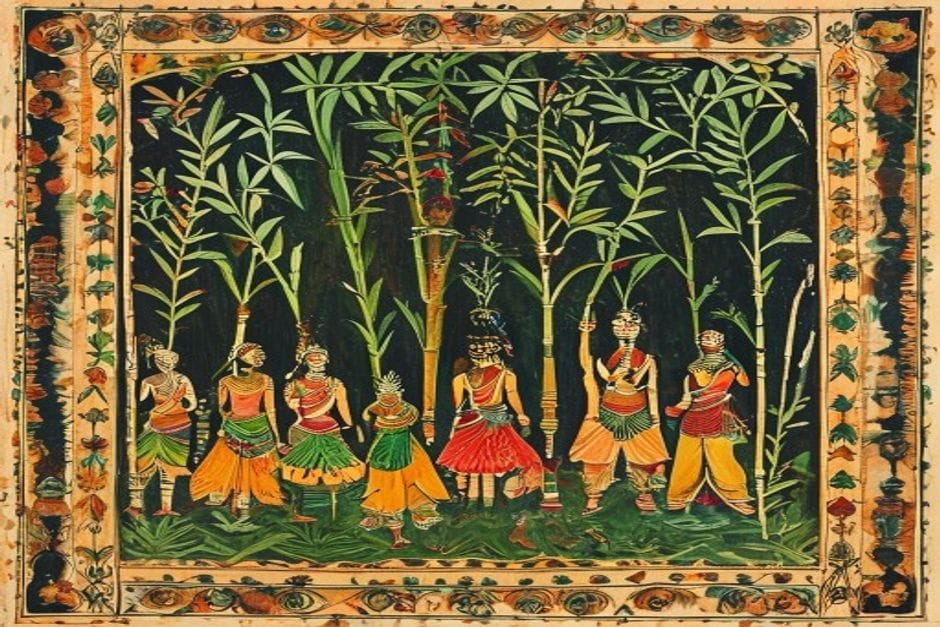 Dom (basket-weavers)
Bamboo Craft — Daura, Soop & Changera
The woven bamboo baskets and winnows — daura, soop and changera — that carry the offerings of every Maithil wedding, Chhath and puja.
-
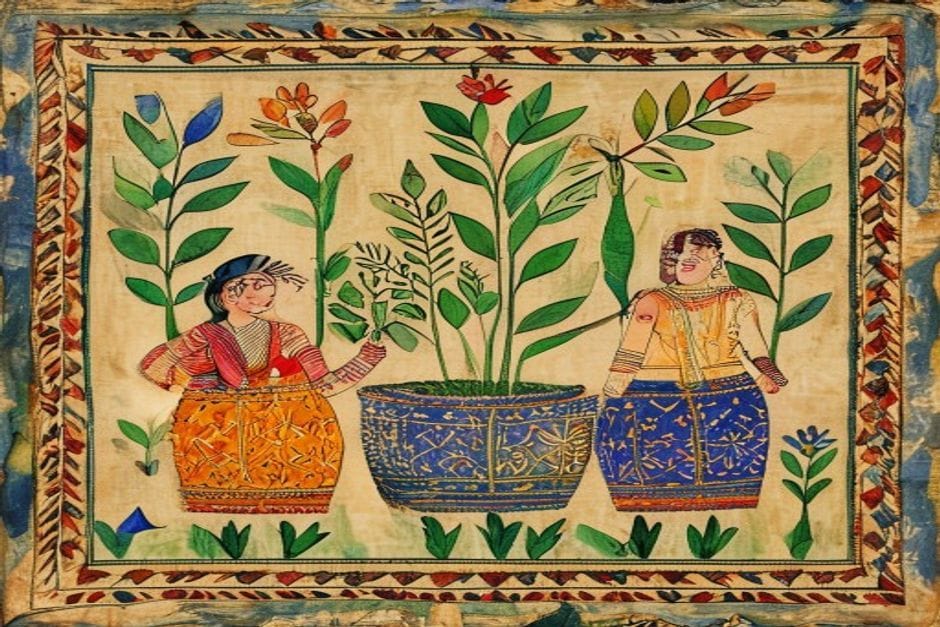 Women of Mithila
Moonj-Grass Coiled Basketry
Sturdy coiled storage baskets and ritual ware built from tough moonj grass — the structural cousin of Mithila's golden sikki.