Stage 1 of 12 · Day 1 · Udog
Udog — marking the five bamboos
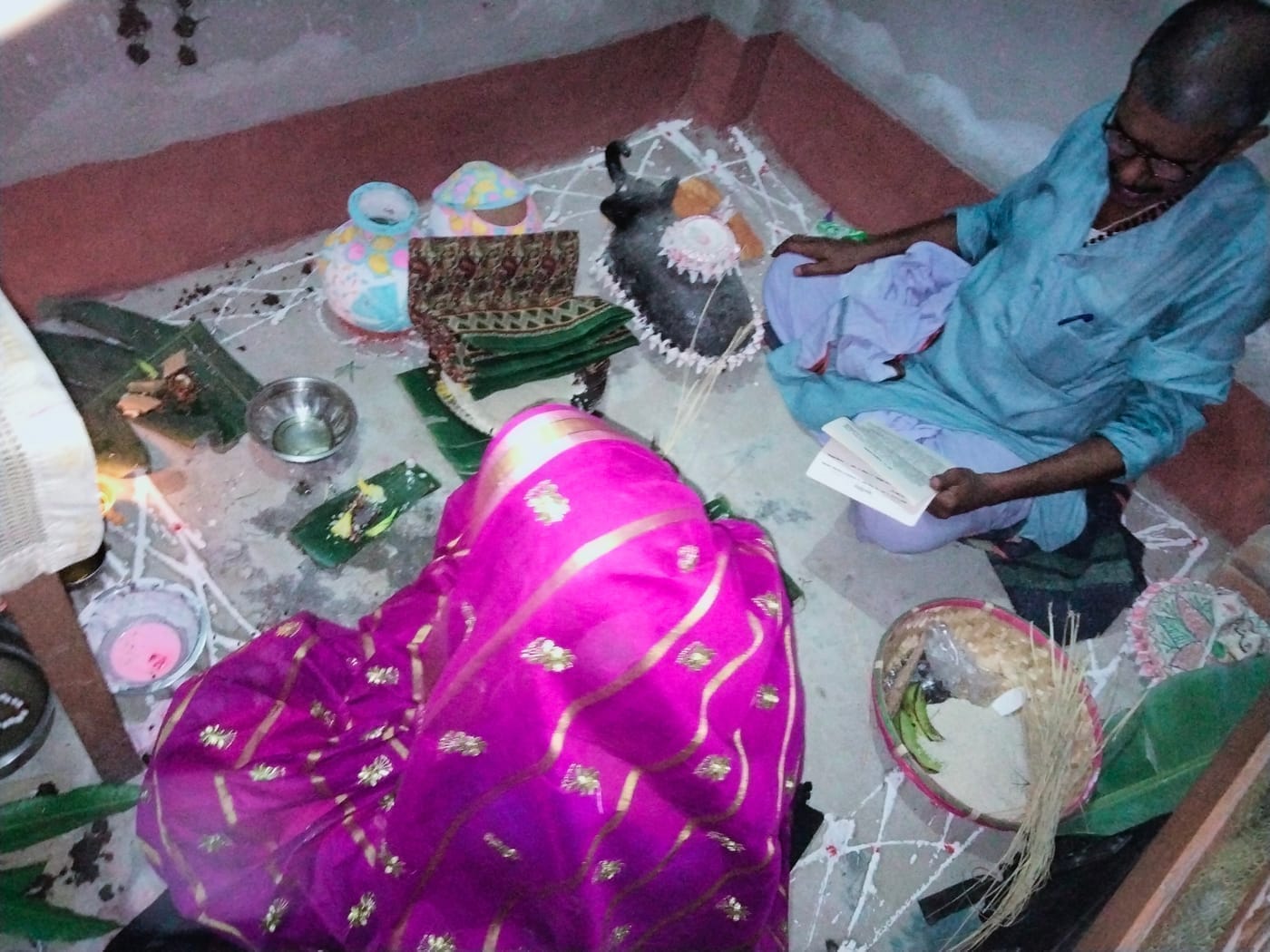
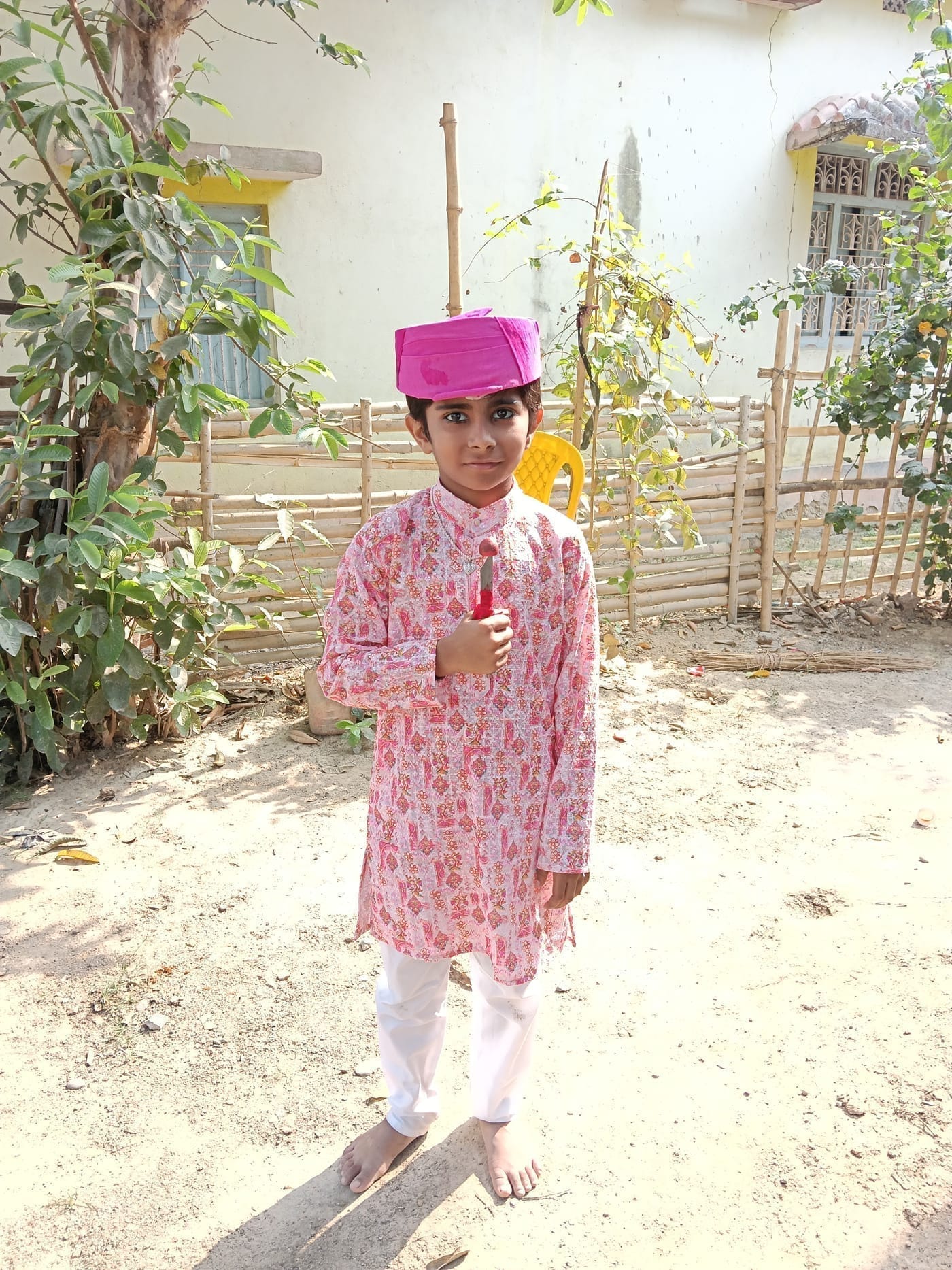
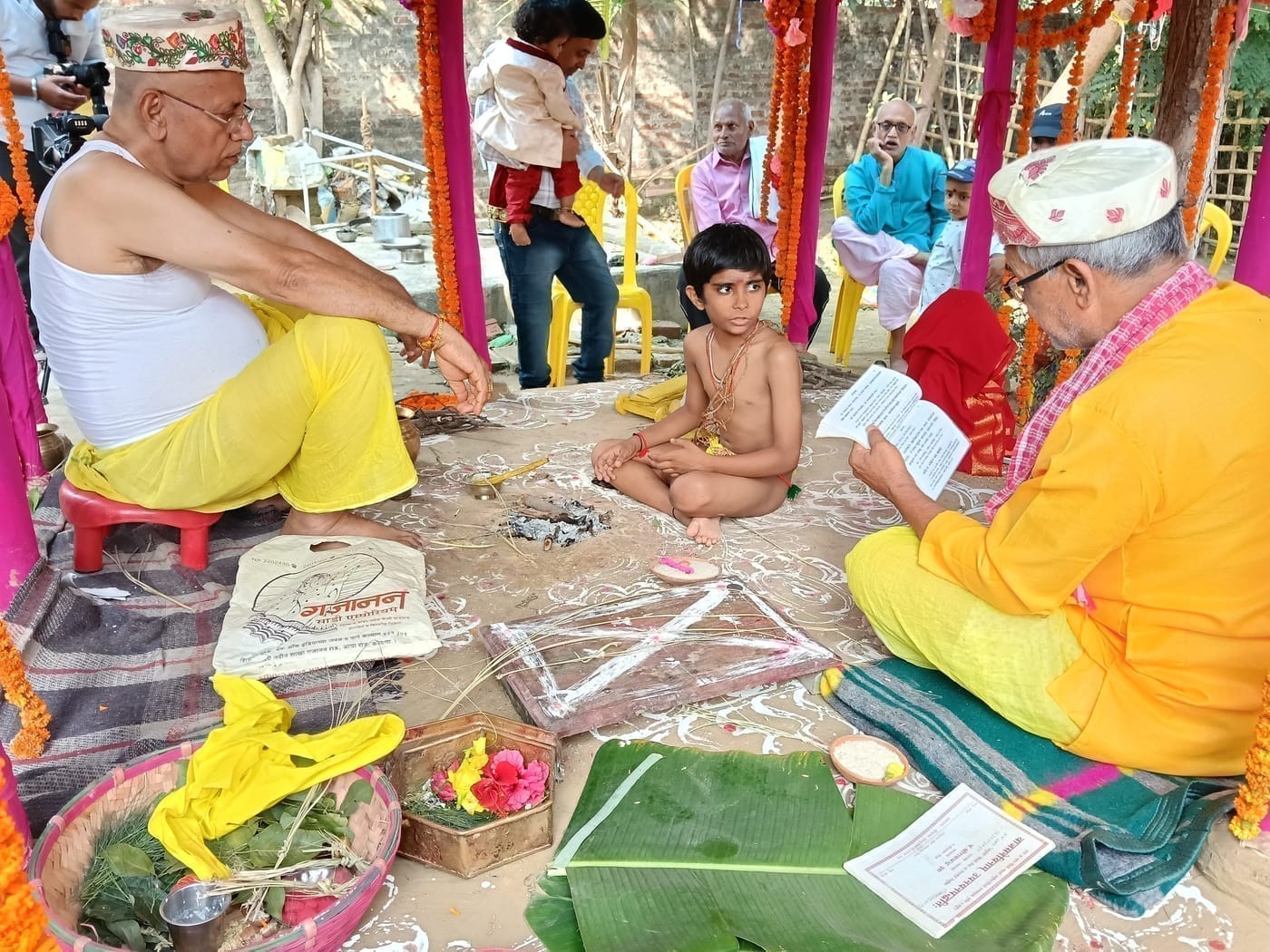
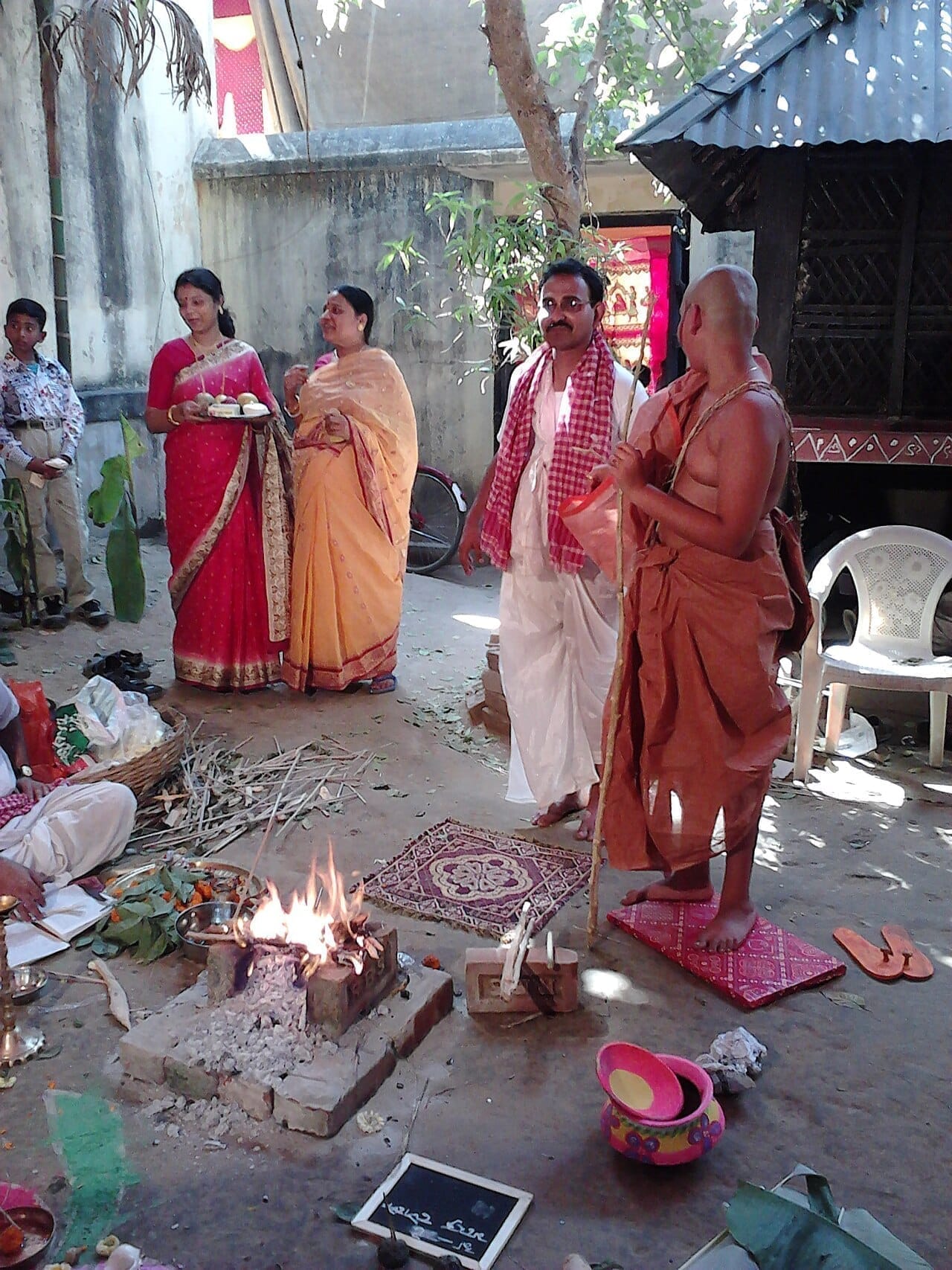
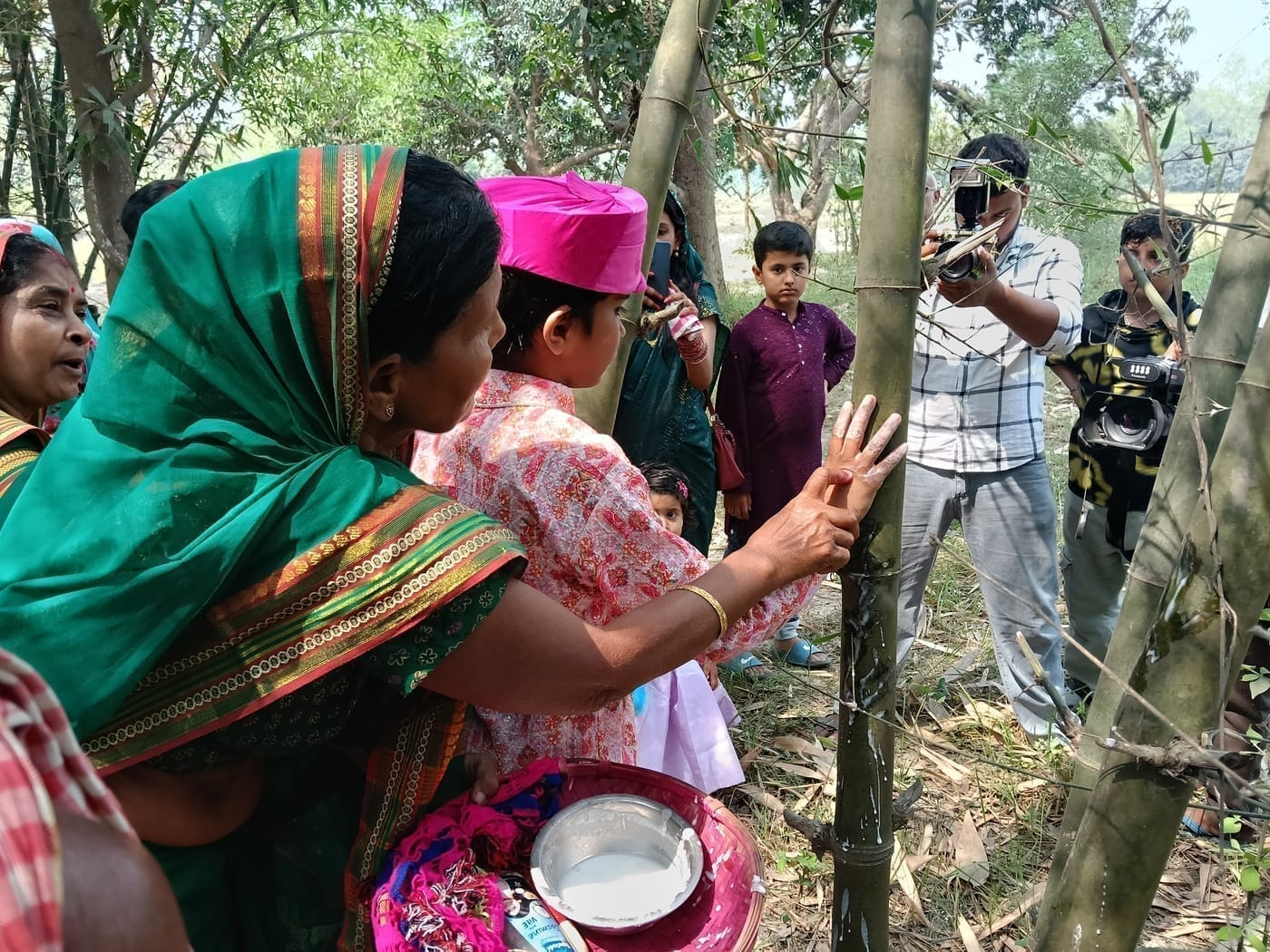
The week-long rite opens with Udog (“the undertaking”). The boy to be initiated — the Barua (or Batuka) — daubs five chosen bamboo plants with pithar (white rice-flour paste) and sindur (vermilion) to consecrate them. Elders then cut these marked bamboos — the Baaskatti, “bamboo-cutting” — and carry them home to become the poles of the marwa, the sacred canopy.
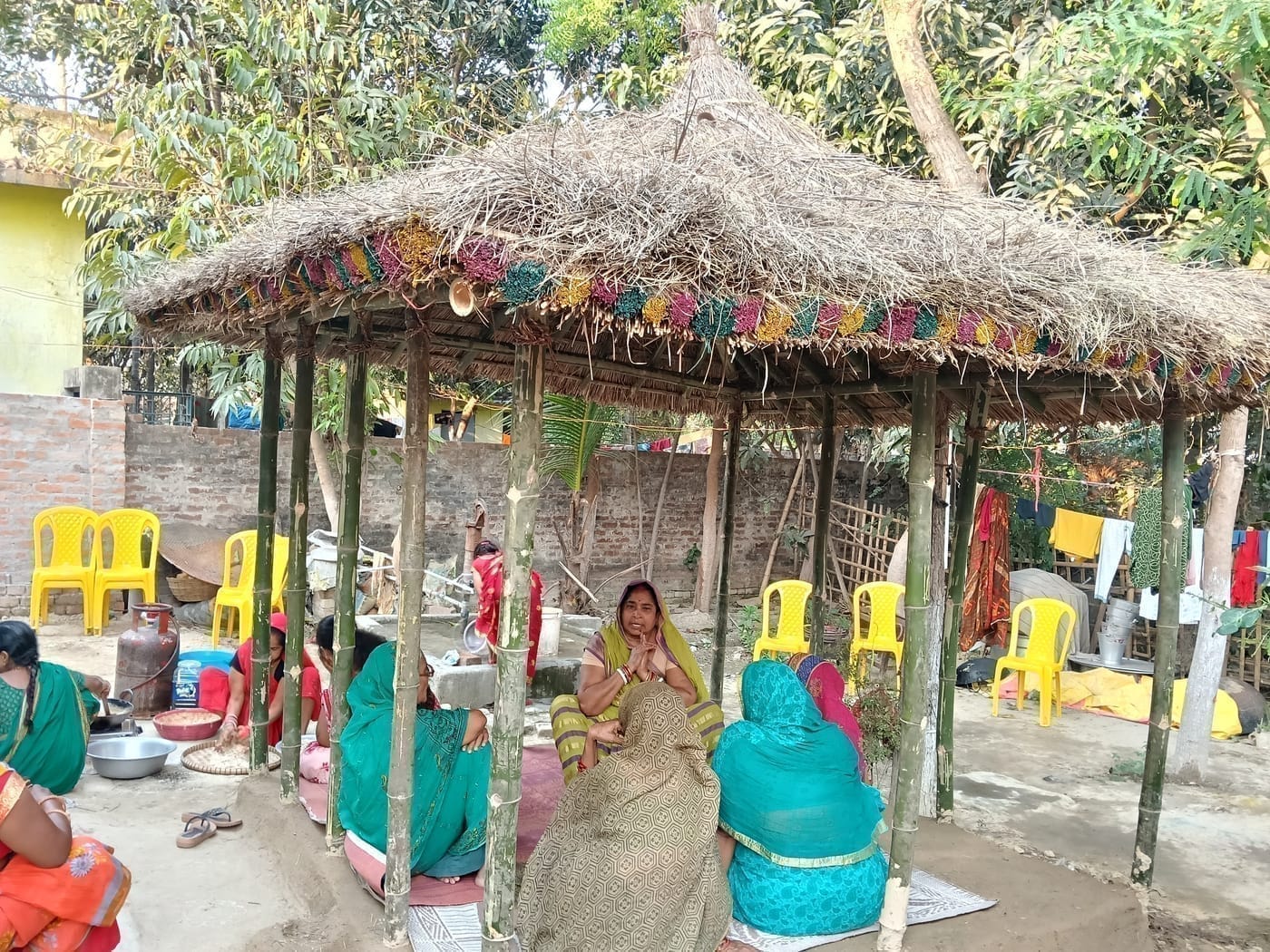
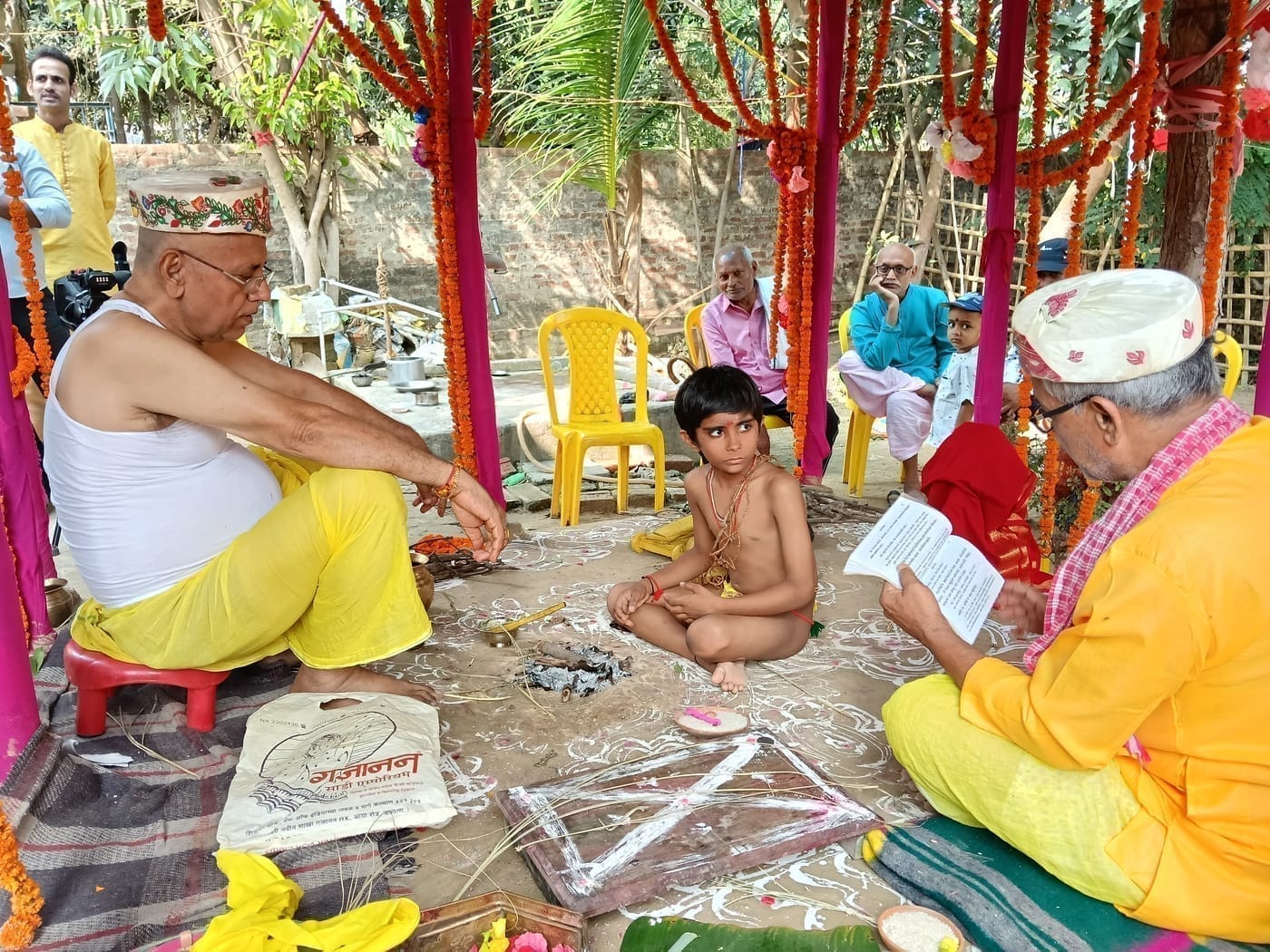
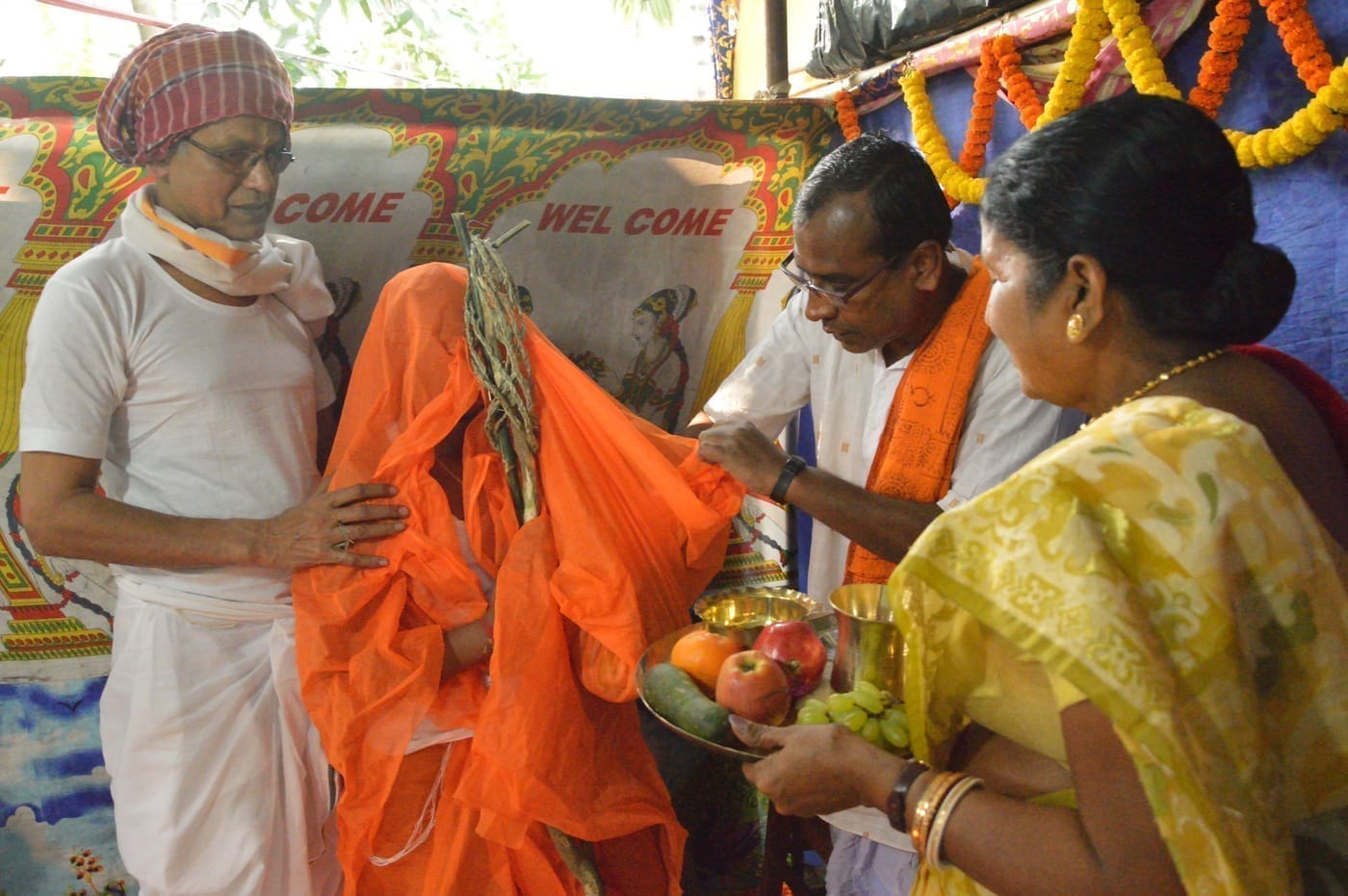
From its first act the Maithil Upanayan borrows the whole grammar of a wedding: the bamboo marwa, the women’s songs, the festival weight. In the land of Yajnavalkya and the Navya-Nyaya logicians, admission to study was an event worth a week of ceremony — the boy, in effect, married to the Vedas.
विधि · The rite, step by step
- An auspicious day is fixed by the Mithila Panchang and the Barua is taken to a stand of bamboo.
- He marks five chosen bamboo plants with pithar (rice-flour paste) and vermilion.
- Elders ceremonially cut the five marked bamboos — the Baaskatti.
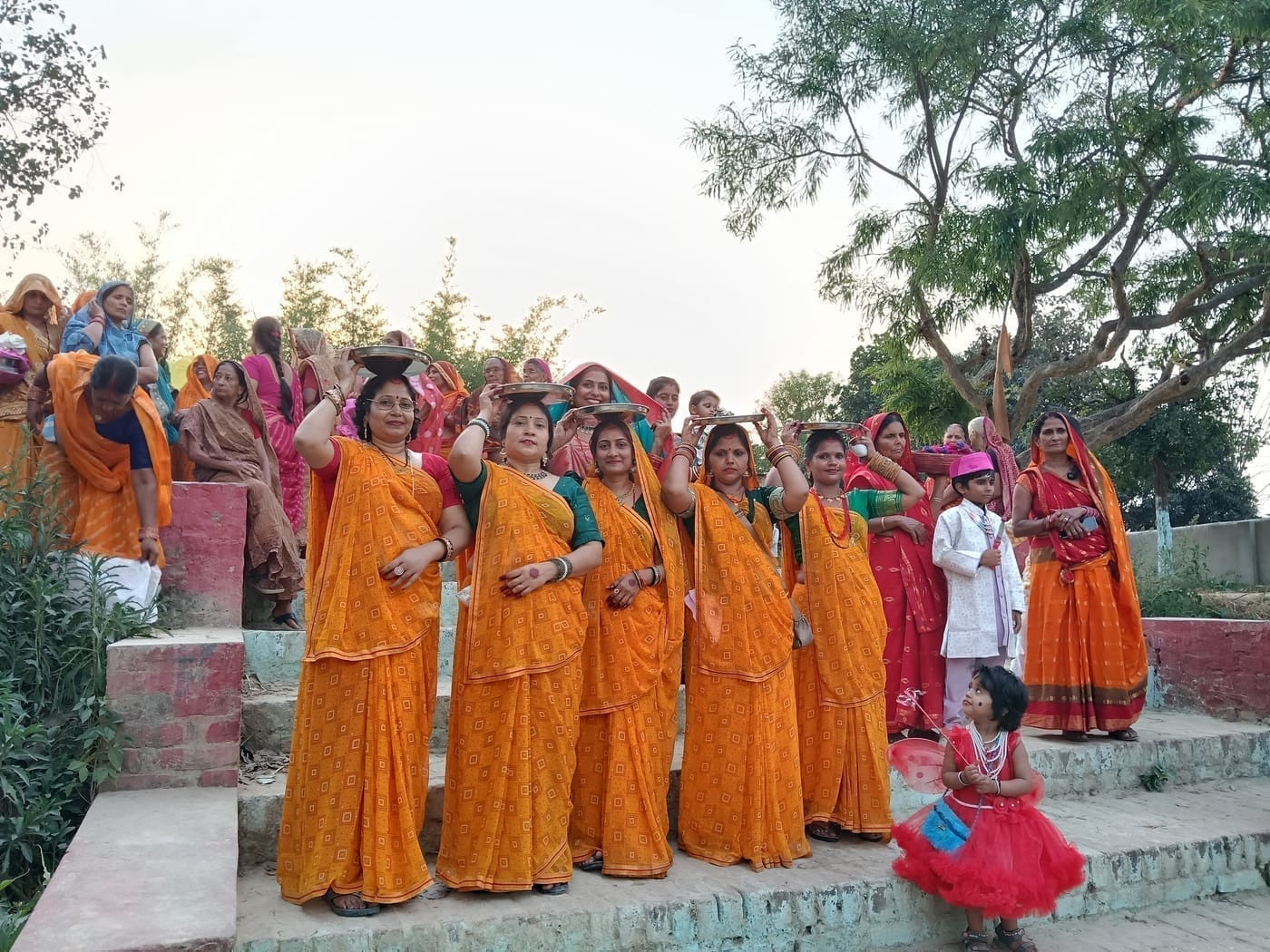
- The cut bamboo is carried home in procession to build the marwa; the women begin the samskar songs.
गीत · Songs of this moment
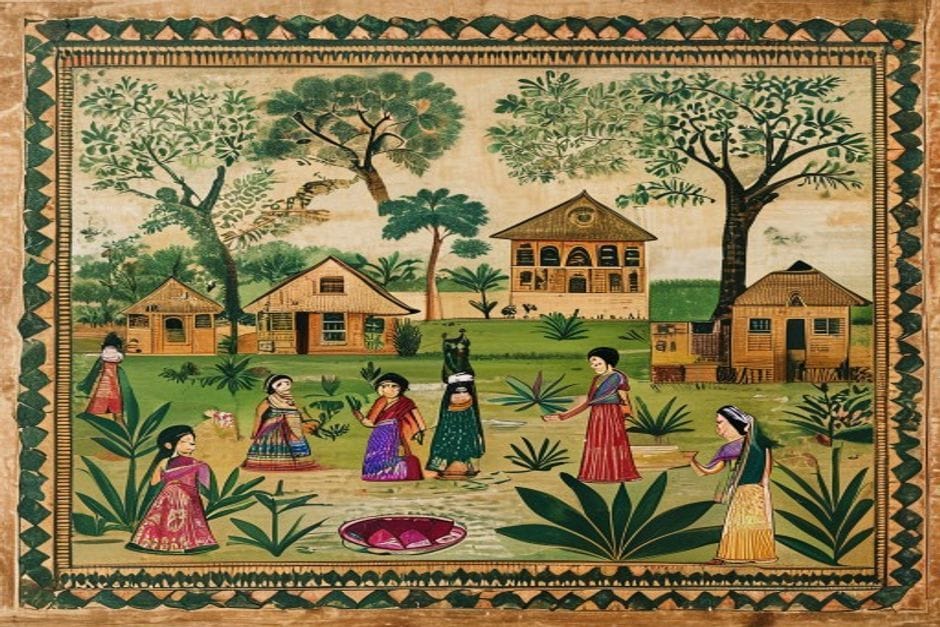
- Brahman geetsongs to the village-deity Brahma Baba sung through the Maithil upanayan and wedding — “Brahman Babu yao hamro par hoiyao na sahay” (“O Brahman Baba, be our protector”)
Across communities The five-bamboo marwa is borrowed wholesale from the Maithil wedding and marks the week-long Maithil form — absent from the brisk one-day Upanayana done elsewhere. India (Bihar) and Nepal-Madhesh practice are the same here.
What is used
Five bamboo plantspithar (rice-flour paste)sindur (vermilion)the cutting bladethe marwa-to-be
Meaning
The “undertaking”bamboo as the ritual framea rite begun with wedding-scale weight