The Darbhanga Raj, the dynasty of the Khandavala family, was the last and longest-lived of Mithila’s great ruling houses, spanning from the mid-16th century to Indian independence. Tradition — followed by most accounts — holds that the Mughal emperor Akbar granted the sarkar of Tirhut to the Maithil-Brahmin scholar Mahesh Thakur on Ram Navami in 1557, after a learned Maithil pandit had distinguished himself at the imperial court. From this grant descended a line of Maithil Brahmins who held Mithila not as Sultanate-style sovereigns but as great zamindars under successive Mughal and then British overlords.
The family’s seat shifted to Darbhanga in 1762, which gave the estate its name. Over the 19th and 20th centuries its Maharajas became national figures. Maharaja Lakshmeshwar Singh (r. 1860–1898) was a Western-educated reformer and philanthropist who backed the early Indian National Congress and brought the Tirhut Railway to the region. Maharaja Rameshwar Singh (r. 1898–1929) was a champion of Sanskrit learning and a co-founder and major donor of Banaras Hindu University. At its peak the estate covered some 6,000 square kilometres and around 4,500 villages, making it, in the standard description, the largest and richest of the North Bihar zamindaris and one of the greatest in British India.
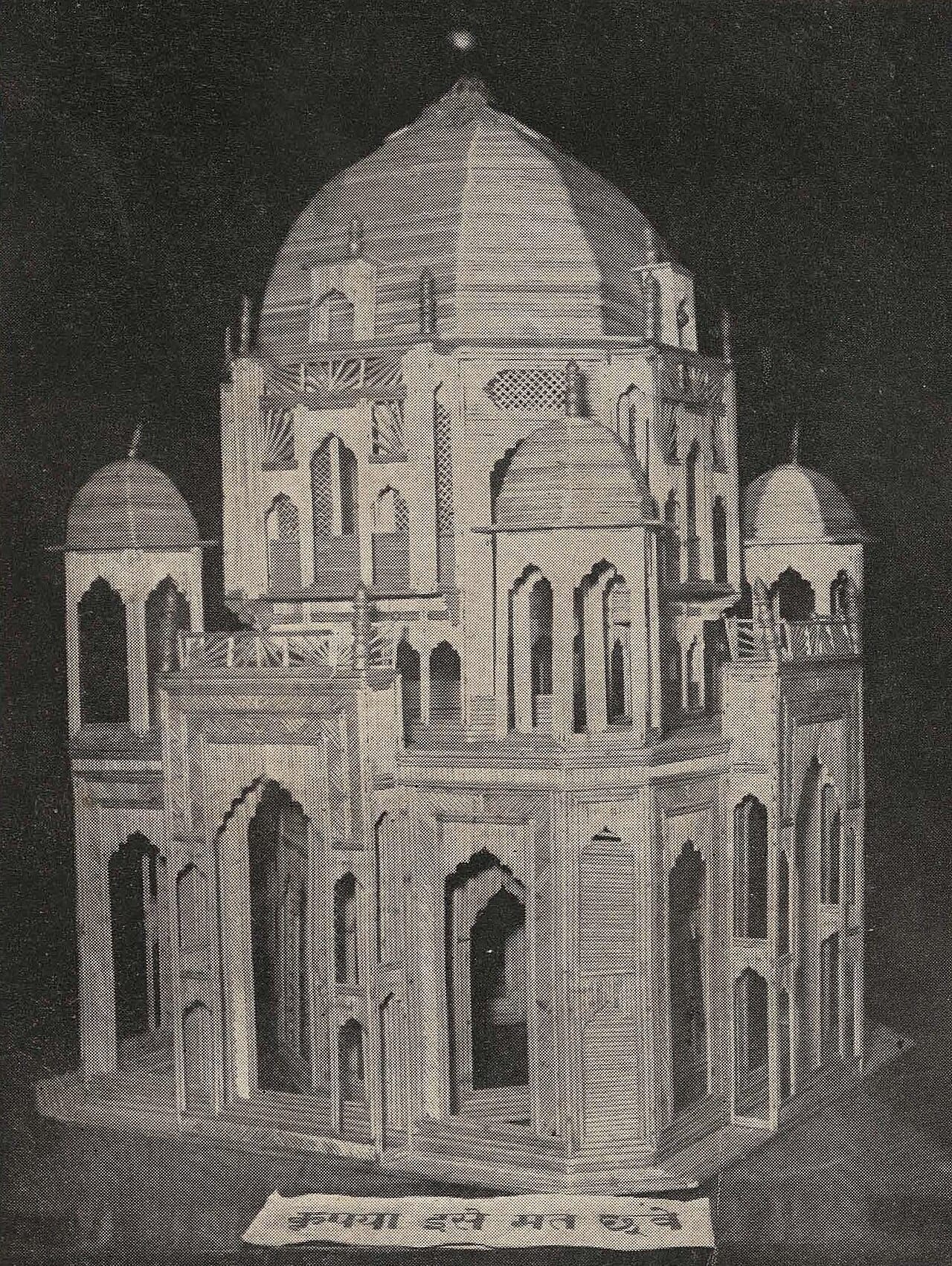
The most prominent of the line was the last ruling Maharaja, Sir Kameshwar Singh (r. 1929–1952), a member of the Constituent Assembly and Rajya Sabha and reckoned among the wealthiest men in India. His philanthropy was vast: endowments to temples, the founding of institutions of Sanskrit and Mithila studies, and major gifts to universities — his name survives in the Kameshwar Singh Darbhanga Sanskrit University and in colleges and hospitals across north Bihar. The Raj’s palaces — the Nargauna and Anand Bagh palaces at Darbhanga and the spectacular Rajnagar Naulakha Palace — were monuments to this wealth.
The end came with land reform. The Bihar Land Reforms Act of 1950 abolished the zamindari system, and through the 1950s the great estate was dismantled and its revenue rights vested in the state. Kameshwar Singh died in 1962 without an heir, and the property passed into trusts and prolonged litigation. What is firmly documented is the estate’s modern scale, philanthropy and dissolution; the picturesque story of Akbar’s 1557 grant rests largely on family tradition and later chronicle, and historians treat its details with some caution.
The Darbhanga Raj’s legacy is woven through modern Mithila: its universities, temples, hospitals and palaces; its patronage of Maithili and Sanskrit scholarship; and its role — especially under Rameshwar Singh — in first articulating Mithila as a distinct region deserving recognition, a thread that runs straight into the later statehood movement.