Stage 1 of 4 · Vasant Panchami
Vasant Panchami — the coming of spring
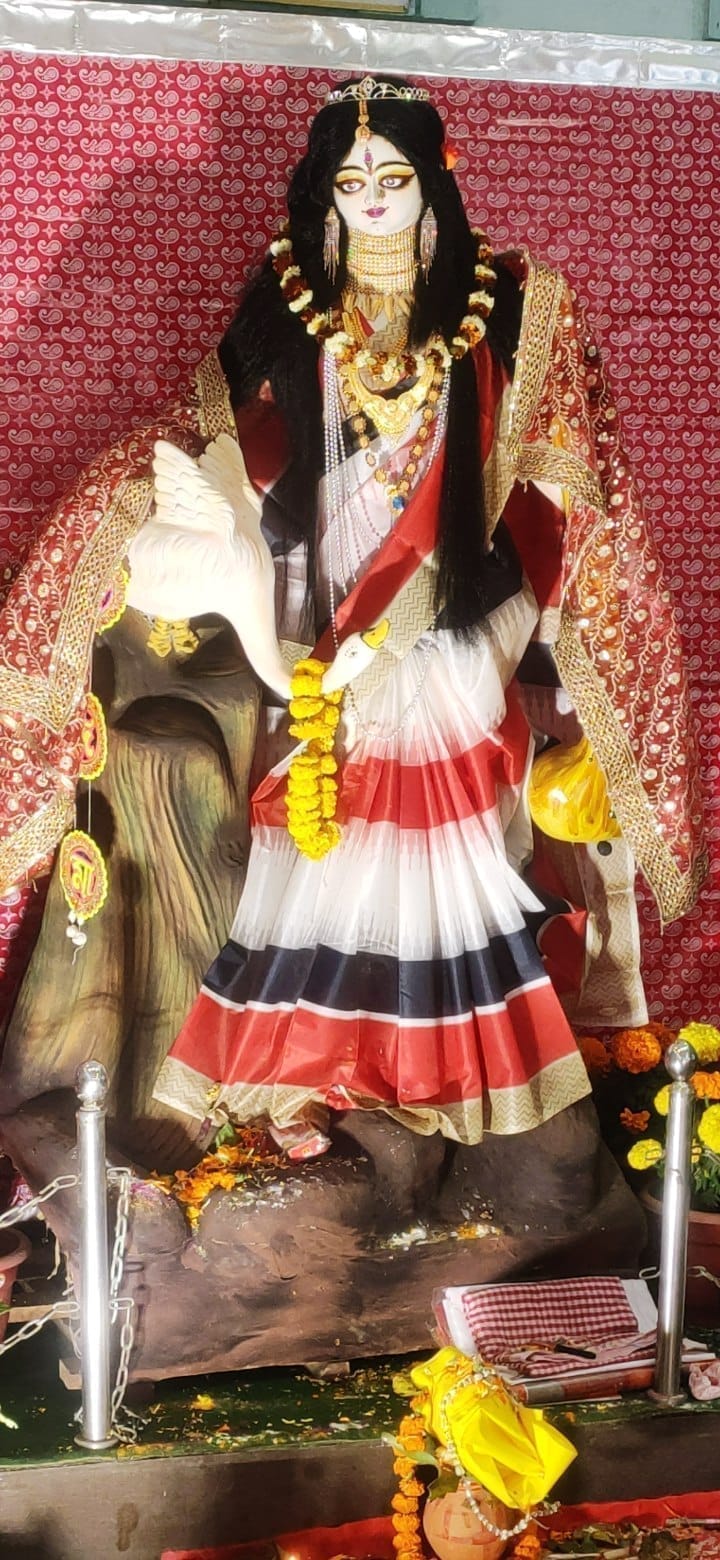
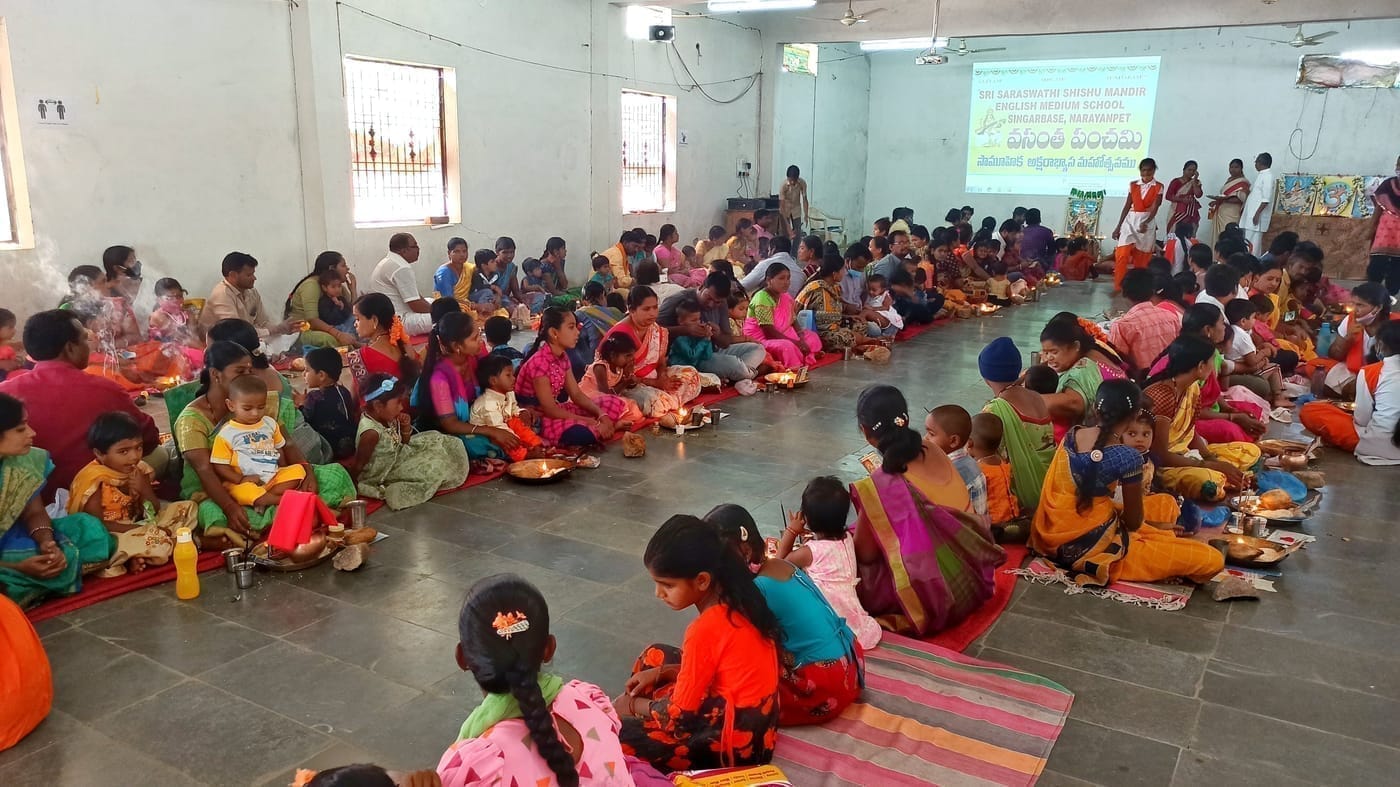
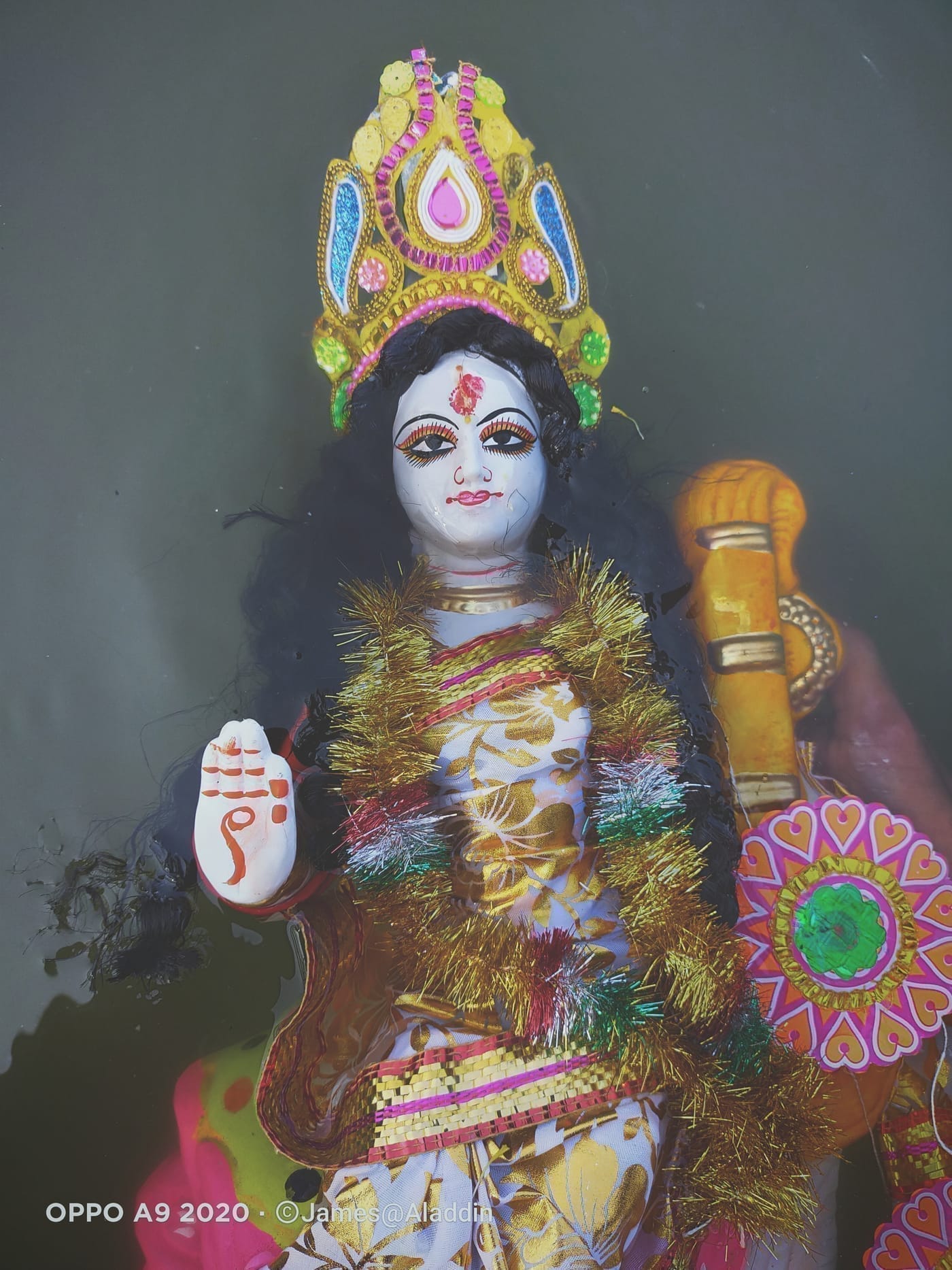
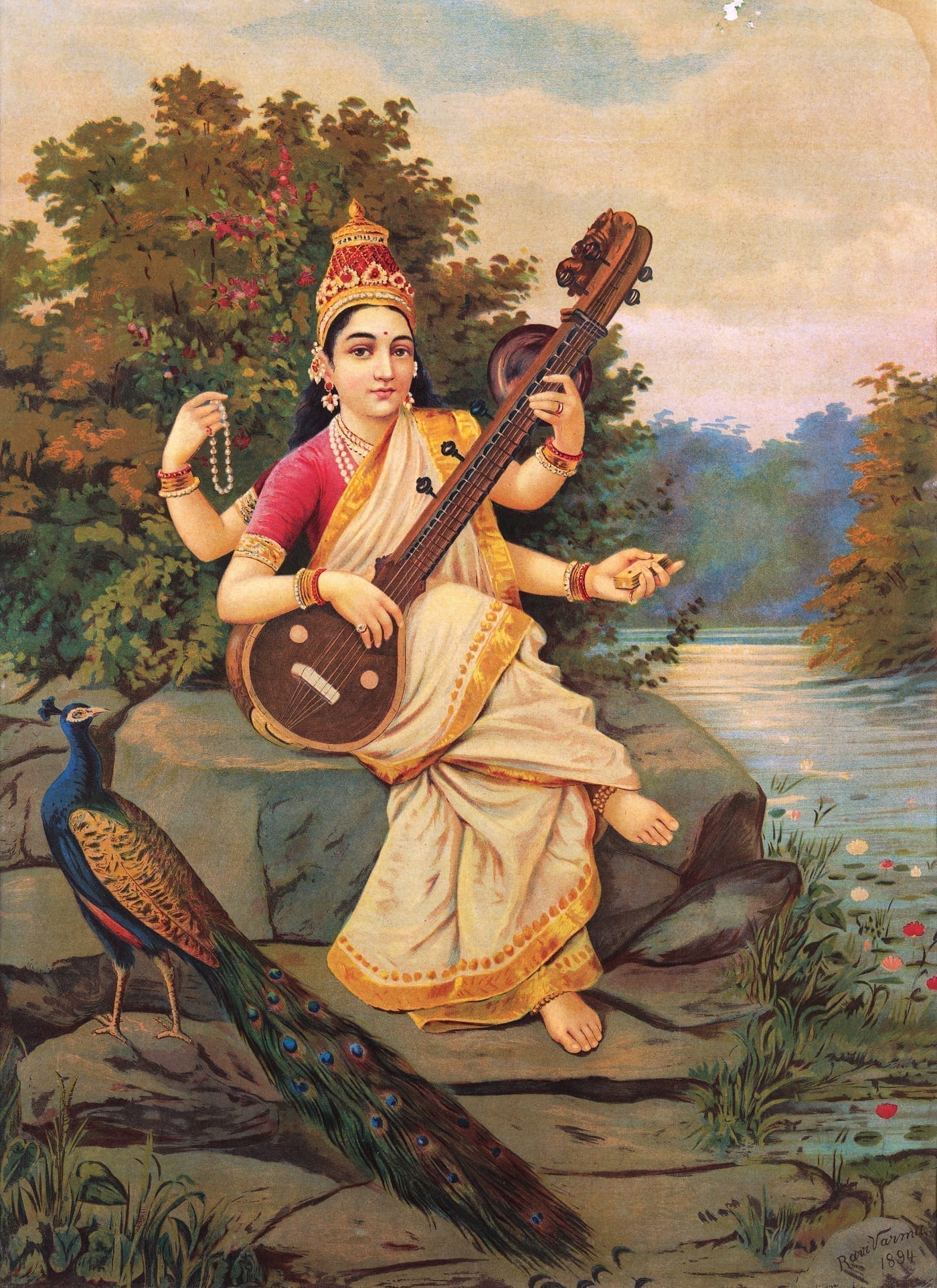
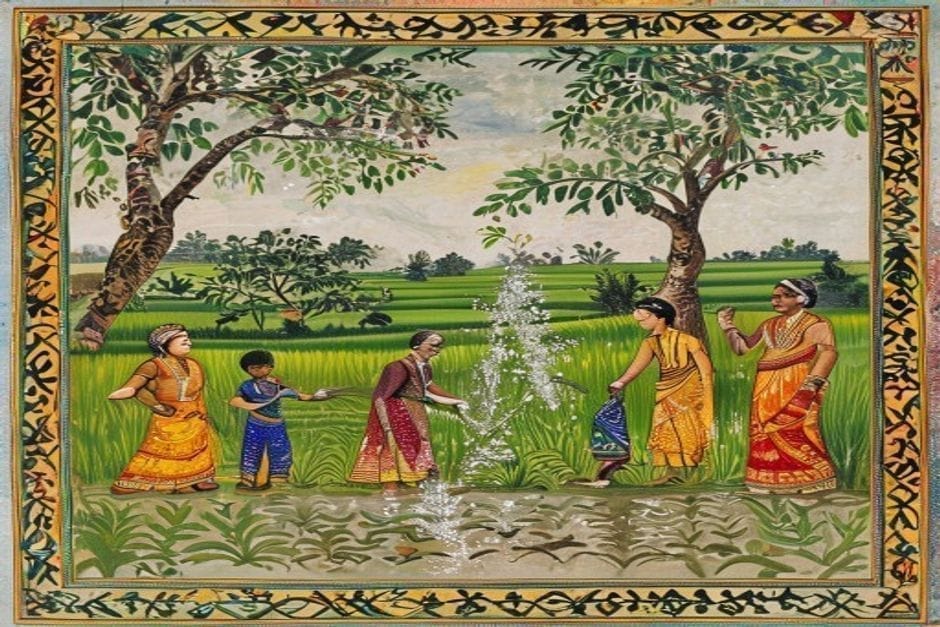
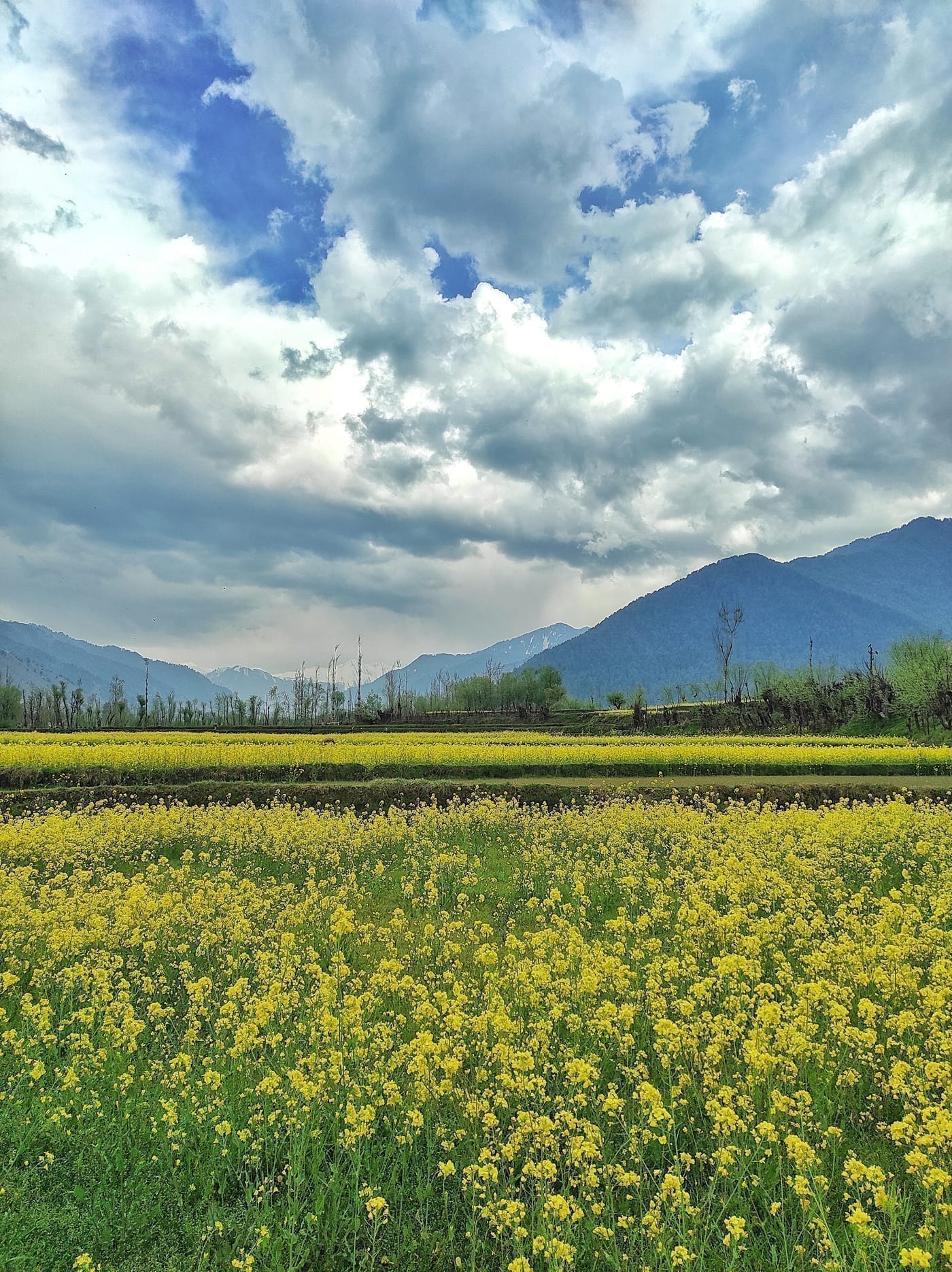
Saraswati Puja falls on Magha Shukla Panchami (late Jan–Feb), the day Vasant (spring) is held to begin. People bathe early, wear yellow (basanti) — the goddess’s colour and that of the blooming mustard — and eat yellow food, while in the fields the rabi crop ripens and farmers resume the plough.
It is a famous abujh muhurat — a self-auspicious day on which weddings, housewarmings, new ventures and, above all, the start of learning may begin without seeking any further muhurta.
विधि · The rite, step by step
- The day is kept on Magha Shukla Panchami as the formal opening of spring.
- People bathe early, dress in yellow/basanti and eat yellow foods.
- Yellow flowers (mustard, marigold) and sweets are gathered for the worship.
- Being an abujh muhurat, families also begin new ventures and auspicious work.
Across communities The yellow-and-mustard spring framing is pan-North-Indian; Mithila stresses the goddess and the farming turn rather than the kites of Punjab/Haryana (kite-flying is not a Maithil custom). On the Nepal-Madhesh side it is Shree Panchami.
What is used
Yellow/basanti clothesmustard & marigold flowersyellow sweets (boondi)the ripening rabi & mustard fields
Meaning
Spring beginsthe colour yellowthe abujh (self-auspicious) muhurat