Stage 1 of 5 · Chhath night · Moulding
Moulding the clay birds
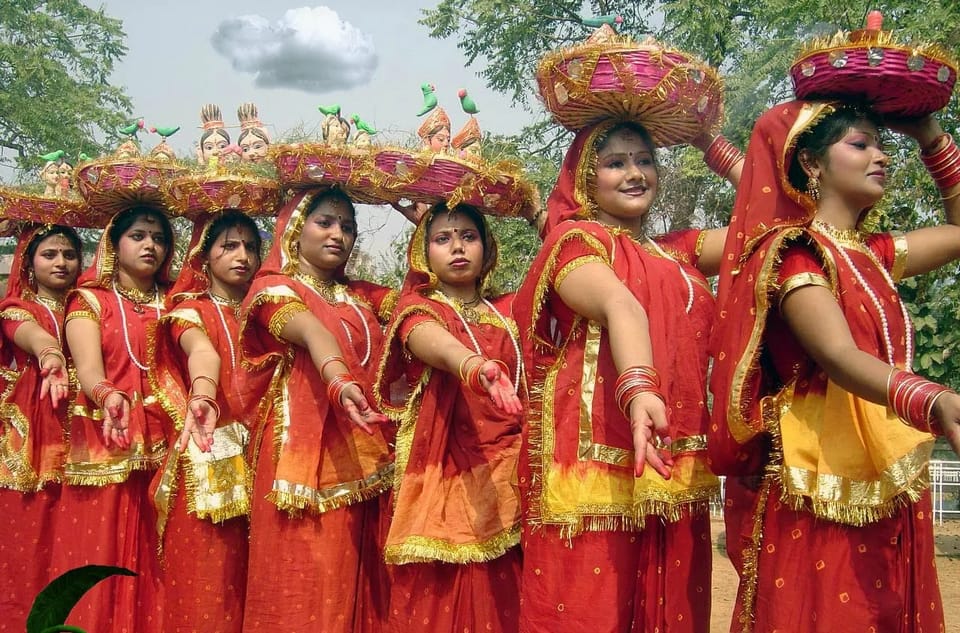
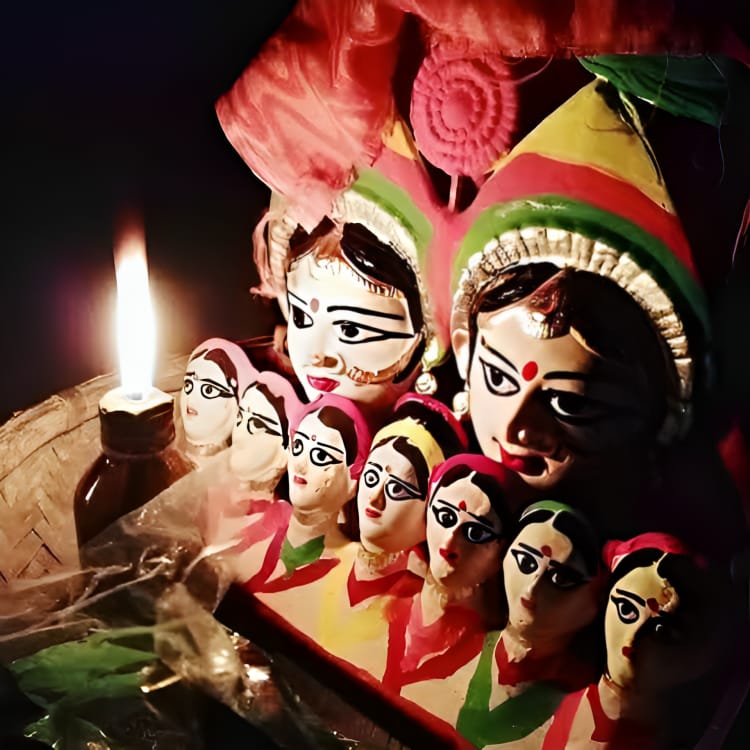
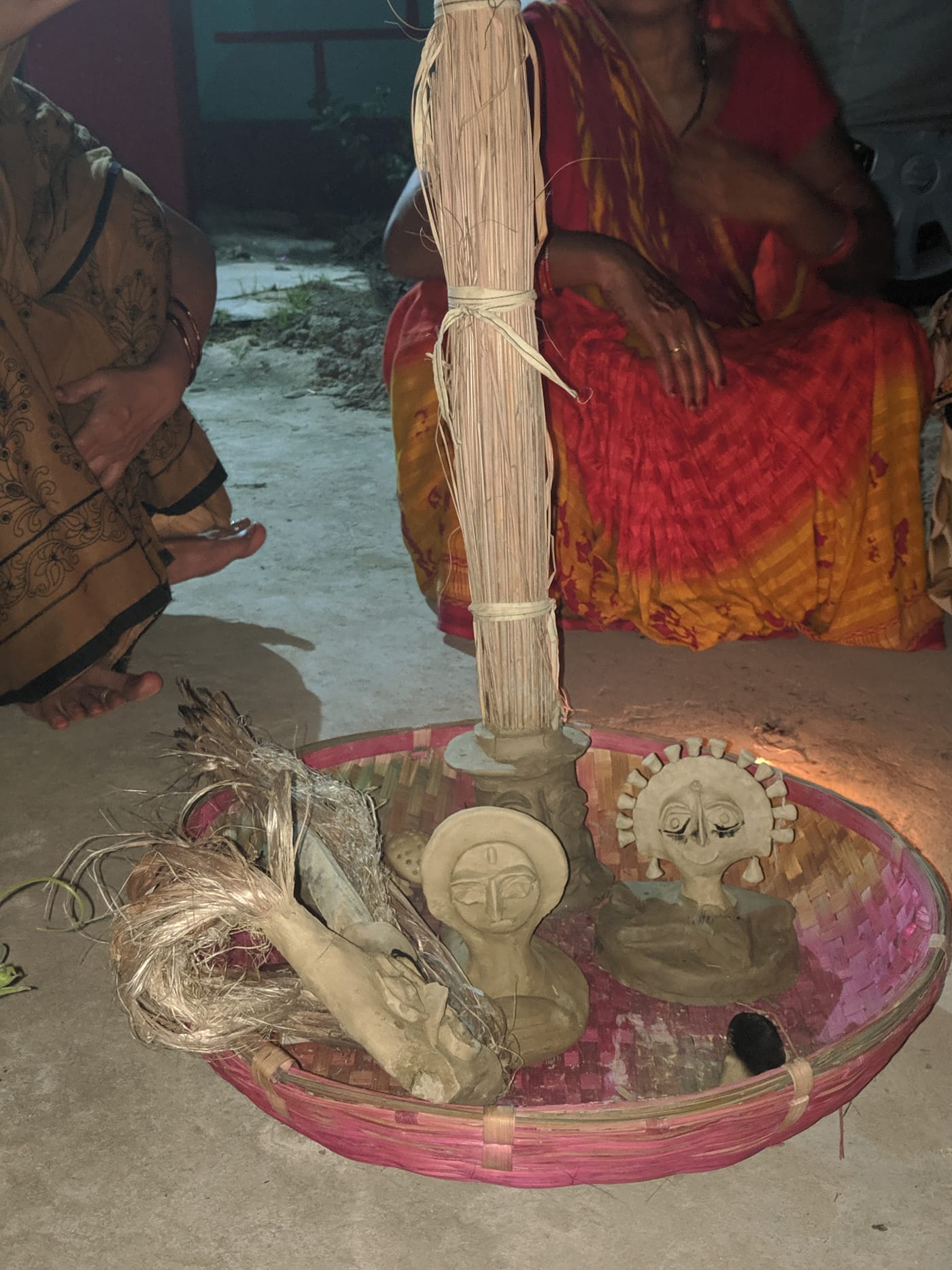
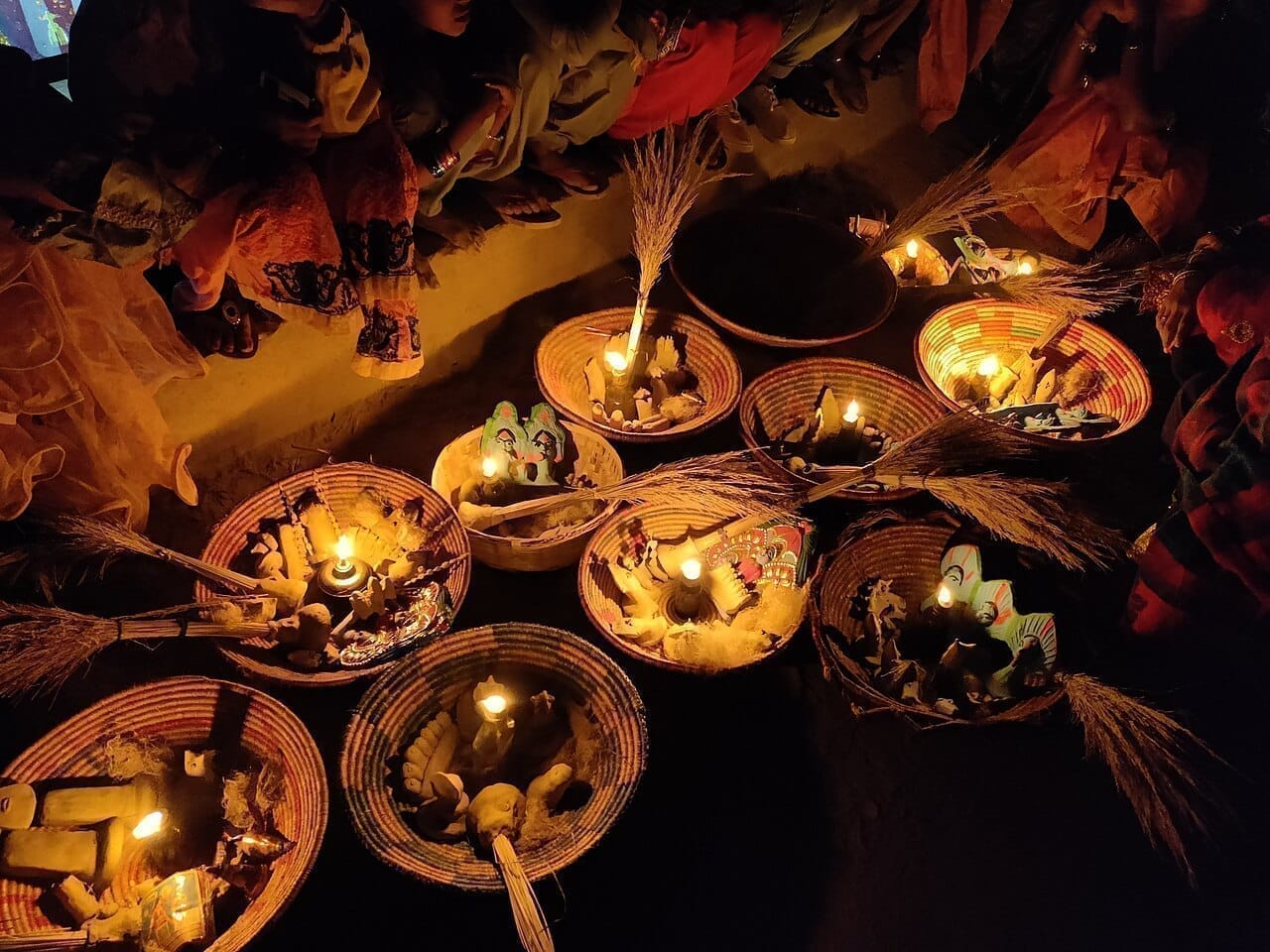
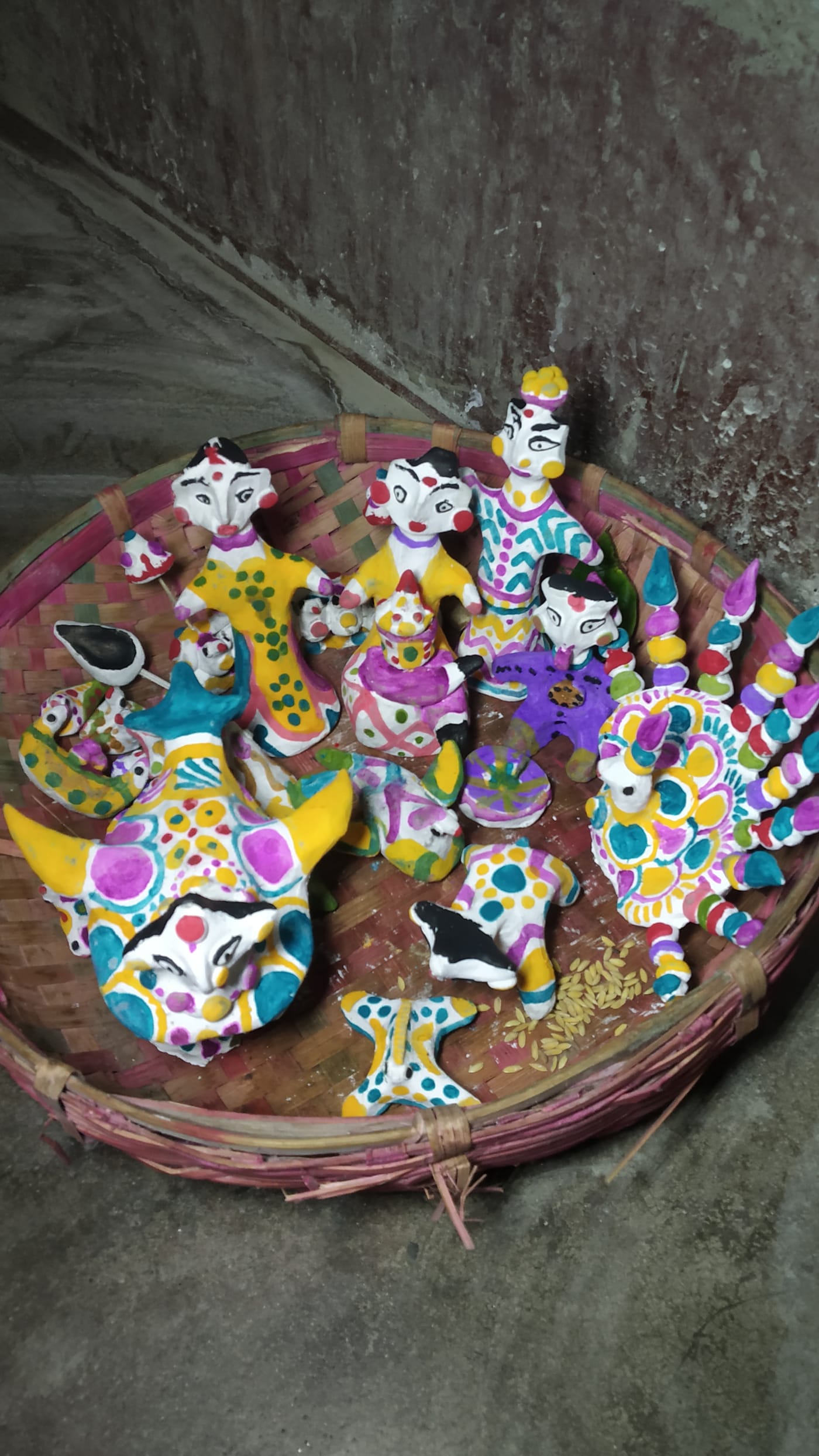
On the night of Chhath the sisters and girls begin shaping a whole cast in unbaked clay — Sama and her husband Chakeva, the slanderer Chugla (given a prominent moustache), the brother(s) Satabhaiya / Samb, a clay Vrindavan grove, musicians and a flock of painted birds. They are sun-dried but never fired — they must stay fragile enough to dissolve back into water at the end — then painted in the bright Mithila palette and laid in a flat bamboo basket, the changera.
The making is timed to a real event: the Kartik migration of Himalayan and Central-Asian birds onto the plains. The namesake is the ruddy shelduck — Chakwa-Chakwi, the “lover bird” that pairs for life, which the clay flock honours as it returns each winter.
विधि · The rite, step by step
- In the days around Chhath the girls gather river/pond clay (village Kumhar potters also supply figures).
- They hand-mould the cast — Sama, Chakeva, Chugla, the brother(s), the Vrindavan grove, musicians and a flock of birds.
- The figures are sun-dried unbaked, then painted in the bright Mithila palette with eyes, sindoor and plumage.
- They are arranged in a flat bamboo changera with a clay lamp, kajal and tiny utensils for the nightly rite.
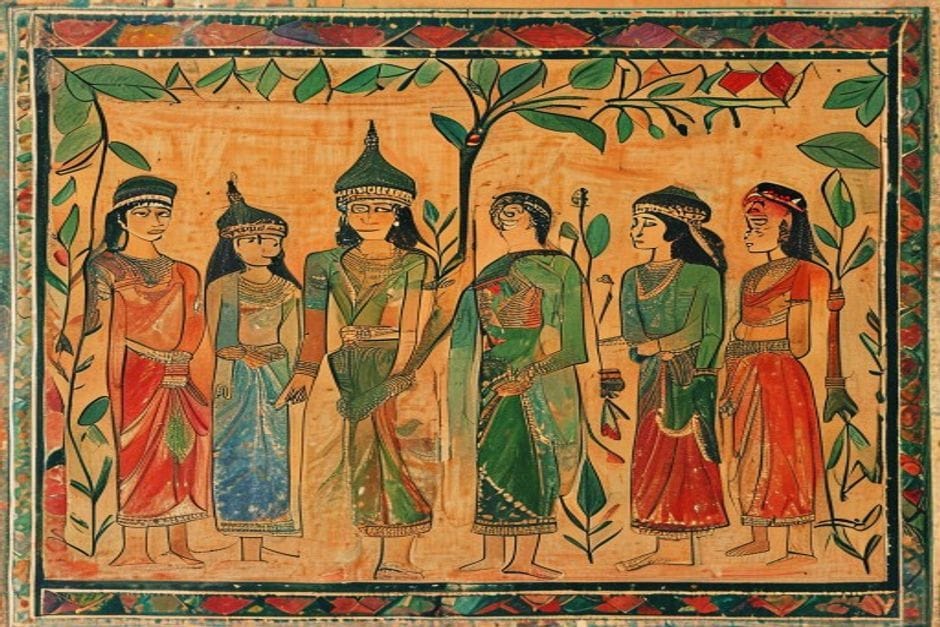
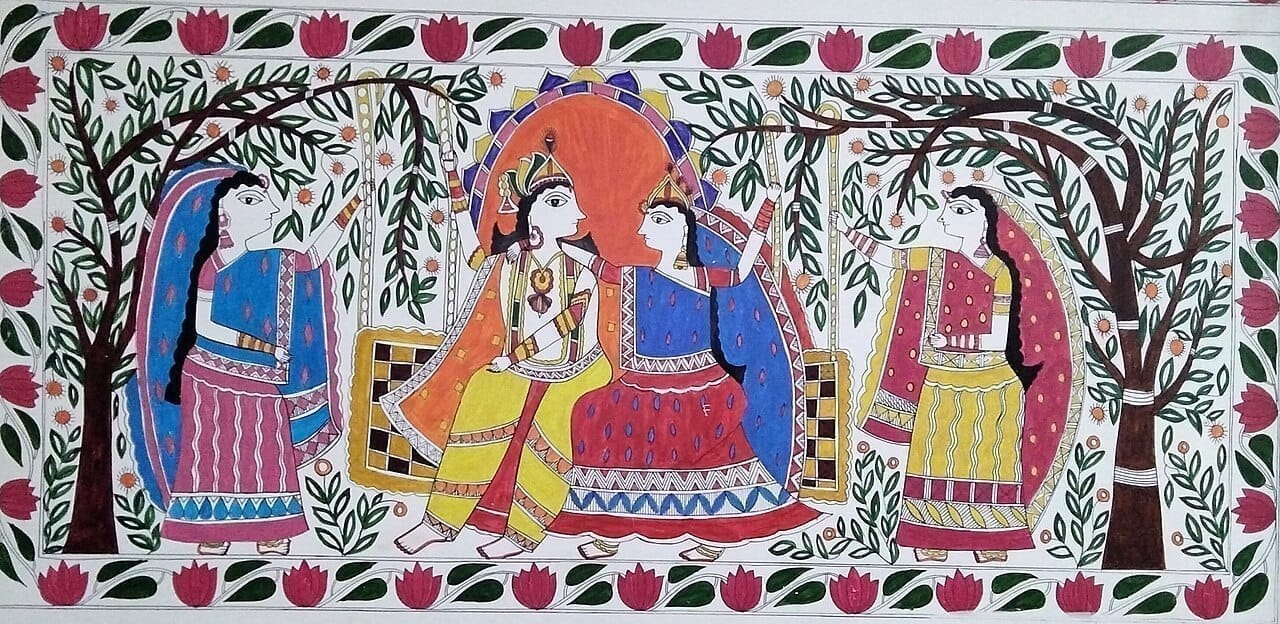
Across communities In Bihar (Madhubani/Darbhanga) the figures follow the Madhubani aesthetic in the changera; in Nepal-Madhesh the same cast also appears as wall murals (Khola) and floor art (aripan). Figure-name spellings shift (Chakeva/Chakeba; Chugla/Chugila; Satbhaiya/Satabhaiya).
What is used
River/pond claythe Mithila paint palettethe flat bamboo changeraa clay lamp & kajal (kohl)sindoorthe clay Vrindavan grovethe bird-flock (Chakwa-Chakwi, partridge, swan, wagtail)
Meaning
Unbaked clay, made to dissolvethe painted bird-flockthe Kartik migrationChakwa-Chakwi, paired for life