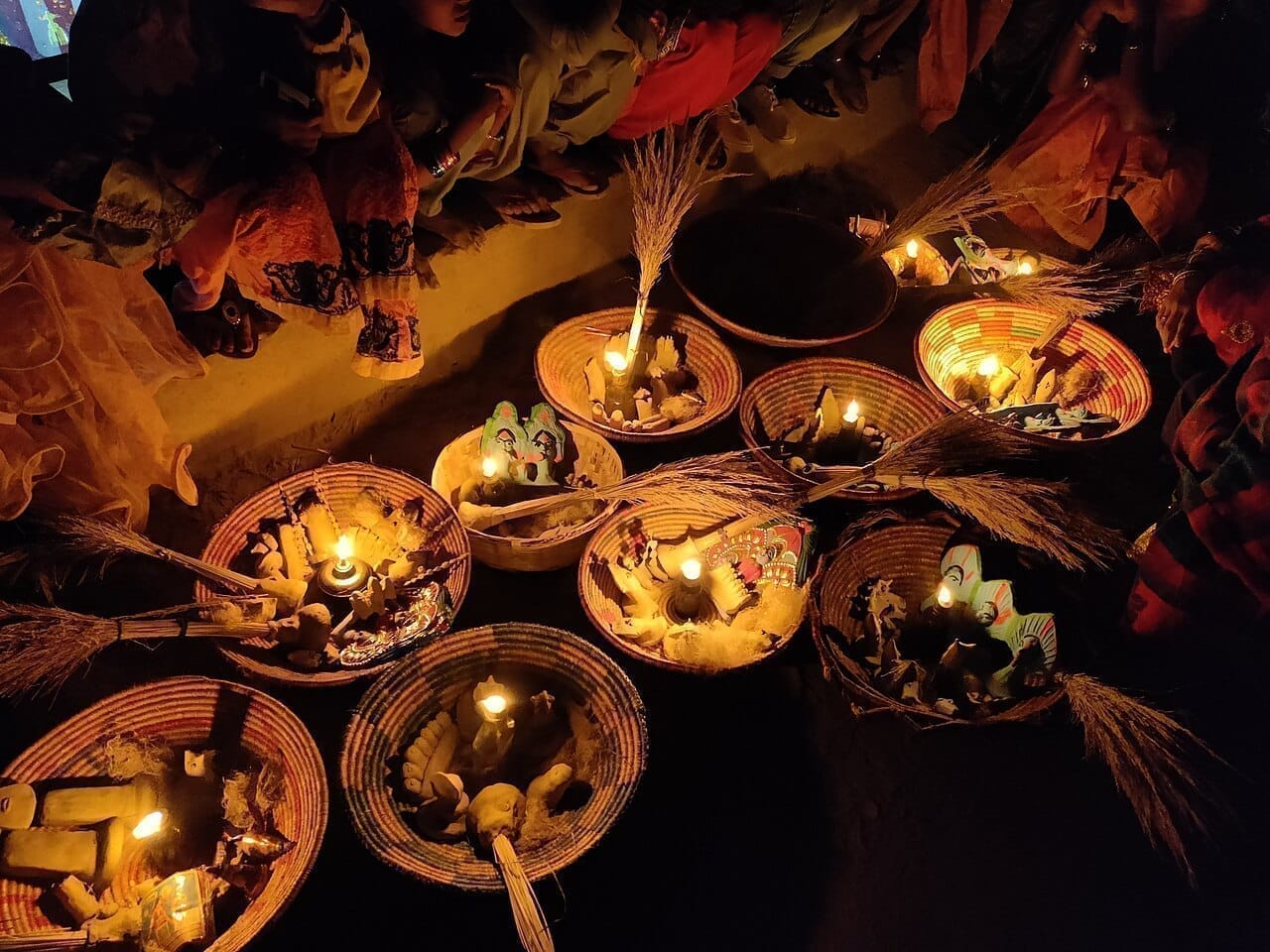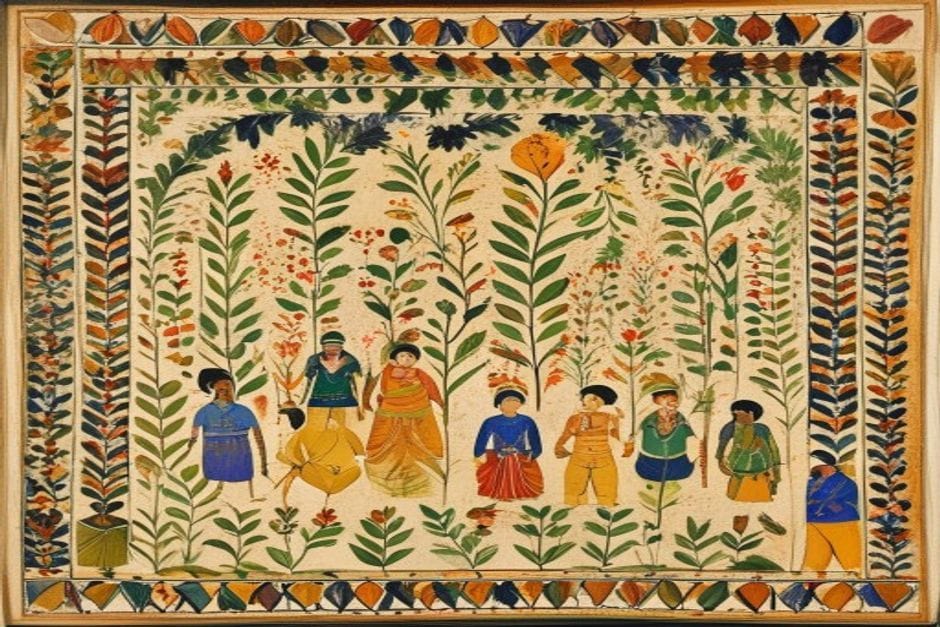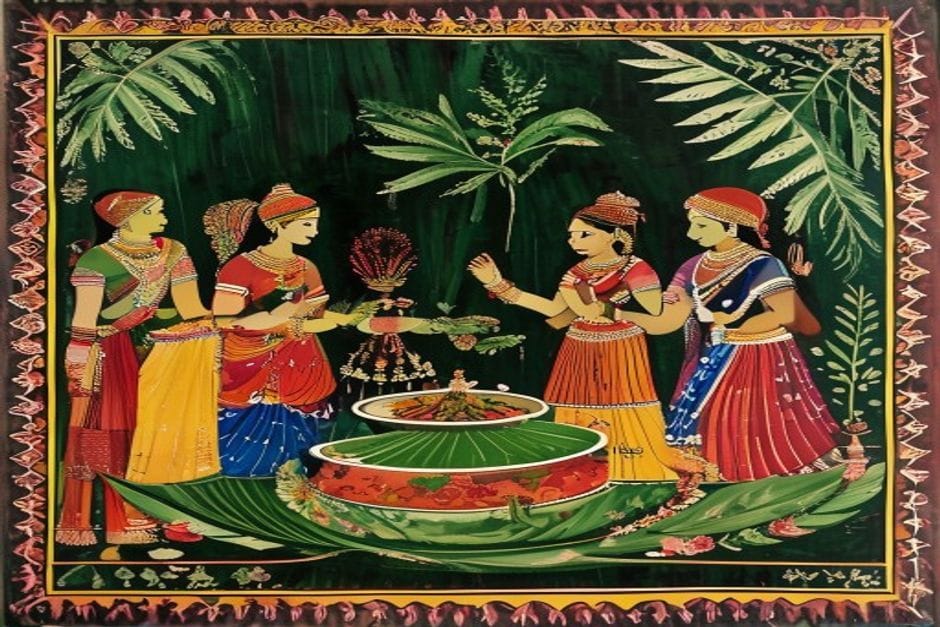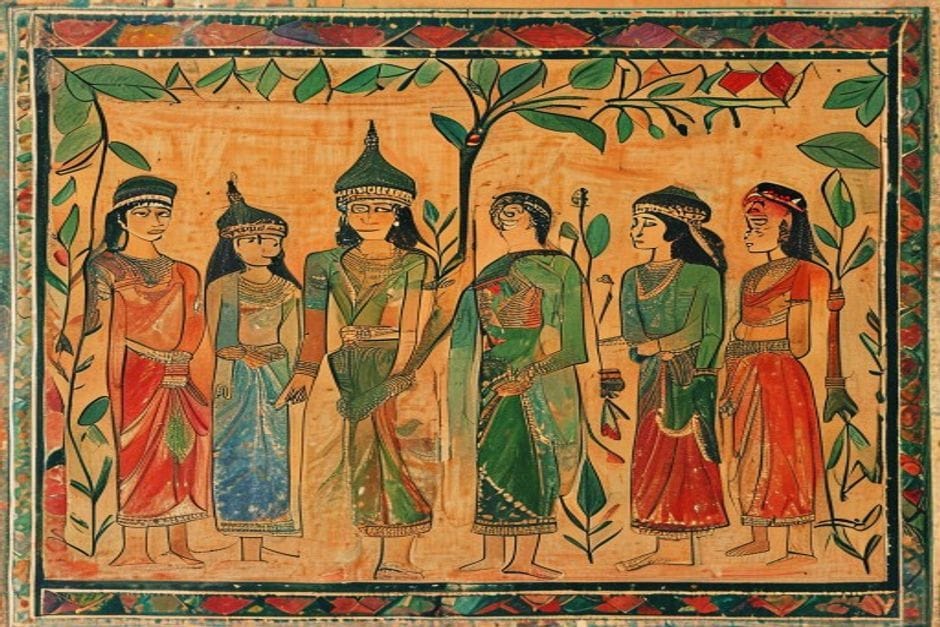
Sama-Chakeva is the one Maithil festival built entirely around a craft of figurative clay-modelling. Over the days from Chhath to Kartik Purnima (around November), women and girls hand-mould unfired clay into a cast of characters from the legend of Sama and her brother Chakeva — Sama and Chakeva themselves, the slanderer Chugla, Vrindavan (the grove set alight in the rite), the seven brothers (satabhaiyya), a drummer and cymbalist, and a flock of birds modelled on the real migratory species that arrive on the plains at that season. The figures are painted in bright colours and arranged in coiled bamboo baskets.
The making is the festival. Each evening the girls carry the dolls out to courtyards and fields, singing Maithili songs, ritually “burning” the slanderer Chugla’s mouth with a small flame, and on the final day immersing the figures in a river or empty field — a tender re-enactment of sending a married daughter to her in-laws’, and a prayer for the brother’s long life. The custom is shared across Mithila in north Bihar and the Madhesh plains of Nepal, and is also kept by Tharu communities.
Because the idols are deliberately ephemeral and remade every year, the craft survives as a household women’s tradition rather than a commercial pottery; its survival now tracks the survival of the festival itself, which urban and migration pressures have thinned even as revival efforts work to keep it alive.