Stage 1 of 4 · The dip & Uttarayan
The holy dip & the sun’s turn
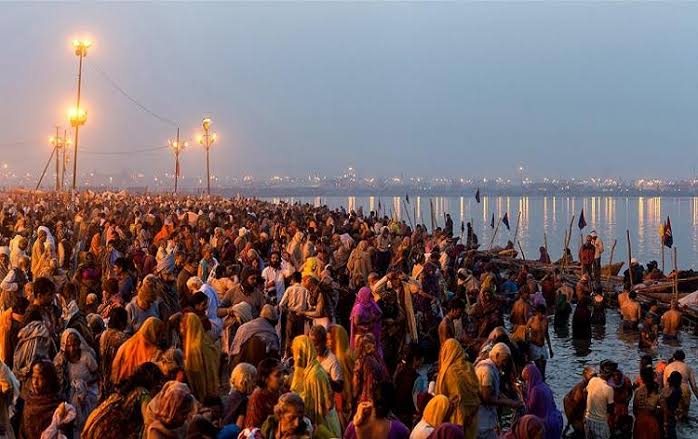
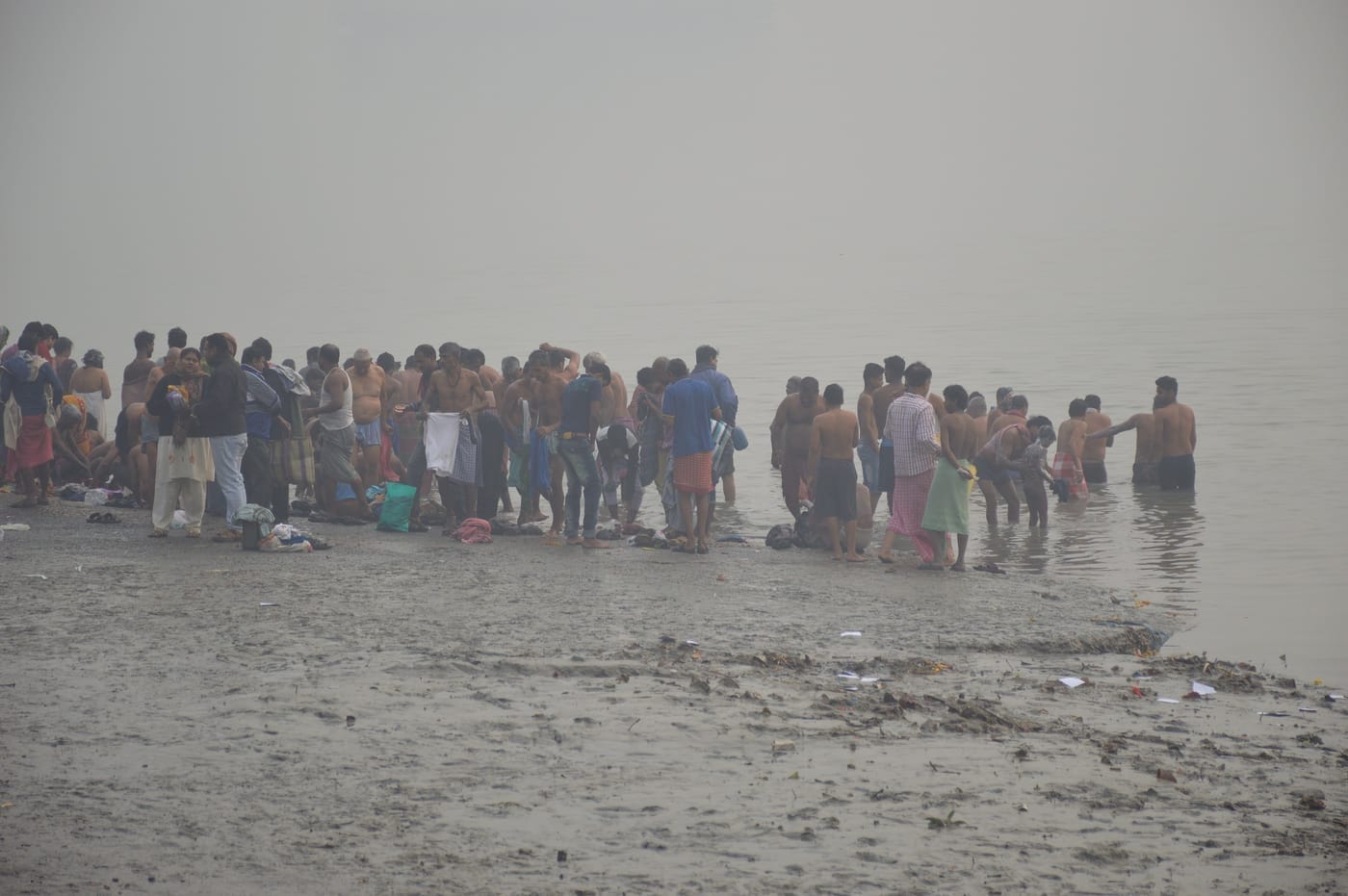
On the night before, families light a ghura — a small bonfire of dung-cakes and wood — to warm themselves against the biting Magh cold. Before dawn the household bathes, in the Ganga, Kosi, Kamla or a pond (children with warmed water at home), often adding til (sesame) to the water as a purifier, then faces east to offer arghya to the rising sun.
Makar Sankranti is the rare festival fixed by the solar calendar: the sun leaves Sagittarius for Makar (Capricorn) and begins Uttarayan, its northward course — which is why it falls on ~14 January every year and not by the moon. With it the inauspicious Kharmas ends and the auspicious season reopens.
विधि · The rite, step by step
- On the eve, a ghura (dung-cake and wood bonfire) is lit to warm the family after bathing.
- Before dawn the household bathes in a river or pond — or at home with warmed water — often adding til to the water.
- Facing east, they offer arghya (water) to the rising sun; an aripan is drawn to sanctify the space.
- The day is kept as the sun entering Capricorn and the start of Uttarayan, ending Kharmas.
मन्त्र · mantraॐ सूर्याय नमः।
oṃ sūryāya namaḥ
“Salutations to the Sun.” The simple Surya salutation used at the dawn bath and arghya — a general Hindu sun-mantra rather than a distinct Maithil rite (some recite the Surya Gayatri instead).
Across communities In greater Bihar/UP it is the “Khichdi” parv with Ganga dips at Simaria and Sonepur; on the Nepal-Madhesh side it is Maghi / Tila Sankranti (and the Tharu New Year). Pan-India it parallels Pongal, Lohri, Magh Bihu and the Ganga Sagar snan.
What is used
River/pond watertil in the bathwaterthe ghura bonfirea brass lota for arghyanew clothesaripan
Meaning
The solar new turnUttarayan beginsKharmas endsthe purifying dip & sun-arghya