Stage 1 of 4 · The Indra-dhwaj
The Indra-dhwaj banner
Indra’s great classical rite is the Indradhvaja Mahotsava — the raising of a tall banner-pole for the king of the gods. In the textual form (the Brihat Samhita) an astronomer chooses an auspicious tree, a carpenter fells it at dawn (an unbroken fall foretelling victory), the trunk is carried into the city and raised as Indra’s banner on Bhadrapada’s twelfth, kept four days, then taken down.
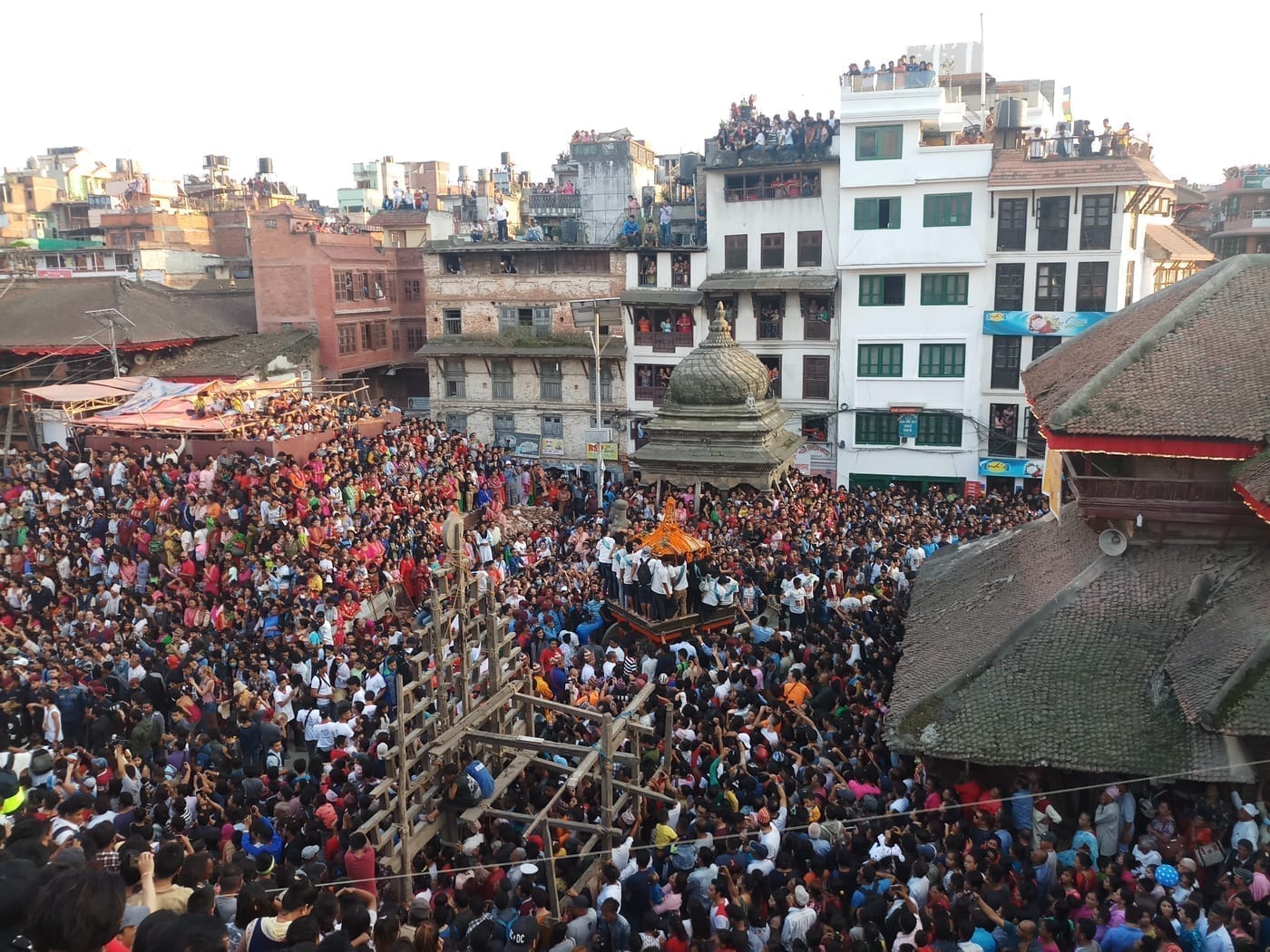
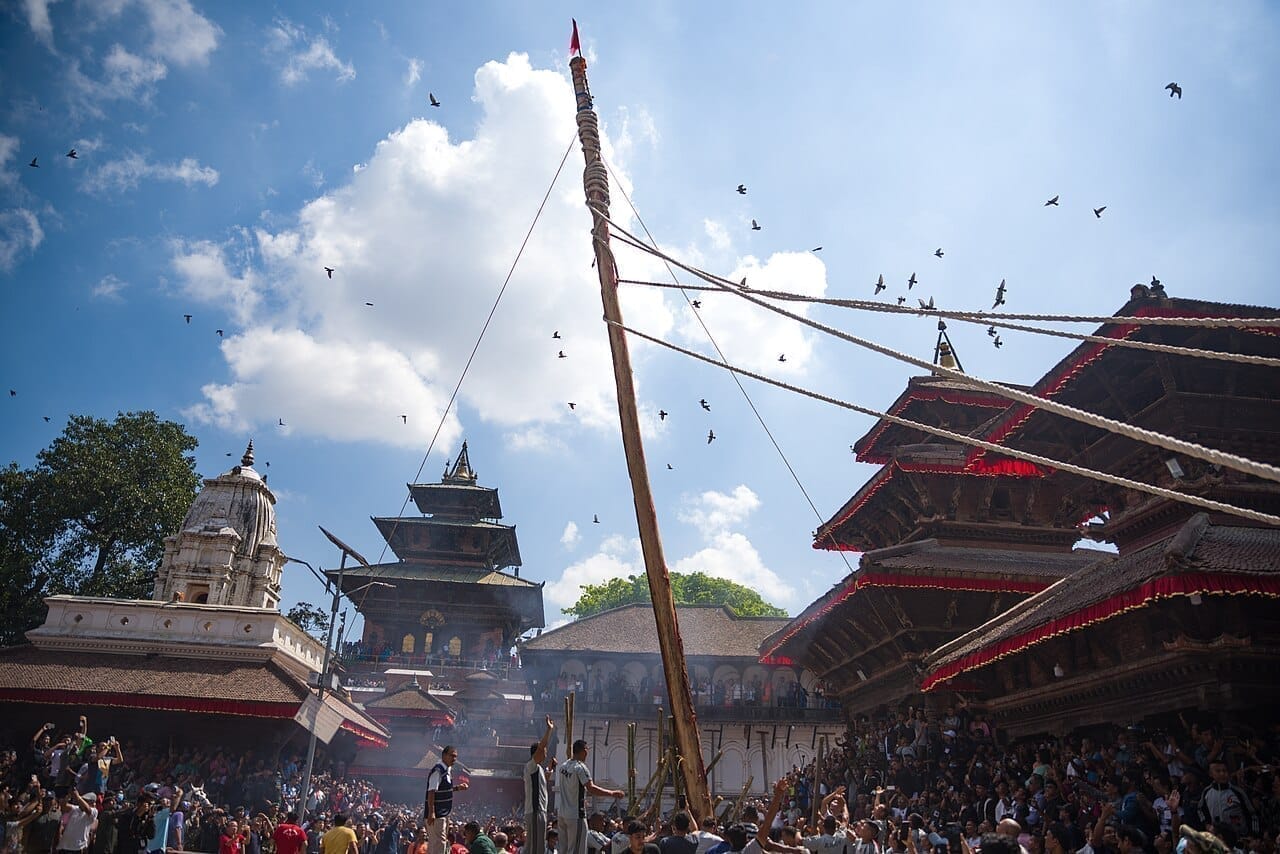
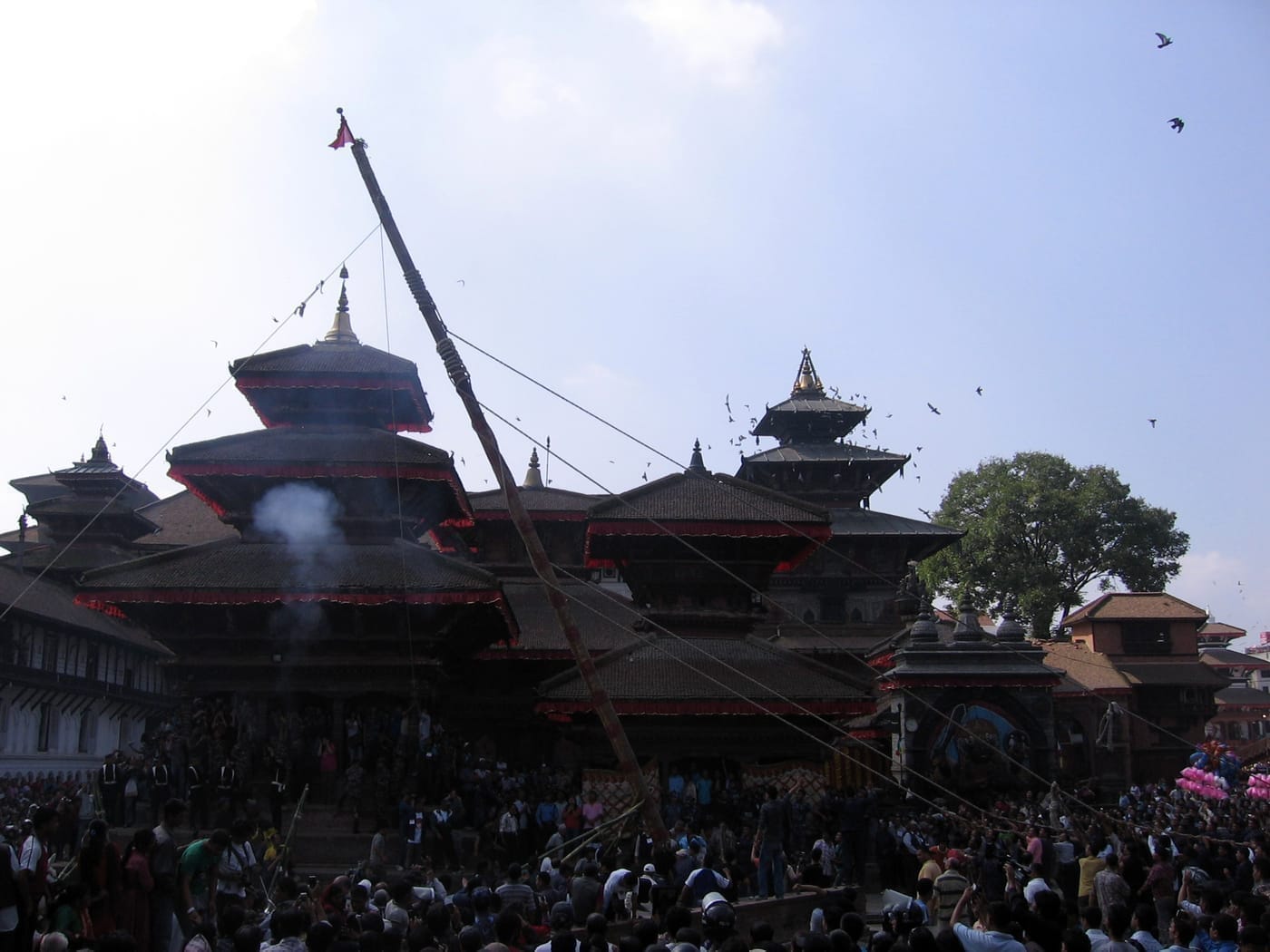
Its living echo is Nepal’s Indra Jatra, where the Yosin (lingo) pole with Indra’s banner is erected at Kathmandu Durbar Square to open the festival. In Mithila’s villages only the faintest trace survives — at most a bamboo or jhanda — and no standardised Maithil pole-rite is well documented.
विधि · The rite, step by step
- An astronomer selects an auspicious tree; a carpenter fells it at dawn, an unbroken fall foretelling victory.
- The trunk is carried into town in procession and dressed as Indra’s banner.
- The banner is raised on Bhadrapada Shukla Dwadashi, maintained four days, then taken down.
- In Nepal’s Indra Jatra the Yosin pole and Indra-banner are still raised at Kathmandu Durbar Square.
Across communities Securely attested only in the classical texts (Mahabharata, Brihat Samhita) and in Nepal’s Indra Jatra; a standardised Mithila village pole-rite is essentially undocumented.
What is used
The tall banner-pole (Yosin/lingo)Indra’s flagumbrellas, mirrors & garlandsthe directional-guardian images
Meaning
Indra’s victory bannerthe felled-tree omenthe Yosin polerain & royal prosperity