Stage 1 of 5 · Cremation
Cremation at the ghat
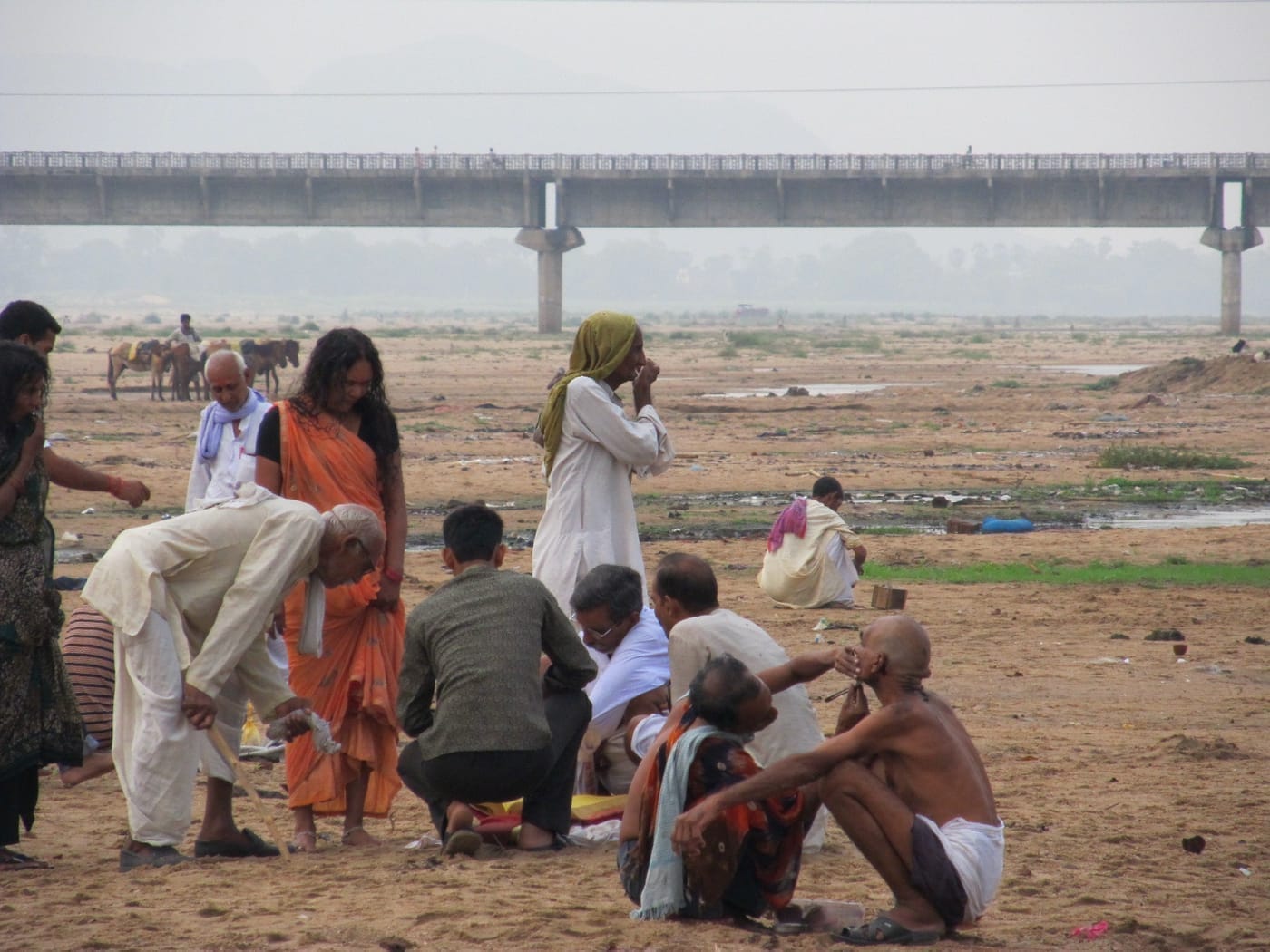
As death nears, the dying person is laid on the bare ground with a tulsi sprig and a lamp at the head, and a symbolic Vaitarini cow-gift (or its value) is made to help the soul cross the river of the dead. In Mithila the body is traditionally kept for saava-pahar — about three and three-quarter hours — before being carried out.
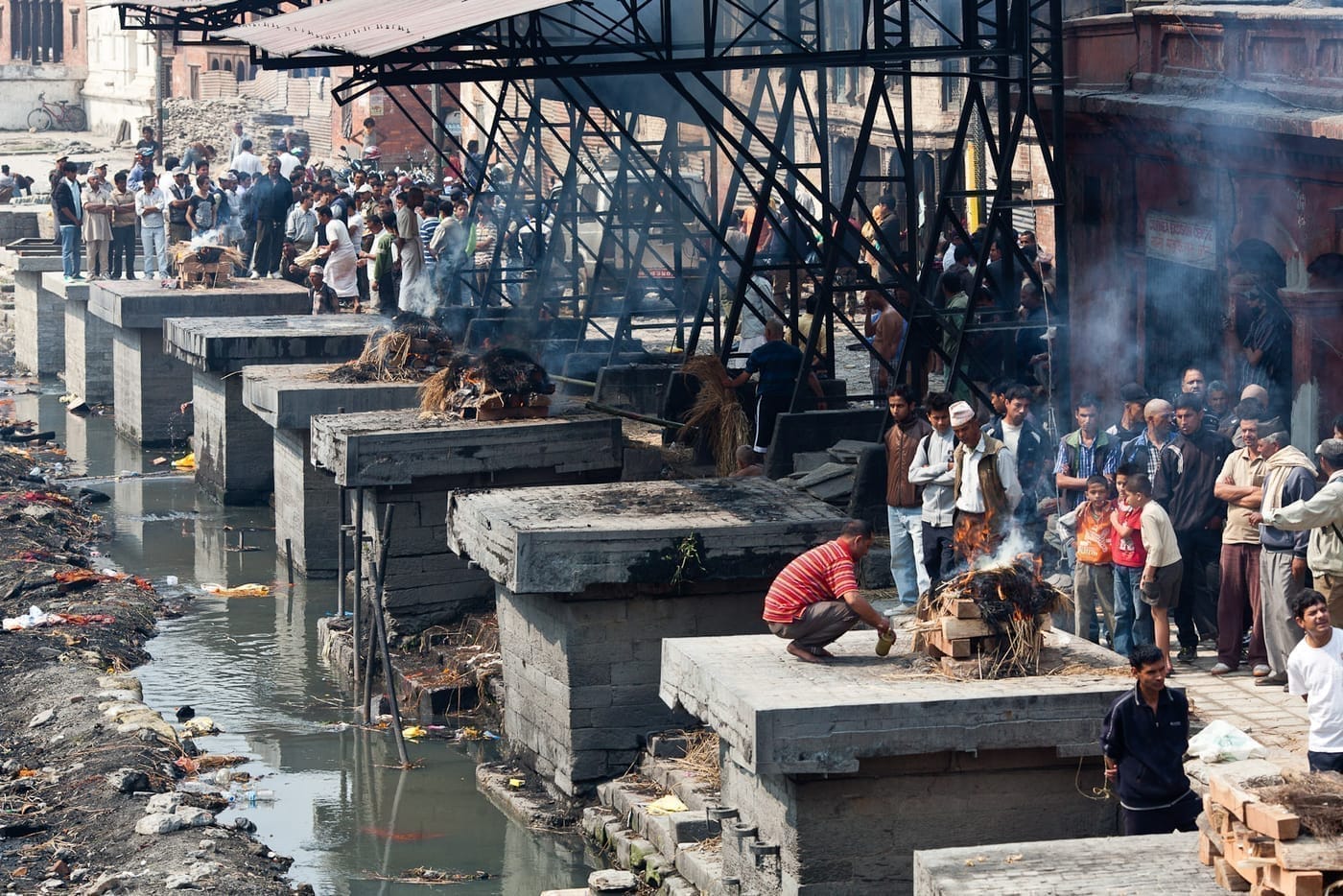
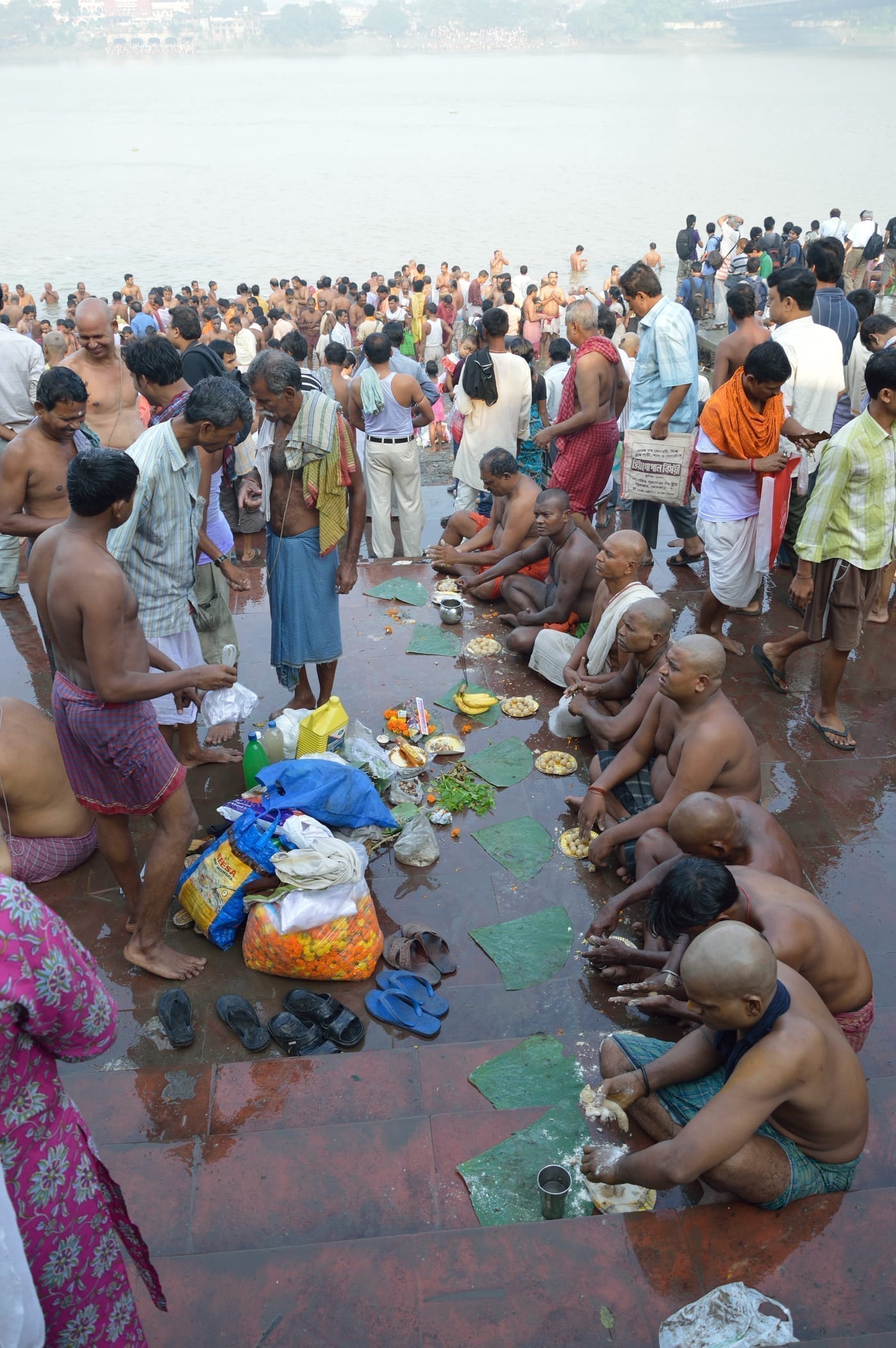
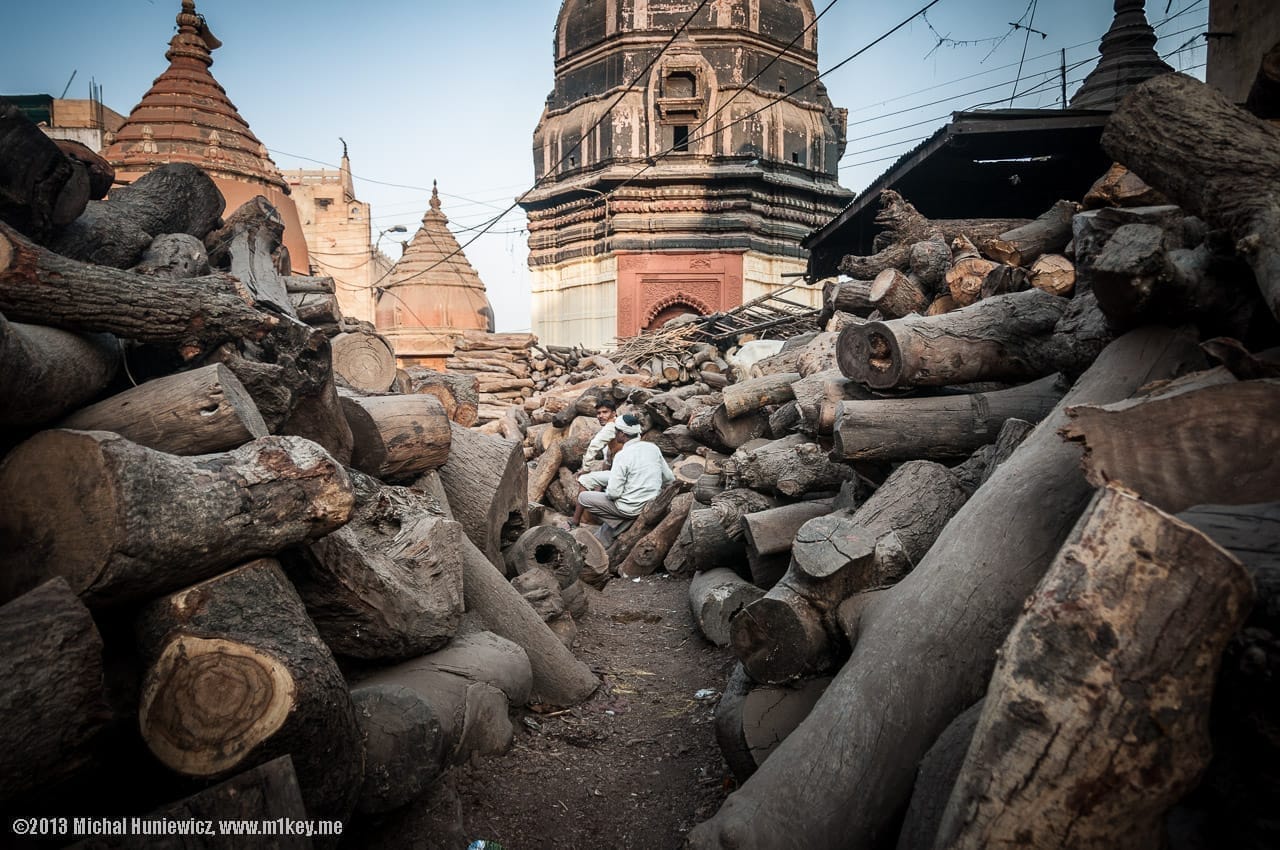
The body is bathed, anointed, wrapped in a new shroud — red for a woman whose husband survives, plain for a widow — and borne to the riverside ghat. There the karta (chief mourner, usually the eldest son) bathes, reverses his sacred thread, builds the pyre with the body laid head to the north, and lights it at the mouth — mukhagni — before the mourners depart without looking back.
विधि · The rite, step by step
- The dying person is laid on the ground, head to the north, with tulsi and a lamp; a Vaitarini cow (or its value) is gifted.
- The body is kept for saava-pahar (~3¾ hours), then bathed, anointed and wrapped in a new shroud.
- It is carried on a bamboo bier to the riverside ghat in procession.
- The karta bathes, dons fresh cloth and reverses his sacred thread (apasavya).
- He builds the pyre of straw and wood, circles it, casts mango-wood, and lights the fire at the mouth (mukhagni).
मन्त्र · mantraॐ मैनमग्ने वि दहो माभि शोचो मास्य त्वचं चिक्षिपो मा शरीरम्॥
oṃ mainam agne vi daho mābhi śoco · māsya tvacaṃ cikṣipo mā śarīram
“Burn him not entirely, O Agni, nor scorch him; do not tear apart his skin or his body.” — Rigveda 10.16.1, addressed to the fire as the pyre is lit.
Across communities Mithila famously follows its own ~800-year paddhati rather than the Garuda Purana — “dharma is determined by Mithila practice” — and notably offers no pre-cremation pindas. The karta is restrained from weeping until the closing rite. (Pyre orientation is described variously — head-to-north in Maithil texts, feet-to-south elsewhere.)
What is used
The bamboo bierthe new shroud (red for a sumangali)tulsi & lampthe Vaitarini cow-giftmango wood, sesame & ghee
Meaning
The bamboo biermukhagni by the sonthe Vaitarini crossingthe “last sacrifice”