Stage 1 of 6 · The chamber
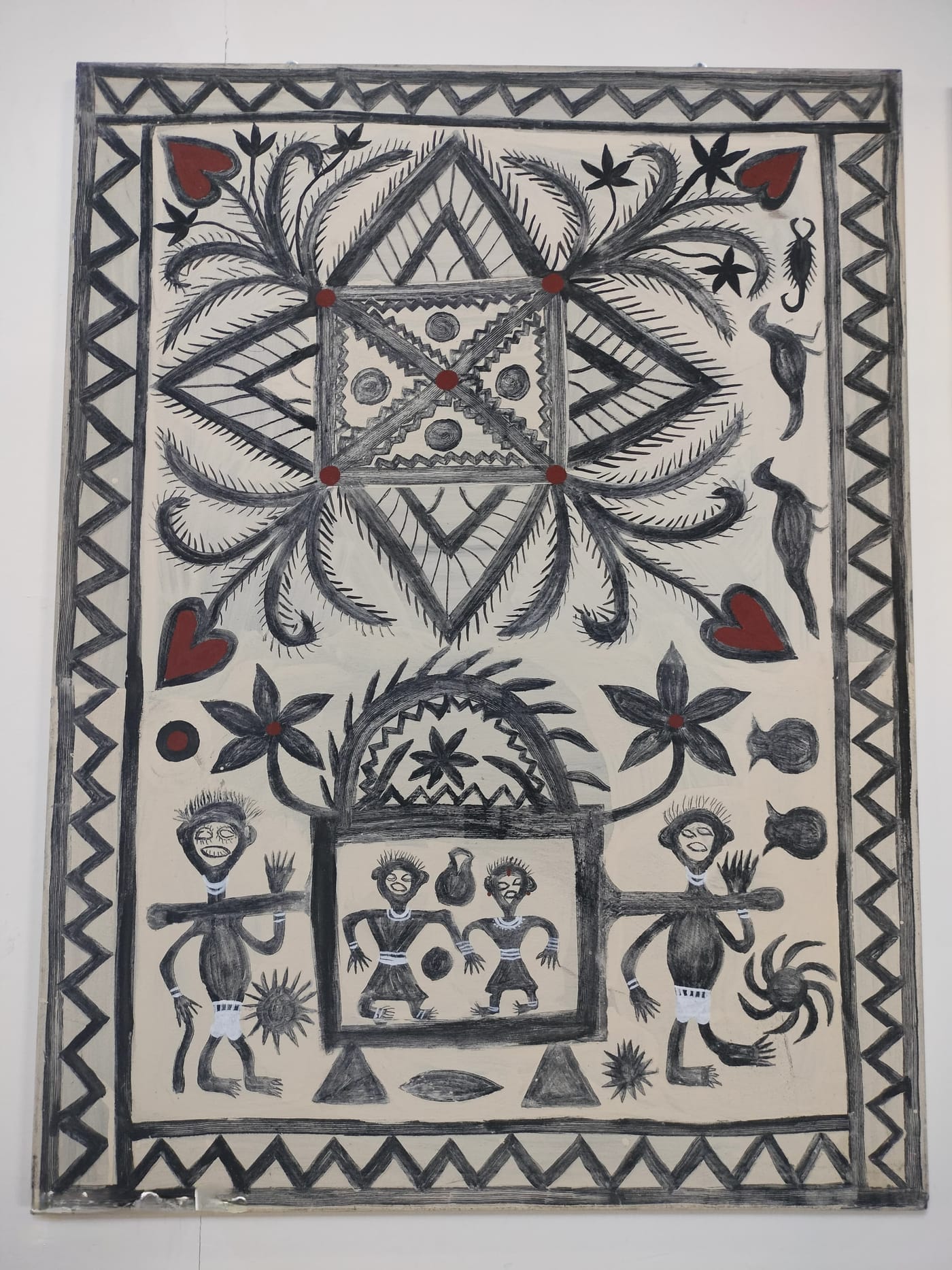
The Kohbar Ghar — the nuptial chamber
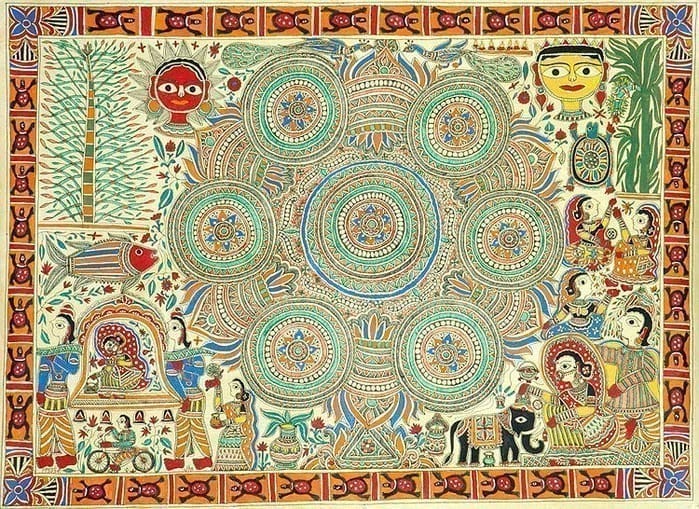
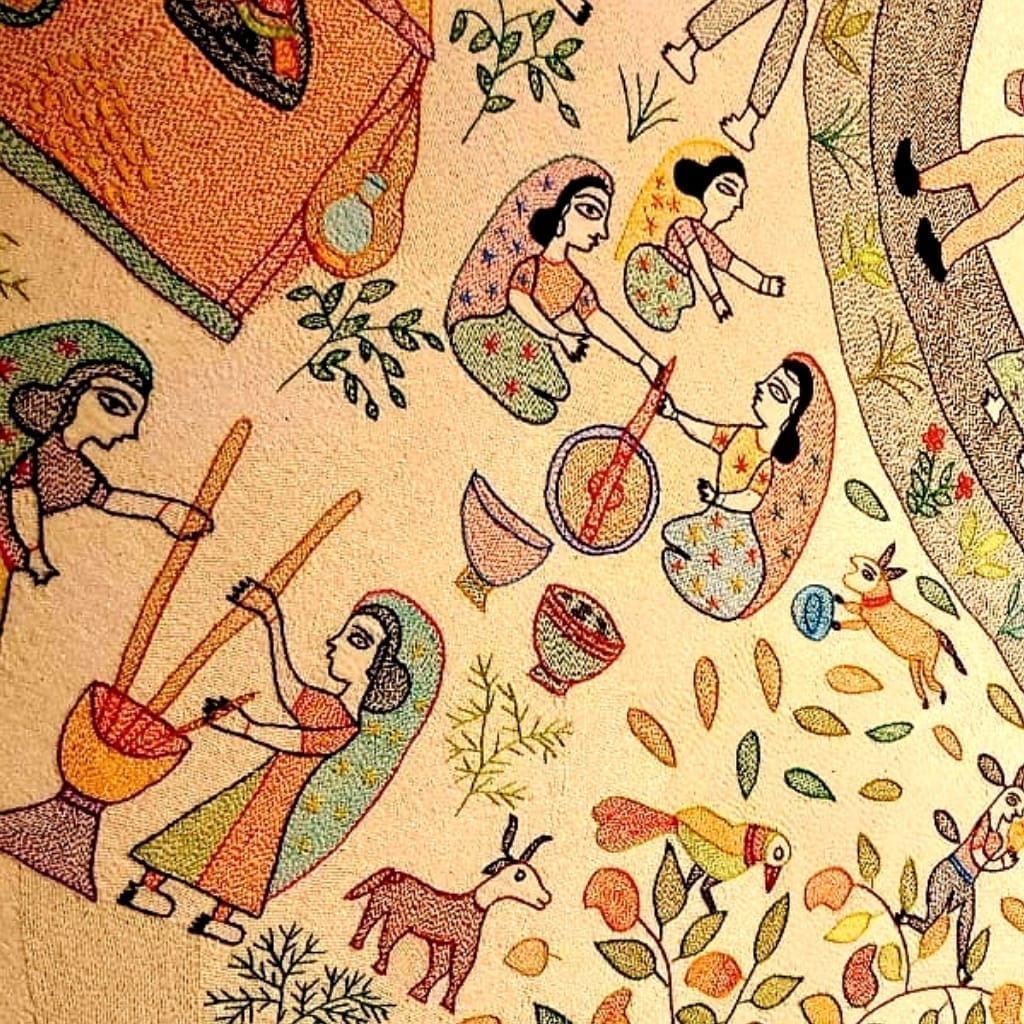
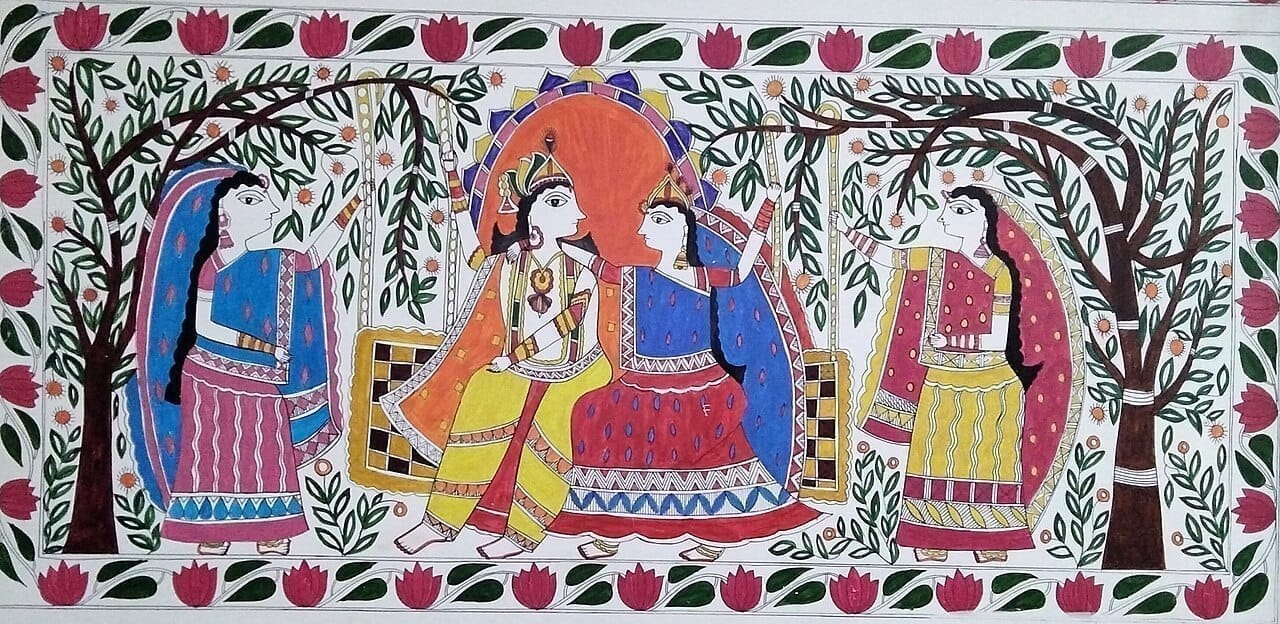
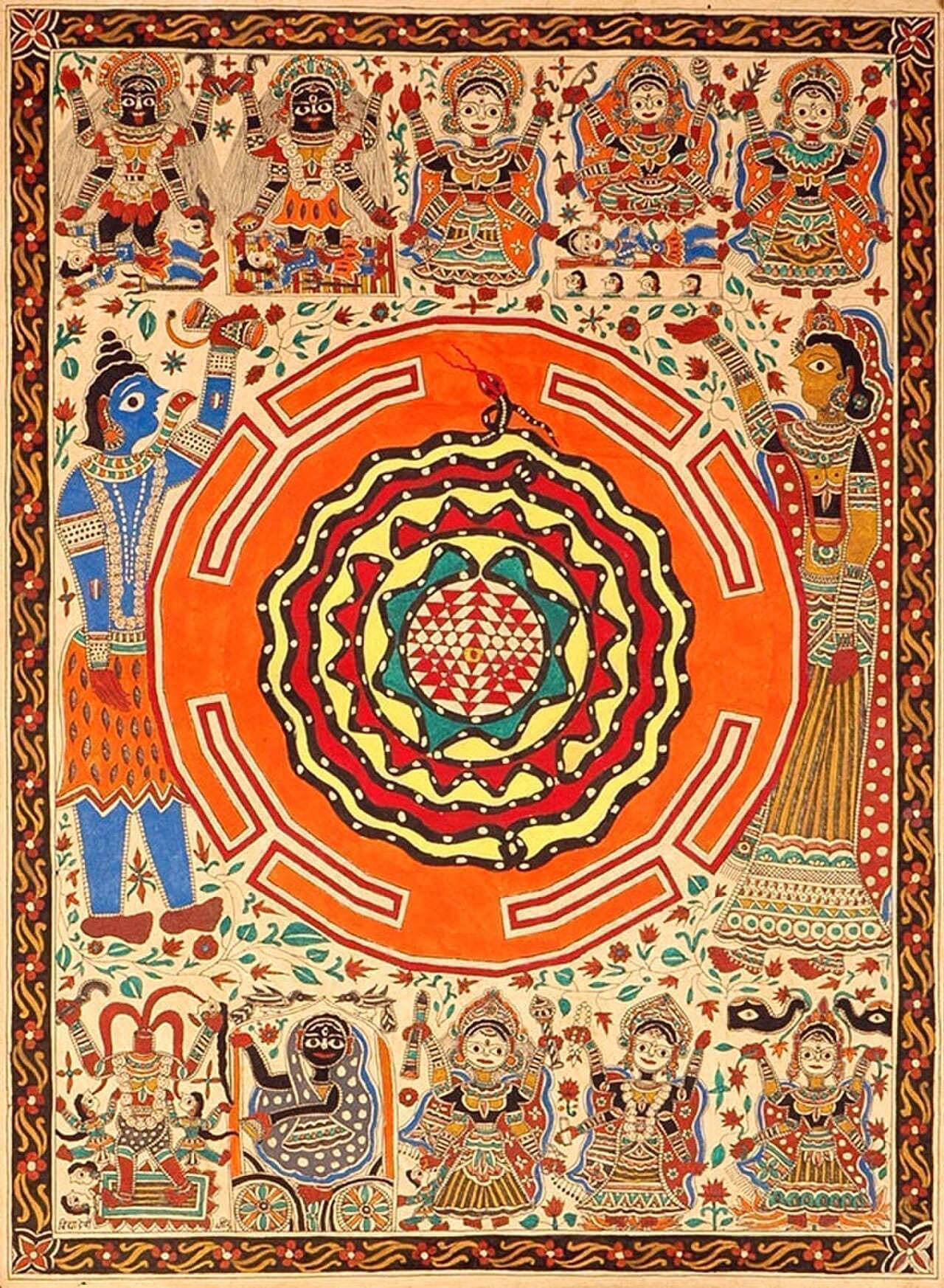
The Kohbar Ghar is the nuptial chamber in the bride’s house — traditionally the most vividly painted room, where the newly-wed couple spends the first four nights of the marriage. Its eastern wall is the sacred focal surface, prepared with rice-paste and consecrated with a red dot before the painting begins, and a pot bearing a four-wick Chaumukh lamp is set before it.
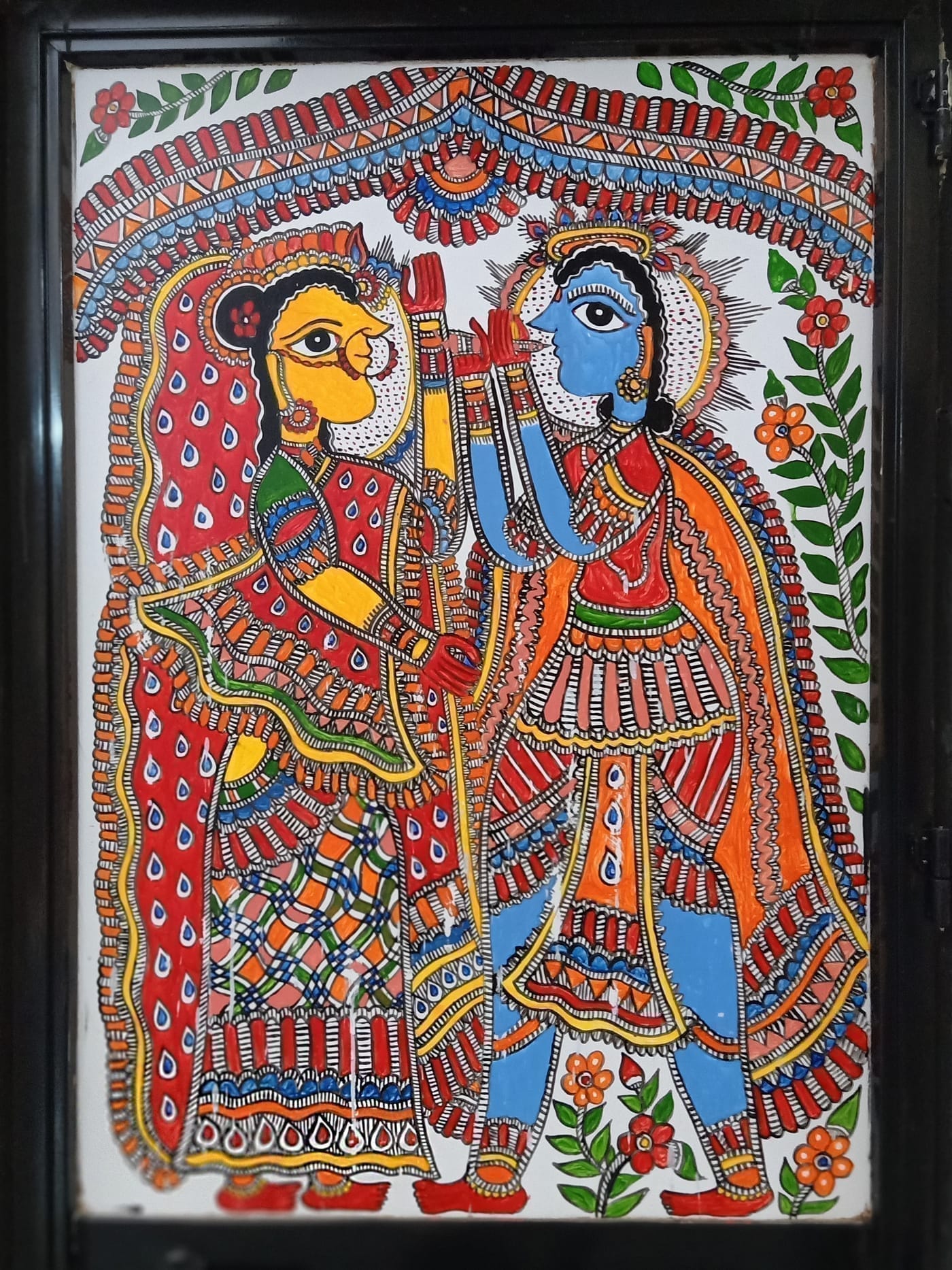
Across the four mornings the couple performs Gauri Puja at this wall. The groom first touches vermilion to the painting — for if any ill omen lurks in the horoscope, it is believed to end at that touch. This is why Maithils say their marriage is sealed not in the stars but on the chamber wall — “the rites begin and end in the Kohbar.”
Across communities A domestic space repainted afresh for each wedding, never meant to last. Today the Kohbar lives both as a wedding-room tradition (Bihar and the Nepal Terai) and as a portable painting — Ganga Devi even recreated a Kohbar at the National Crafts Museum, Delhi.
What is used
The nuptial chamberthe rice-paste-prepared east wallthe red consecrating dotthe Chaumukh four-wick lampthe Gauri-puja stationvermilion
Meaning
The painted nuptial chambersealed “on the wall, not the stars”the first four nightsGauri’s blessing