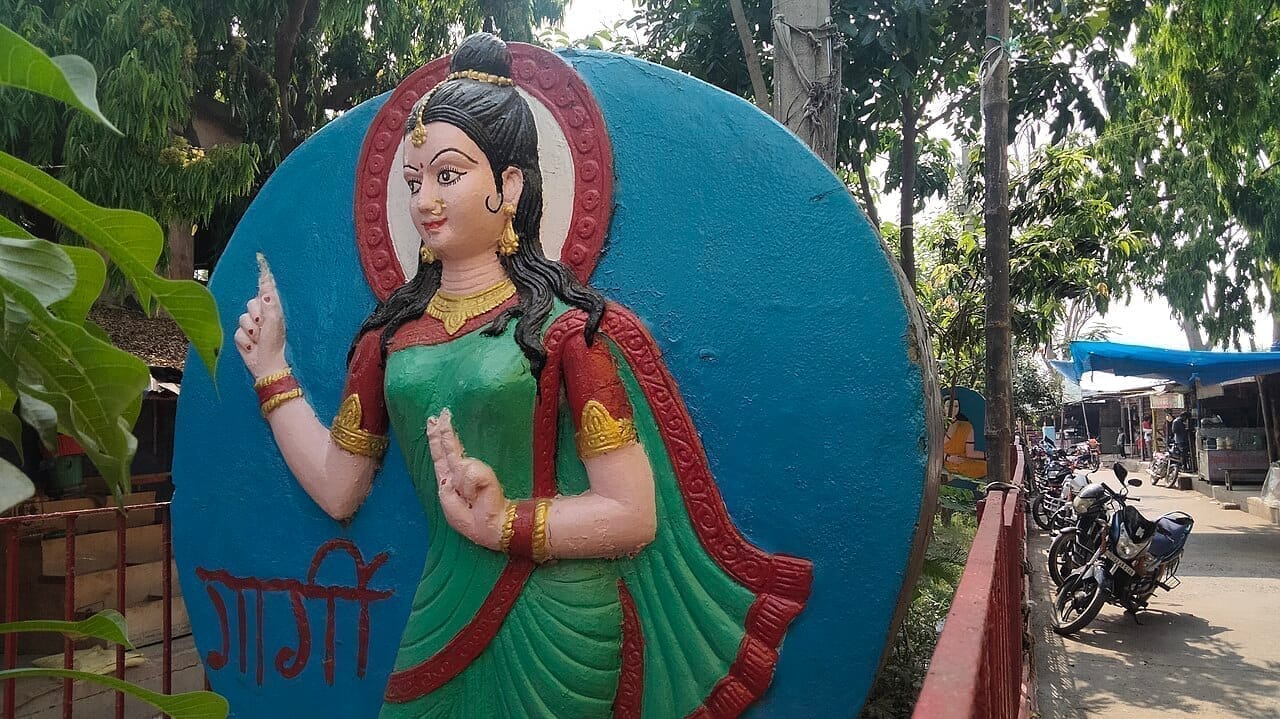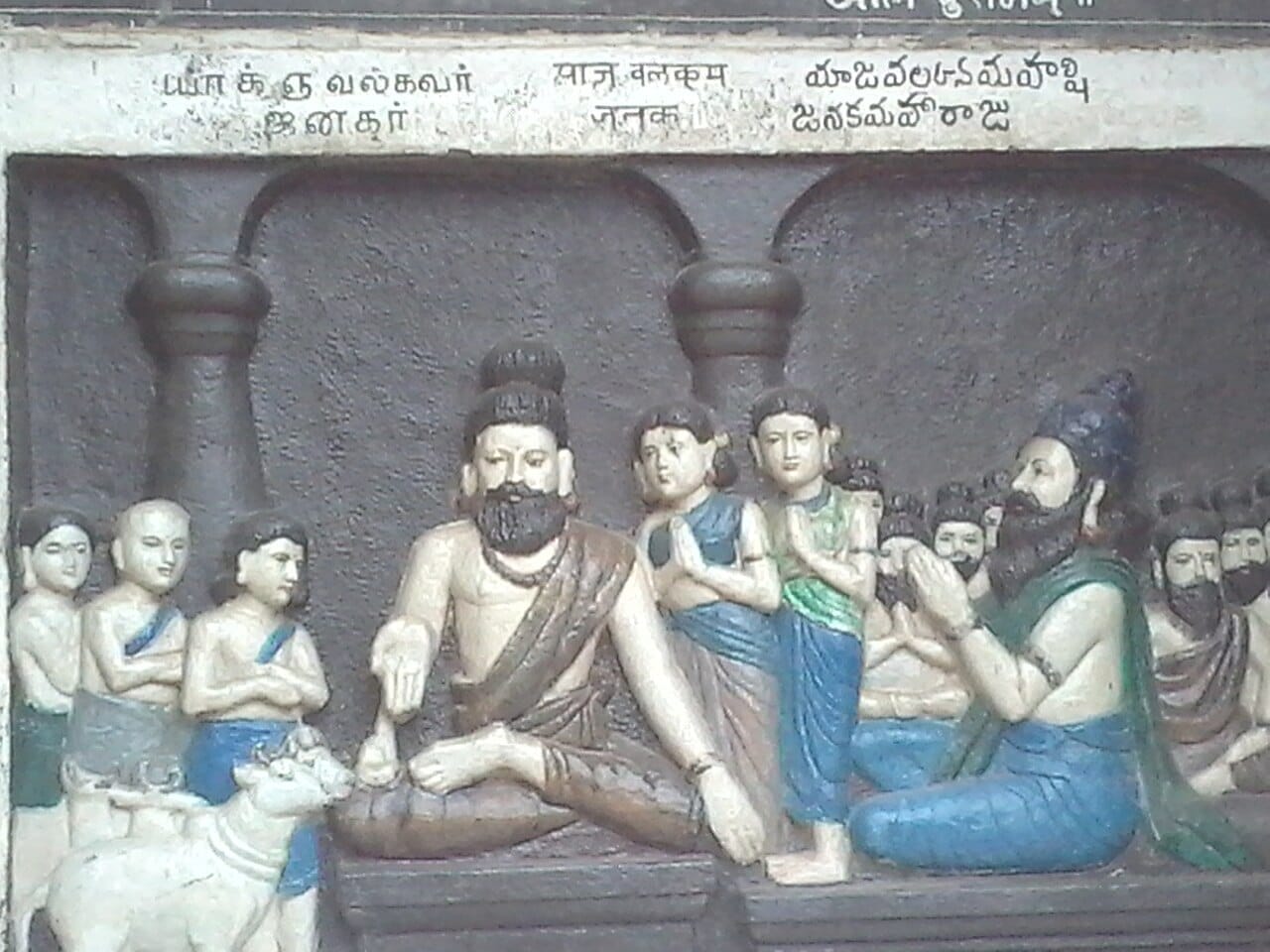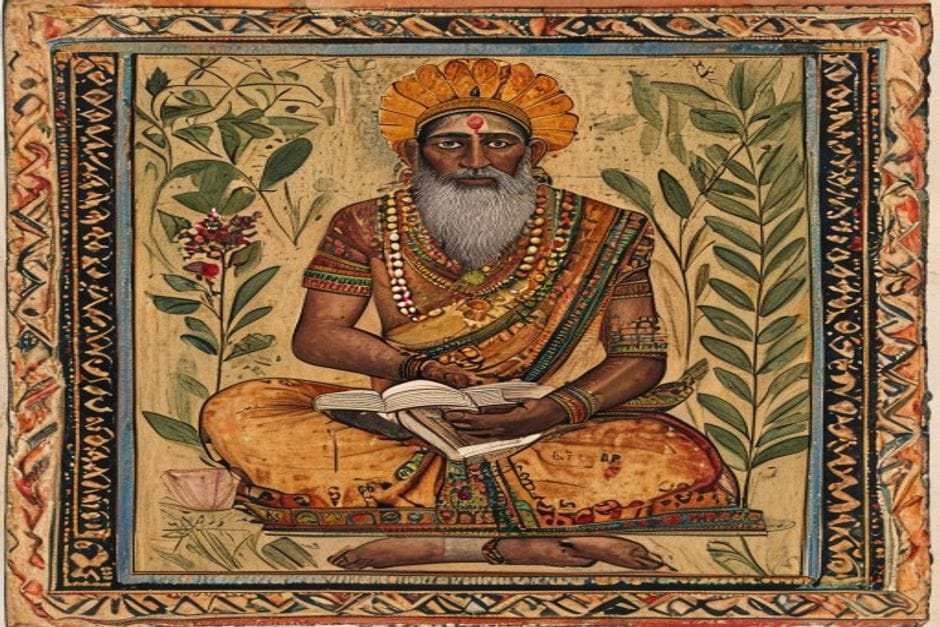
Maitreyi is one of the earliest named women philosophers of India, remembered in the Brihadaranyaka Upanishad (c. 700 BCE) as a brahmavadini — an “expounder of the Veda” — within the court culture of Videha, the kingdom of Mithila under King Janaka. She appears as the scholarly wife of the great sage Yajnavalkya, contrasted with his other, worldly wife Katyayani. Her dates are legendary rather than documented.
In the famous Maitreyi–Yajnavalkya dialogue, when her husband prepares to renounce the world and divide his property, Maitreyi refuses wealth and asks instead for the knowledge of immortality — “What should I do with that which will not make me immortal?” Her question opens one of the Upanishad’s deepest meditations on Atman (the Self) and Brahman, a cornerstone of later Advaita philosophy. Commentators from Sureshvara onward treat her not as a passive listener but as a genuine challenger of Yajnavalkya’s argument.
For Mithila, Maitreyi embodies the land’s ancient identity as a seat of Vedic learning and open philosophical debate centred on Janaka’s Videha — a tradition in which women could be acknowledged seekers of metaphysical truth.