Stage 1 of 5 · The bhaar
The bhaar — gifts from the bride’s house
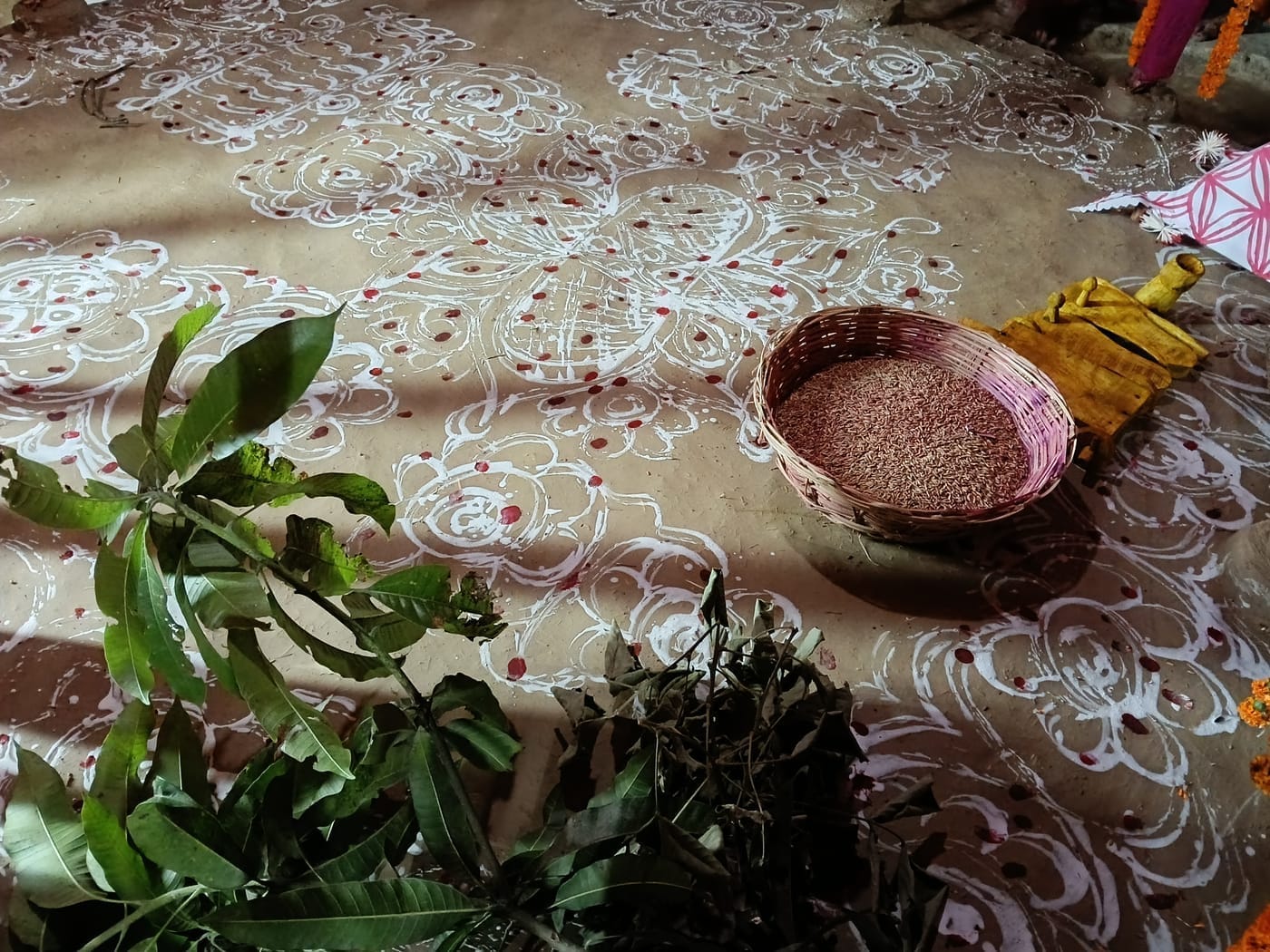
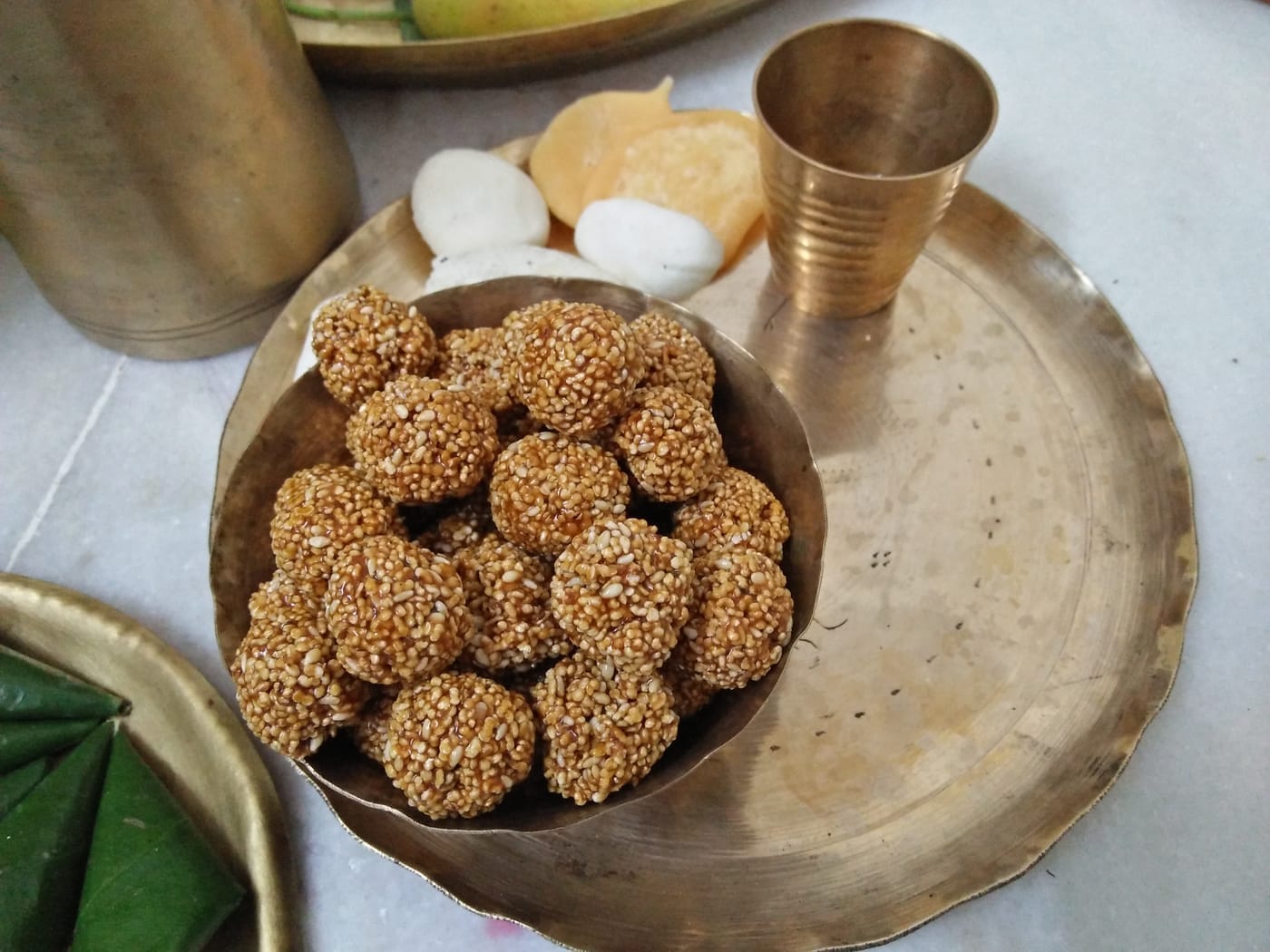
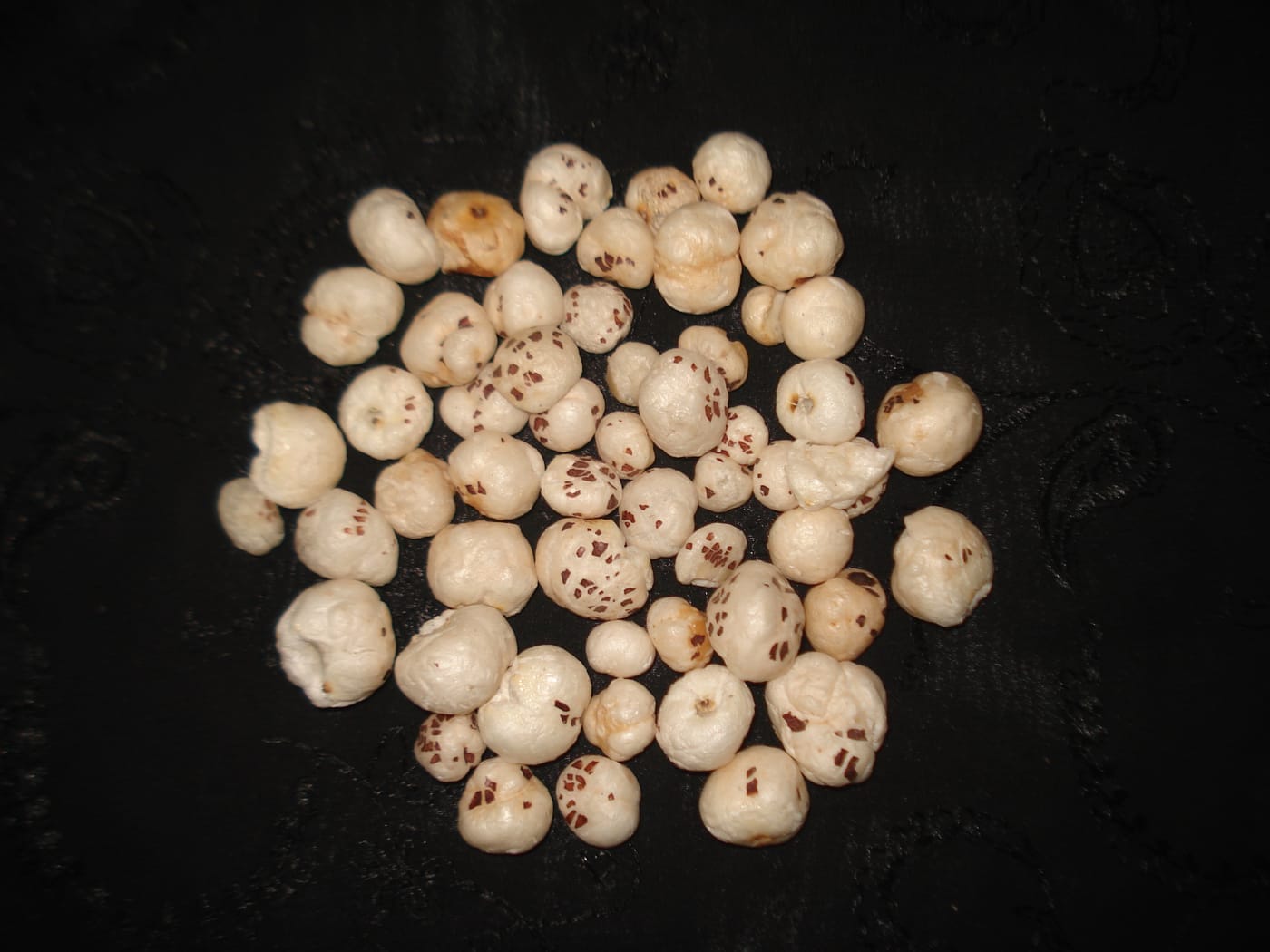
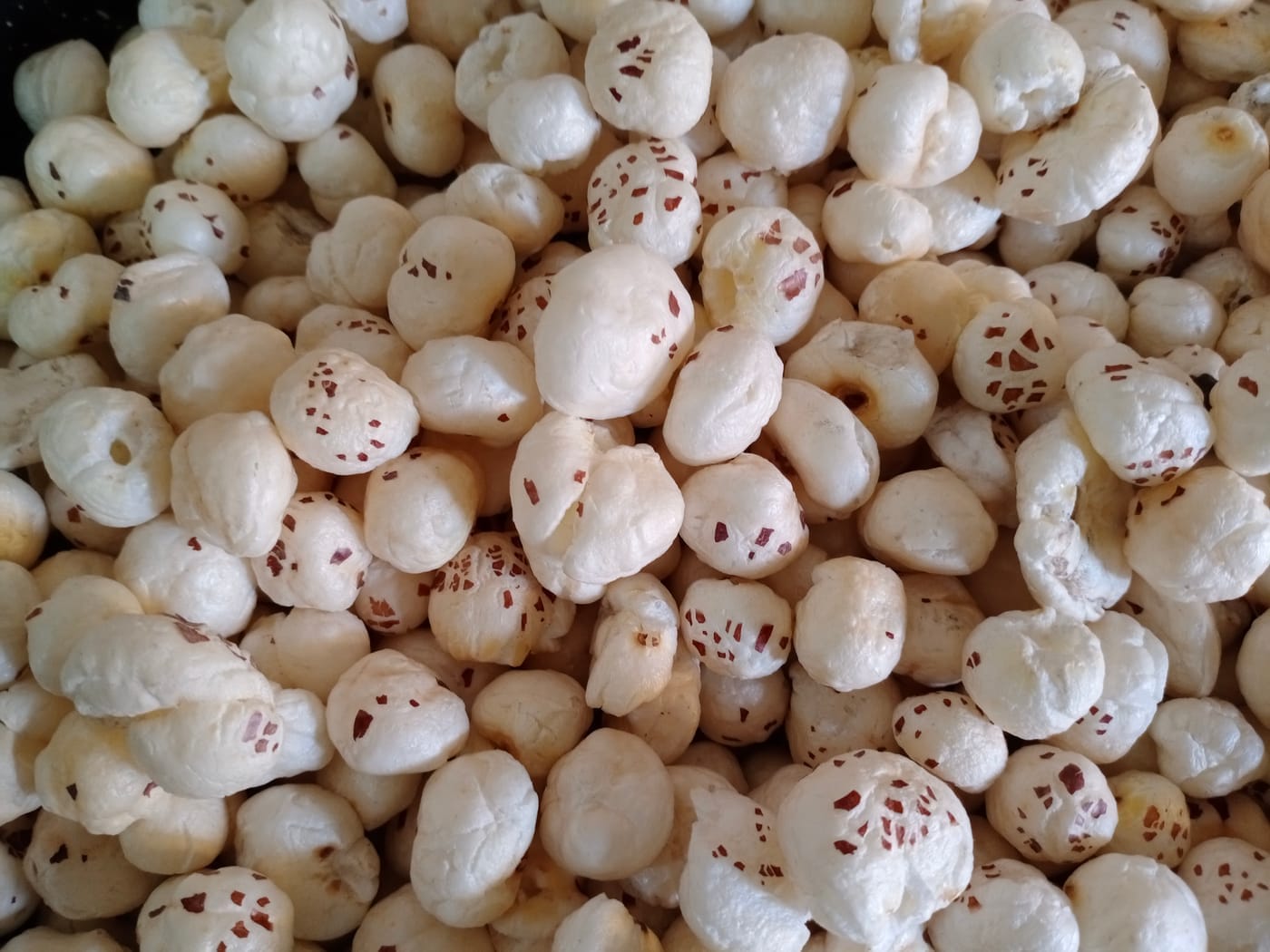
In the first autumn after a wedding the bride’s family sends a bhaar to the new groom’s home for his first Kojagara — a ceremonial load carried in cane baskets: makhana (fox-nuts, Mithila’s own crop), paan (betel), batasha and khaja sweets, fruit, curd, and new clothes for the groom.
This is what makes Kojagara, in Mithila, the festival of the jamai (son-in-law): the day honours the family’s new bridegroom. Tradition traces the custom to King Janaka, said to have first kept it for his son-in-law Rama (in some tellings it is Sita who sends the gifts).
विधि · The rite, step by step
- In the first autumn after the wedding the bride’s family prepares the bhaar — makhana, paan, batasha, khaja, fruit, curd and new clothes.
- It is carried in cane baskets to the groom’s home before the Ashwin full moon.
- The groom’s family receives the bhaar; the new clothes are set aside for him to wear that evening.
- The makhana and sweets are kept for the night’s puja, prasad and neighbourhood sharing.
Across communities The jamai-centred bhaar is distinctively Maithil — elsewhere (Bengal, Odisha, the wider Sharad Purnima) this full moon is a Lakshmi or Kumar-Purnima night with no son-in-law focus. Within Mithila both Brahmin and Kayastha families keep it; the lavishness of the bhaar varies with means.
What is used
Cane bhaar basketsmakhana (fox-nuts)paan & suparibatasha & khajafruit & curdthe groom’s new dhoti, kurta & turban
Meaning
The bhaar from the naiharmakhana, paan & batashanew clothes for the jamaiJanaka honouring Rama