Stage 1 of 4 · Day 1 · Nahay-Khay
Bathe and eat
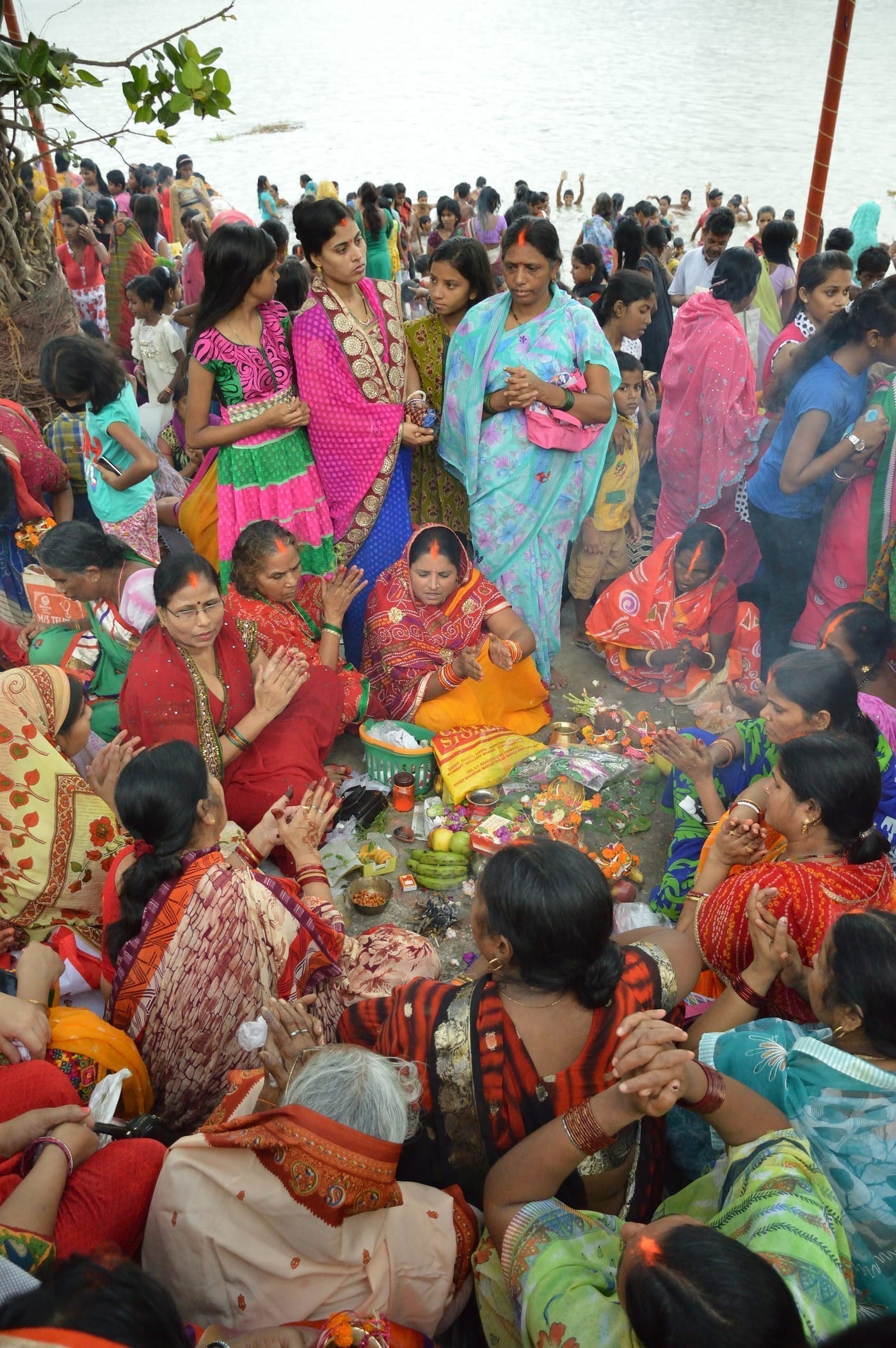
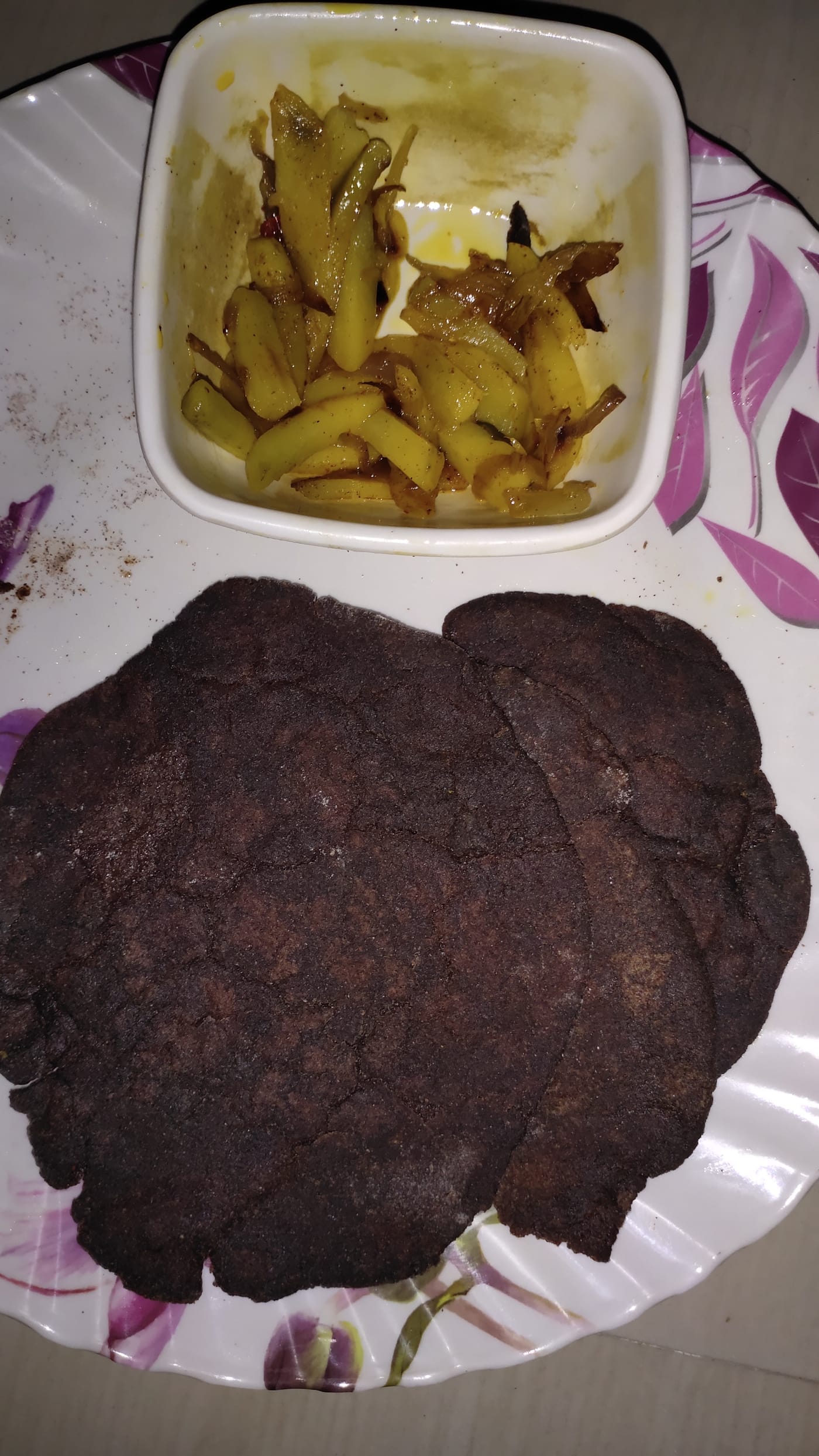
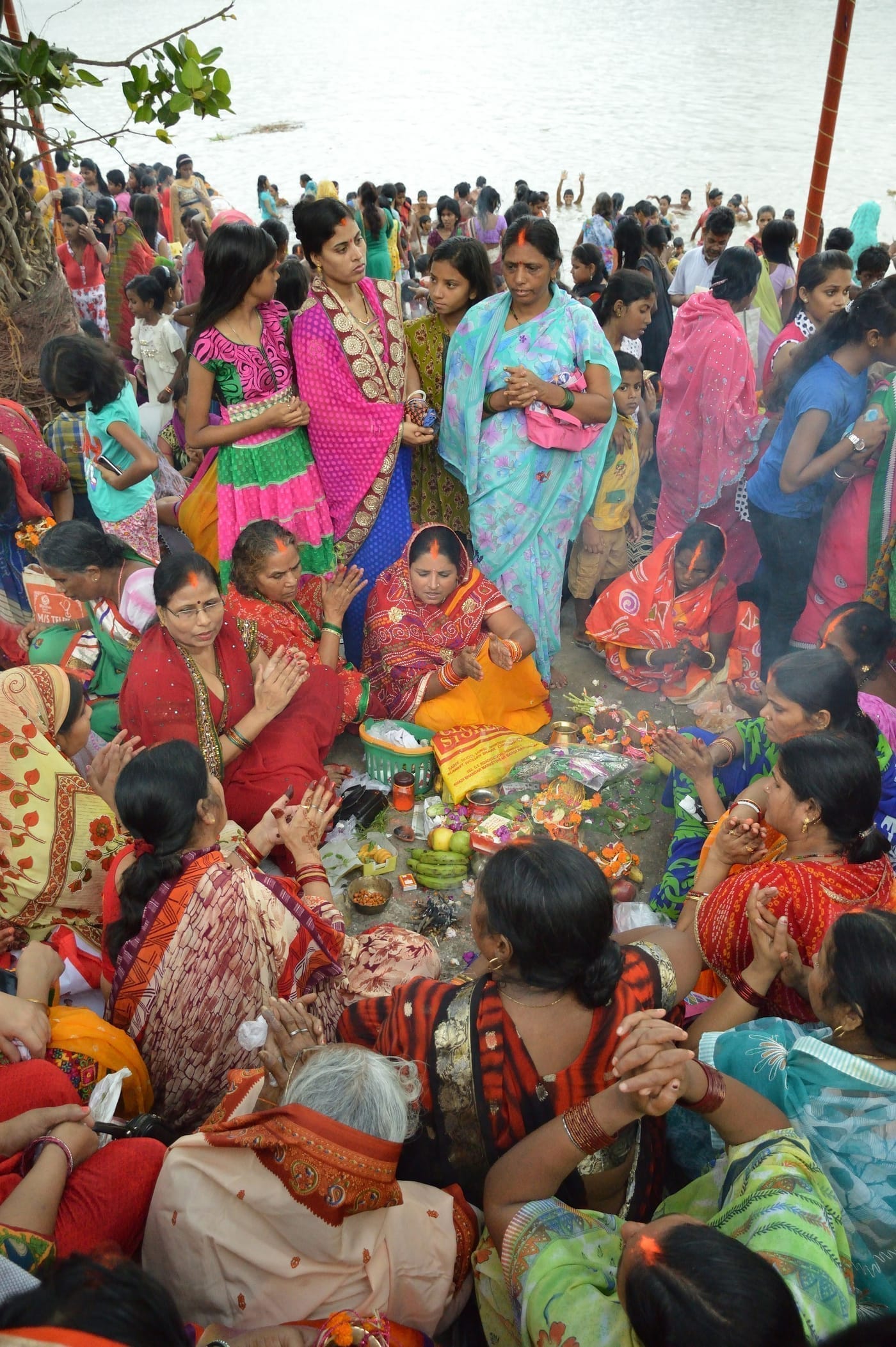
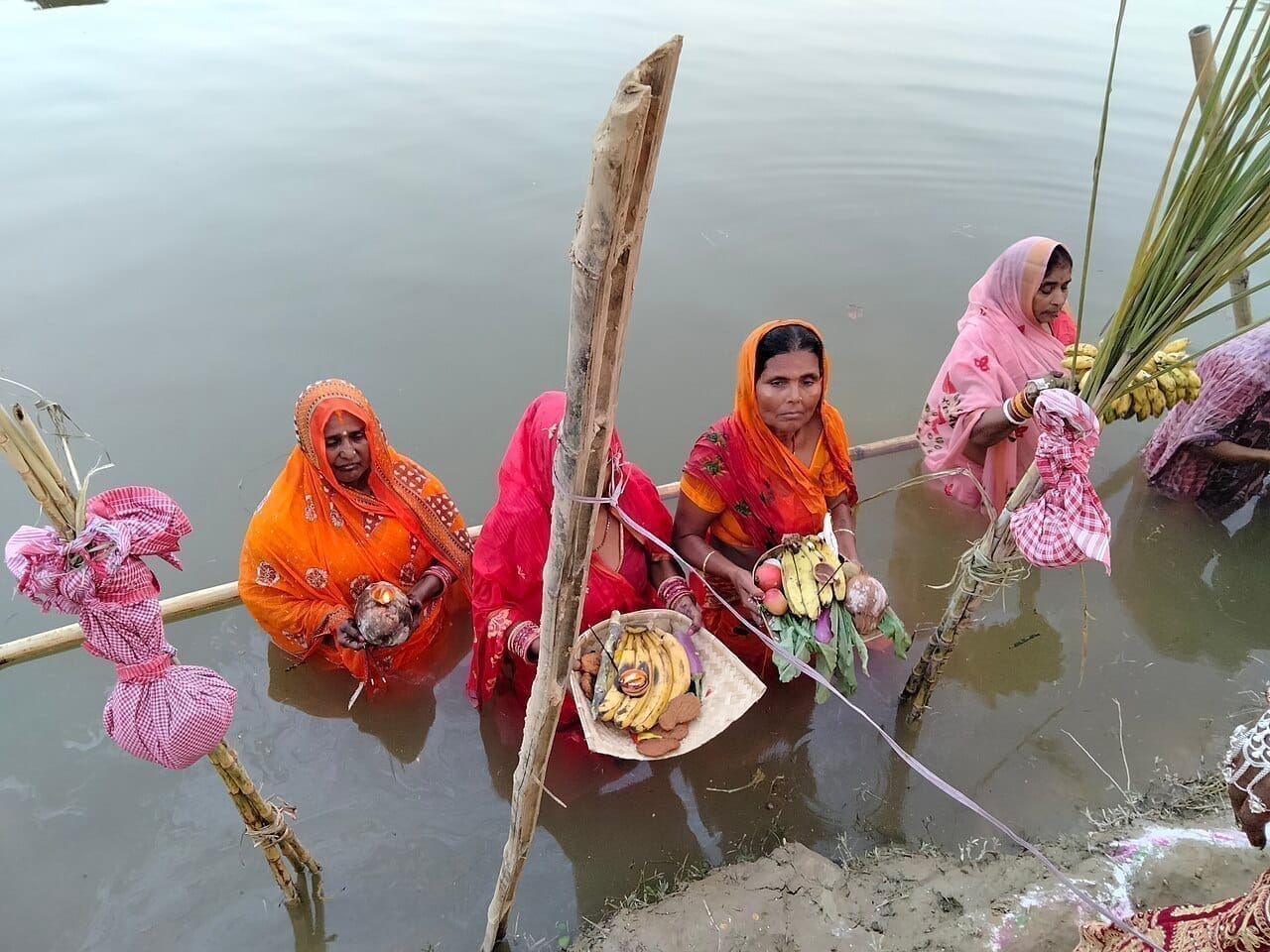
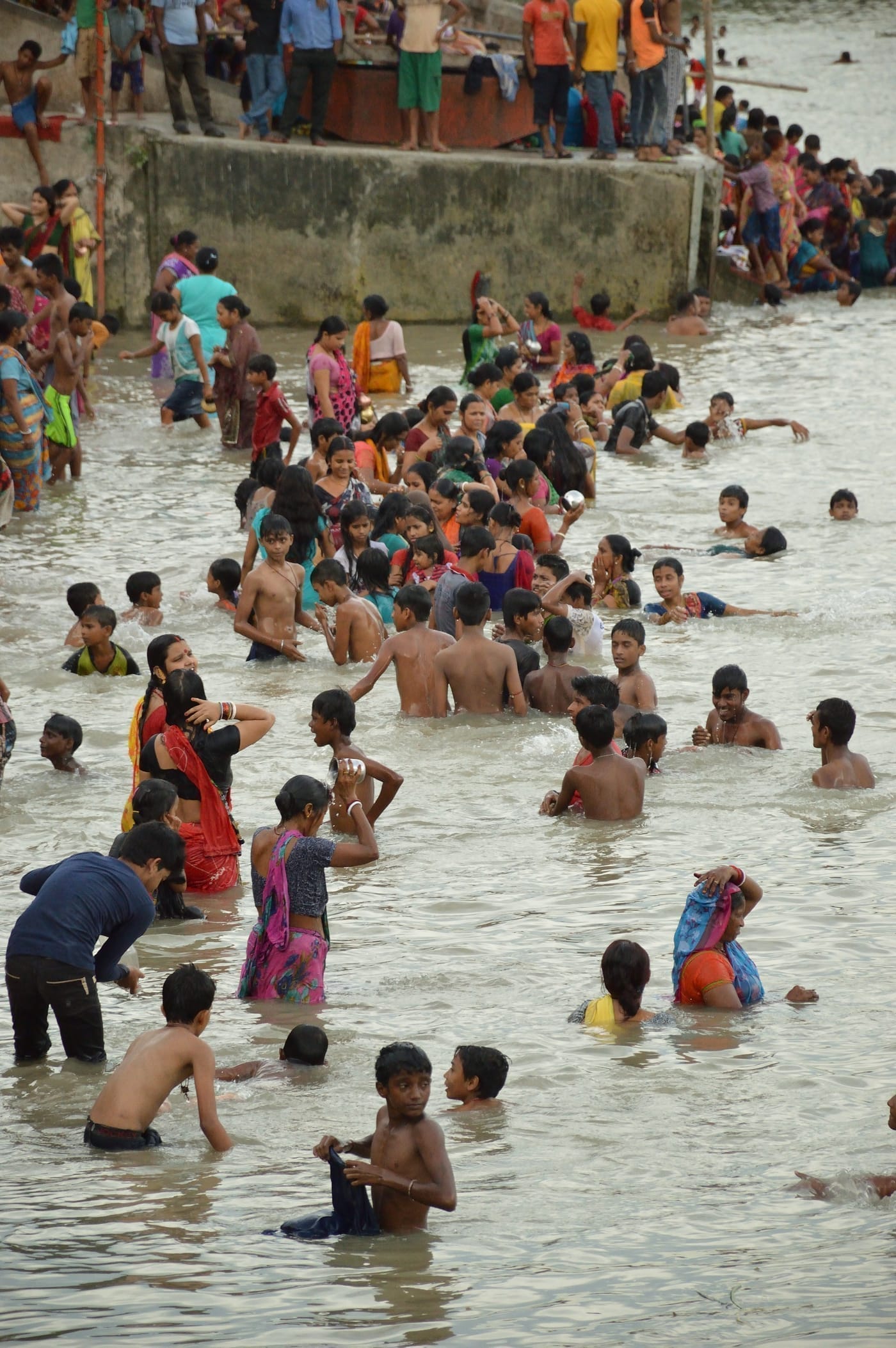
On Ashwin Krishna Saptami the observing mothers rise early and bathe to purify themselves, then cook and eat a single sattvik meal — free of onion and garlic, in ghee and rock salt. In Mithila the distinctive fare is noni (nuni) saag and marua (ragi) roti, valued as strengthening food for the ordeal ahead; many homes also eat fish.
The eve carries a pre-dawn meal — the Otgan (Ongthan) — eaten before sunrise, so that the long waterless fast can begin cleanly at daybreak. The women put on the red-thread Jiutiya amulet.
विधि · The rite, step by step
- The mothers rise early and bathe (ideally in a river or pond) to purify themselves.
- They cook and eat a single sattvik meal — noni saag and marua roti, often with fish — in ghee and rock salt.
- A pre-dawn Otgan (Ongthan) meal is eaten before sunrise to sustain the coming fast.
- The red-thread Jiutiya amulet is worn for the duration.
Across communities The noni-saag + marua-roti fare and the pre-dawn Otgan are strongly Mithila/Bihar; in Jharkhand the observance can run longer, and Nepal-Terai Tharu women keep it as Jiutiya with the Jhamta dance.
What is used
River/pond bathghee & rock saltnoni (nuni) saag & marua (ragi) rotifish (maachh)the red Jiutiya thread
Meaning
The purifying baththe last sattvik mealthe pre-dawn Otganthe red Jiutiya thread