Stage 1 of 4 · Day 1 · Ghatasthapana
Ghatasthapana — the pot, the barley, and the goddess invoked
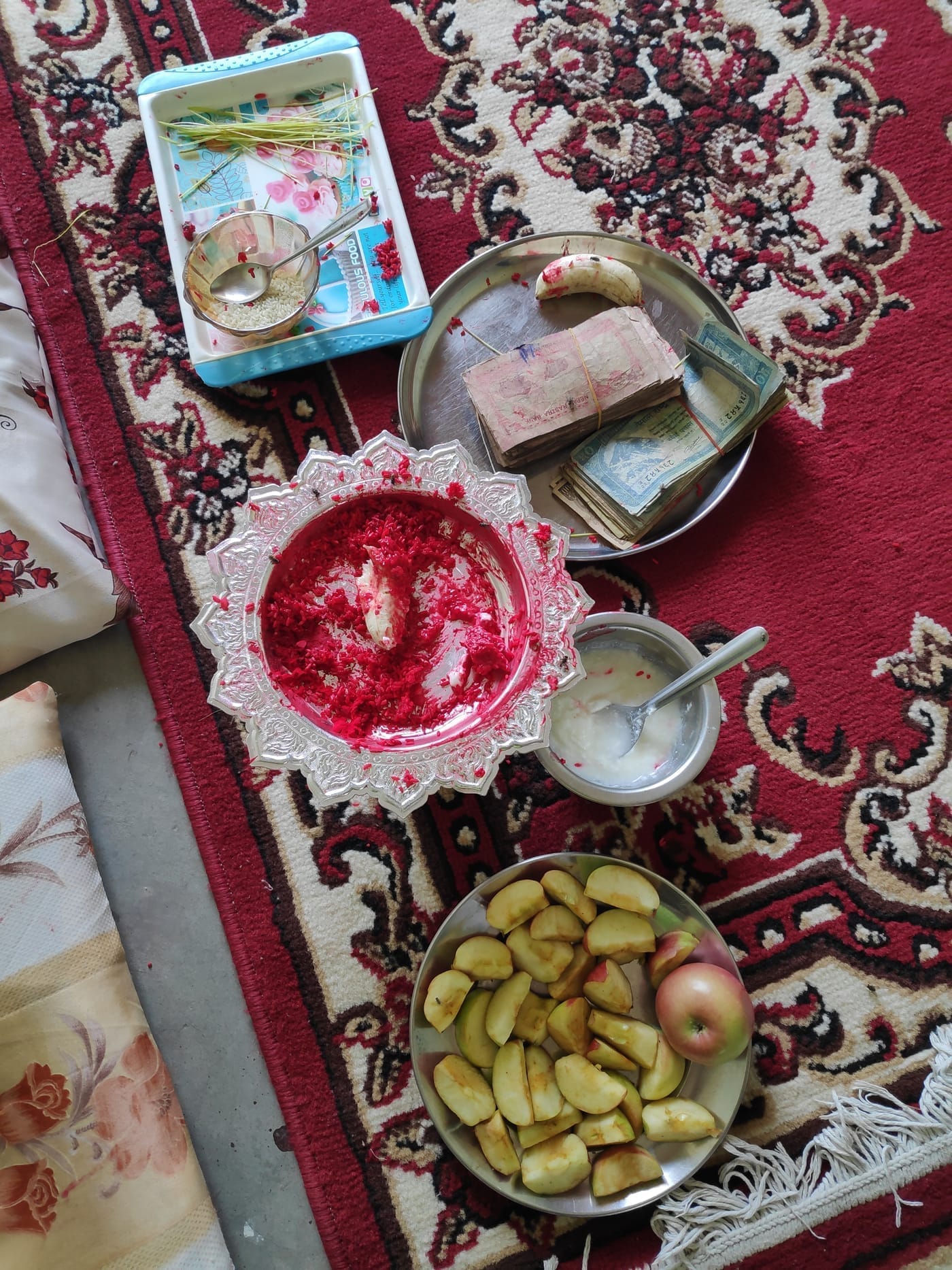
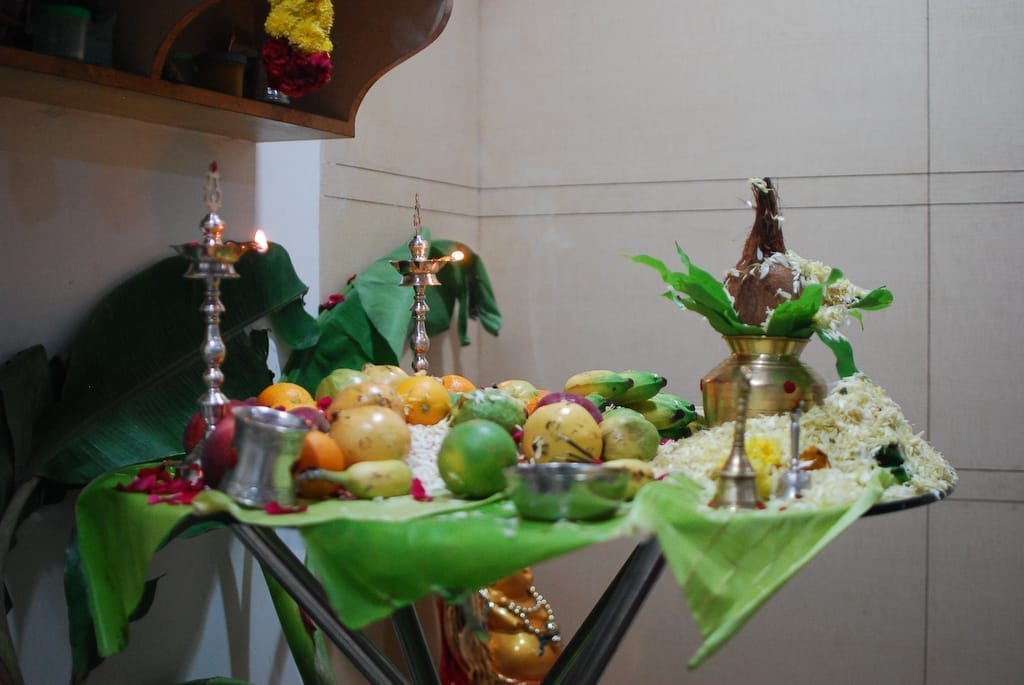
The Ashwin Navratri opens on Pratipada with Ghatasthapana (Kalashsthapana) — installing the goddess in a kalash (sacred pot) at an auspicious morning muhurat. In a purified corner of the home — the Gosaunik ghar, the Maithil household shrine — clean sand is laid in a clay bed and sown with barley (jamara/jau); on it sits the water-filled kalash, its mouth ringed with mango leaves and crowned with a coconut, dressed in red cloth and vermilion.
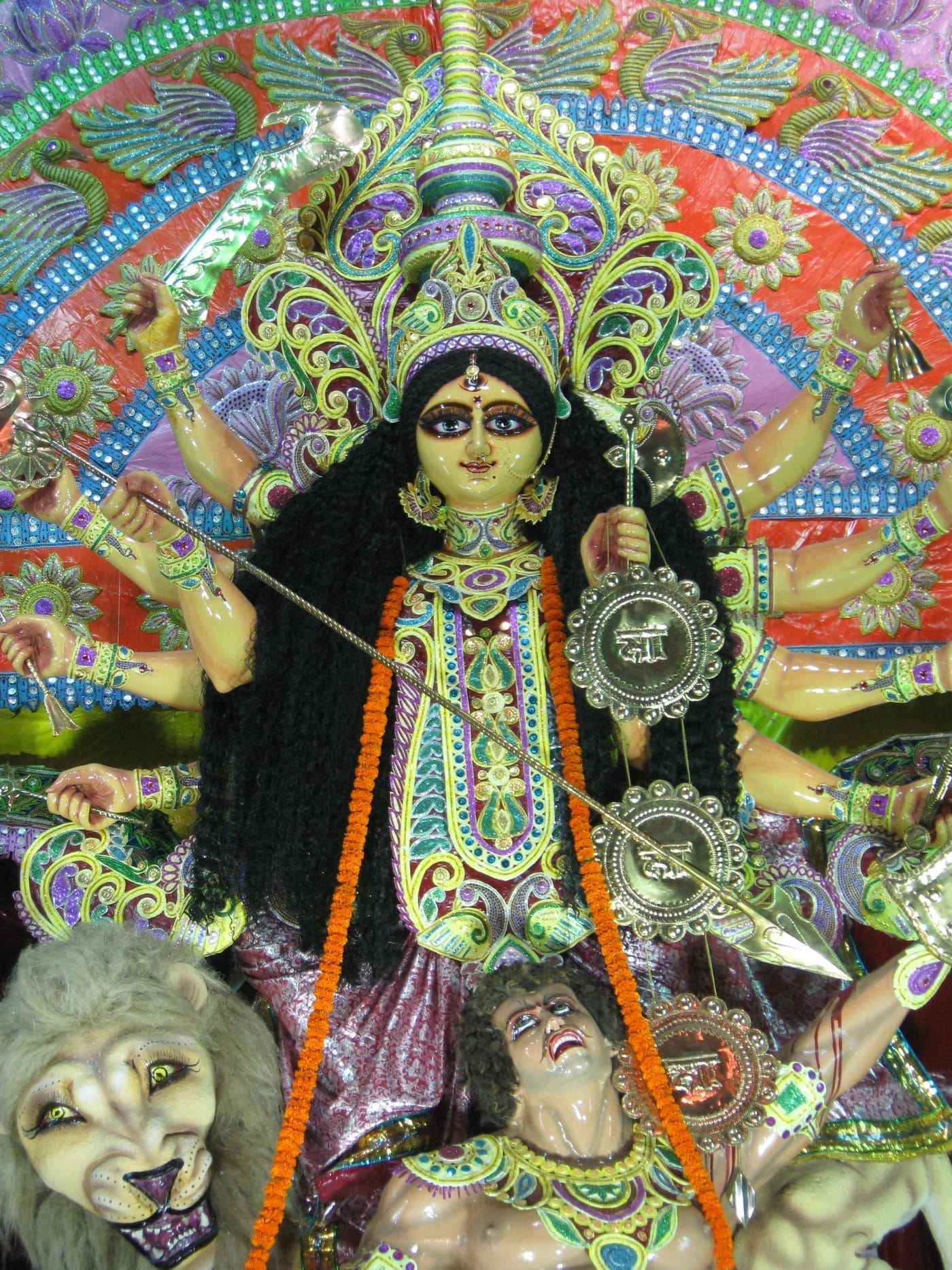
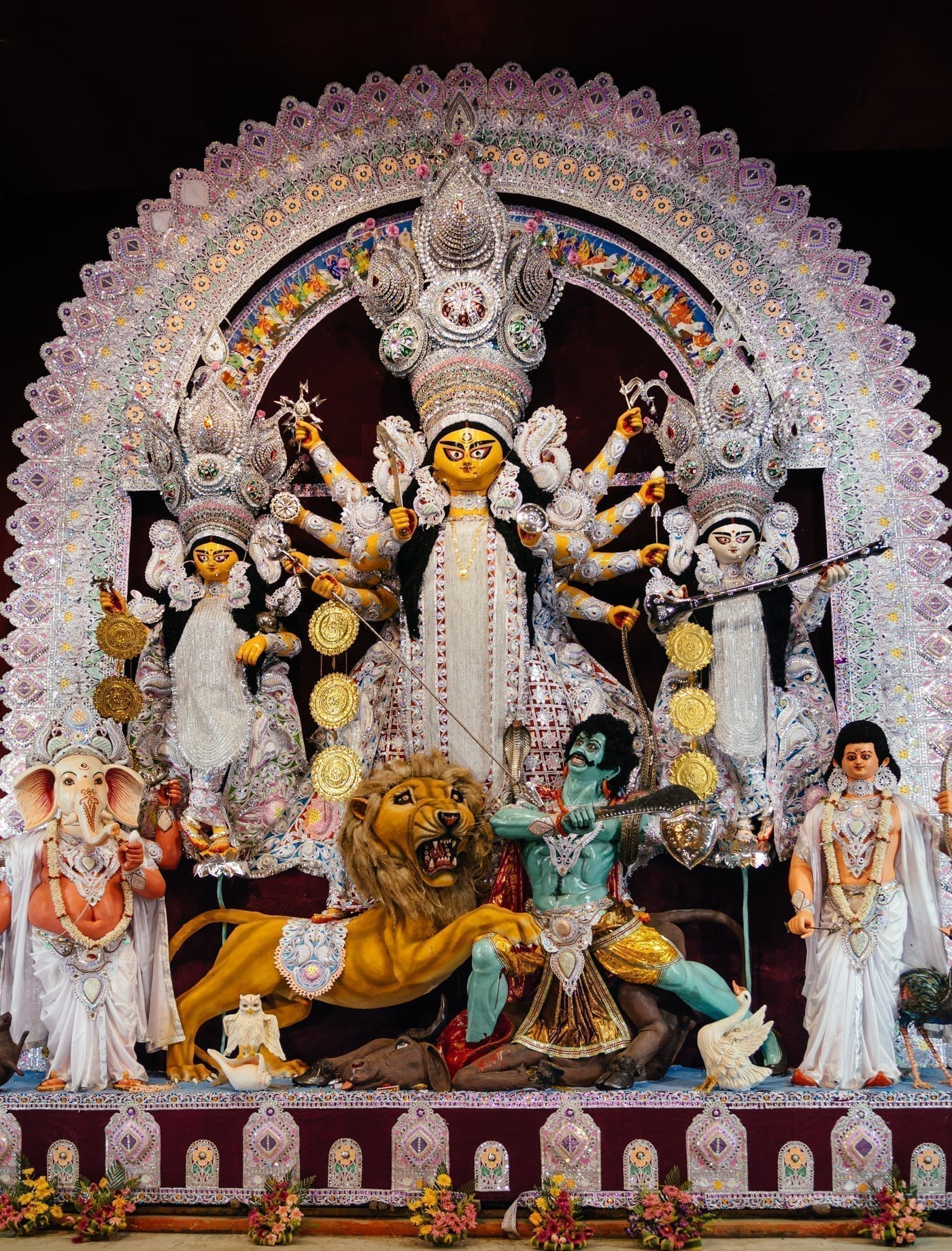
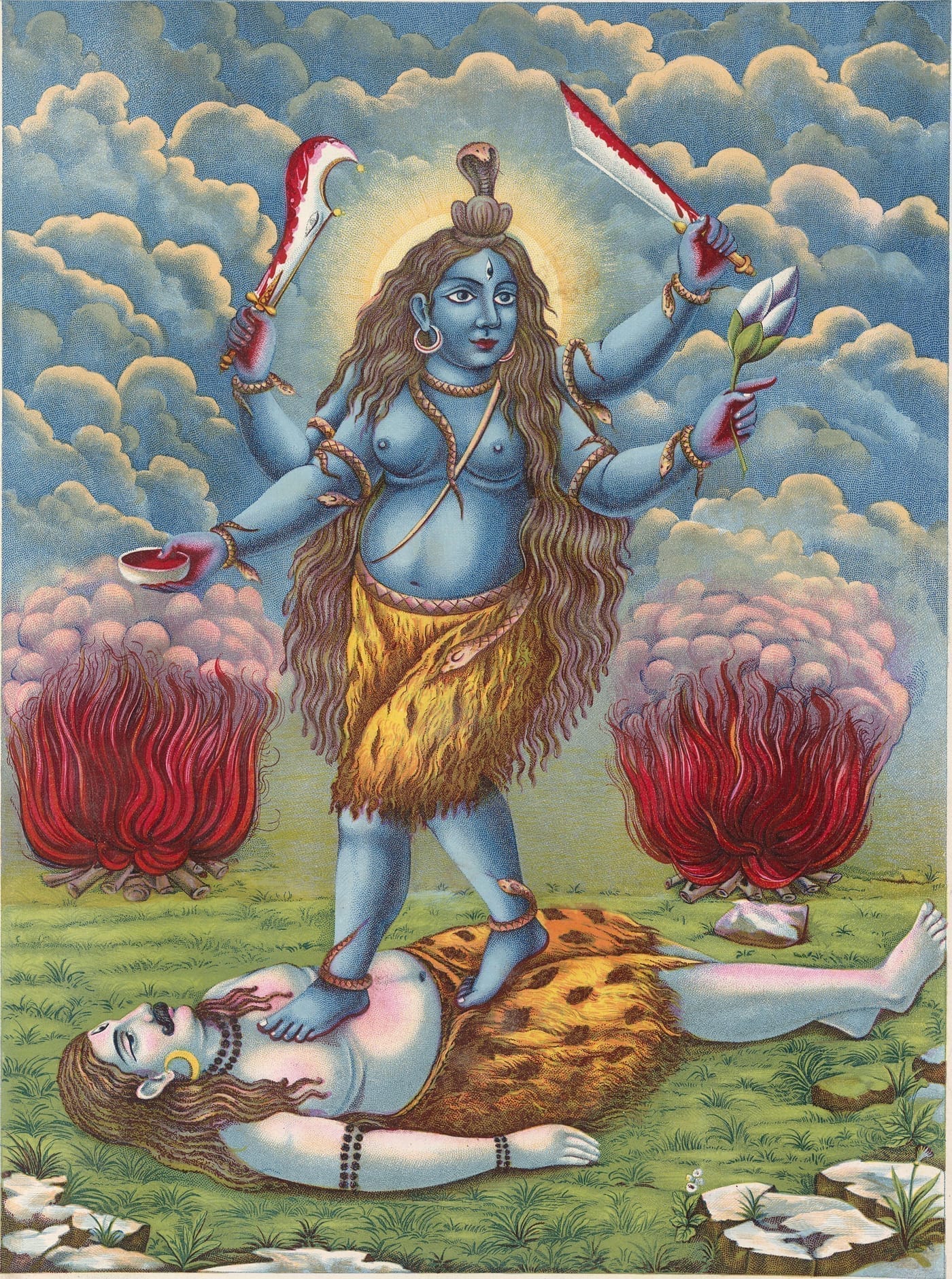
Durga is invoked into the pot, an akhand-deep (unbroken lamp) is lit to burn through the nine nights, and for nine days the Navadurga — her nine forms — are worshipped one a day. The barley, kept in shade and watered, sprouts into the pale-gold jamara given as blessing on the tenth day; its height is read as an omen of the year’s harvest.
विधि · The rite, step by step
- At an auspicious morning muhurat a spot in the Gosaunik (home shrine) is purified.
- Sand is laid in a clay bed and sown with barley; a water-filled kalash, ringed with mango leaves and topped with a coconut, is set on it.
- Durga is invoked into the kalash and an akhand-deep (unbroken lamp) is lit to burn through all nine nights.
- Each day one of the Navadurga is worshipped; the barley is watered in shade and grows into the golden jamara.
मन्त्र · mantraॐ कात्यायनाय विद्महे कन्याकुमारि धीमहि। तन्नो दुर्गा प्रचोदयात्॥
oṃ kātyāyanāya vidmahe kanyakumāri dhīmahi, tanno durgā prachodayāt
We know Katyayani, we meditate on the maiden-goddess; may that Durga impel us. — the Devi (Durga) Gayatri.
गीत · Songs of this moment
- Mahalaya & Devi-geetthe season is woken by Mahalaya (the dawn Chandipath recitation that summons the goddess); through the nine nights Maithil homes sing bhagavati geet to Durga
Across communities In the Nepal Madhesh and hills this same rite begins Dashain (Bada Dasain), and the sprouted barley is the famous jamara worn on Tika day. In Bengal-influenced Bihar the home kalash-puja increasingly runs alongside a community pandal, but the Maithil Shakta home keeps the older Gosaunik kalash at its centre.
What is used
The kalash, water, mango leaves & coconutbarley seed and the clay sand-bed (jamara)red cloth, vermilion, the akhand-deep lampthe Gosaunik home shrine
Meaning
The pot as the goddess’s seatbarley as a living harvest-omenthe unbroken lampnine nights, nine forms