Stage 1 of 18 · The match
Ghatkaiti — the matchmaker
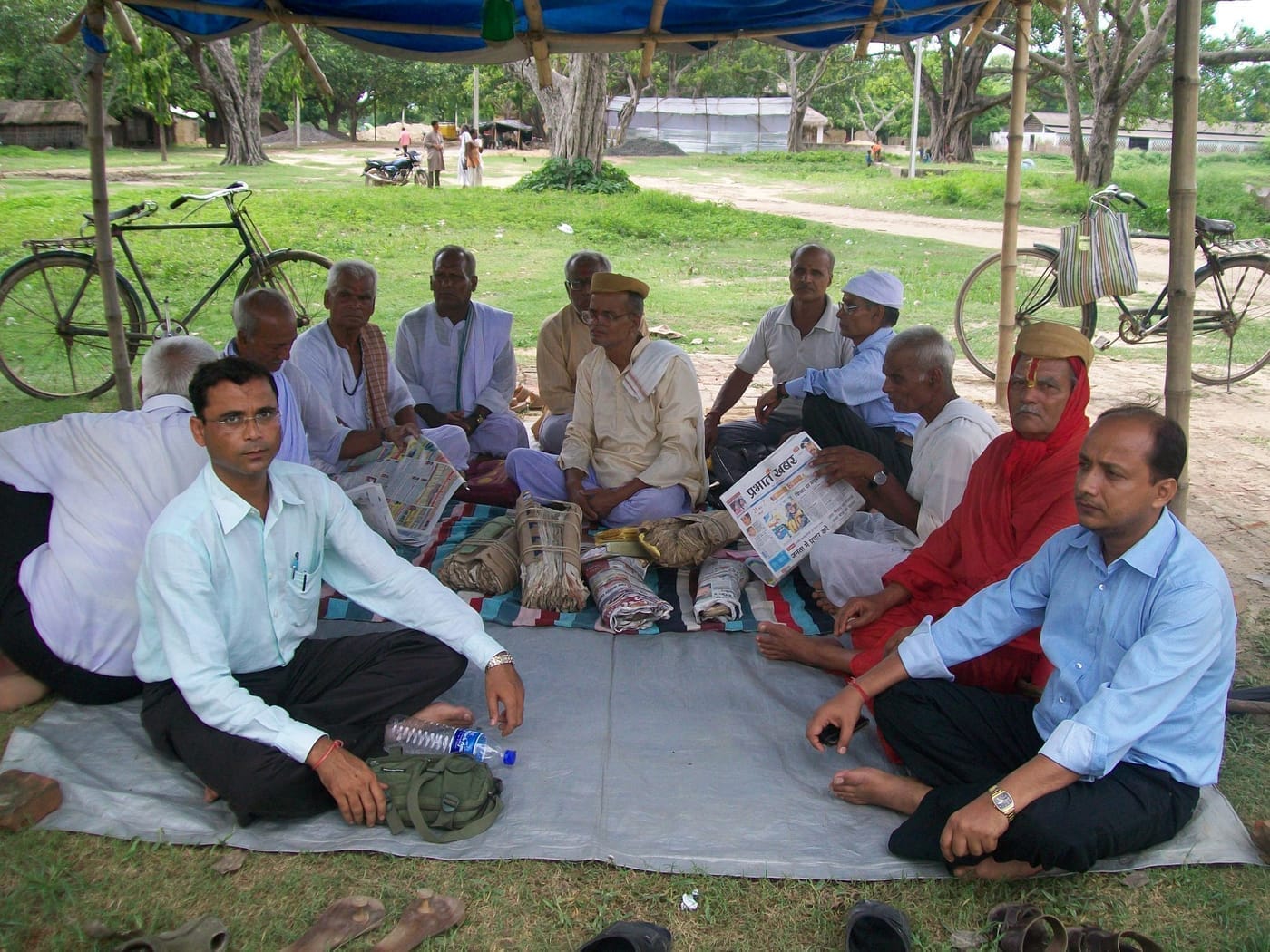
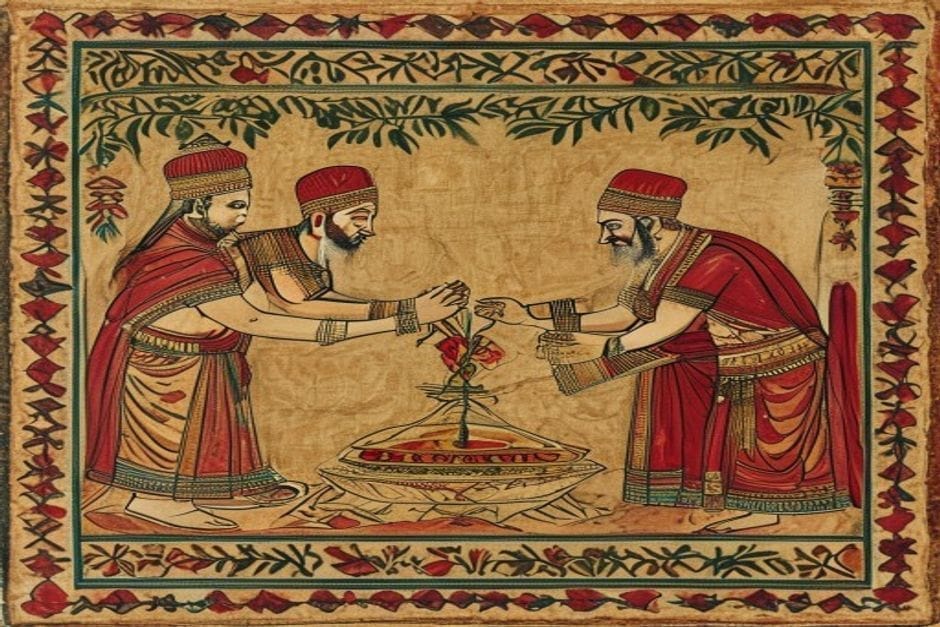
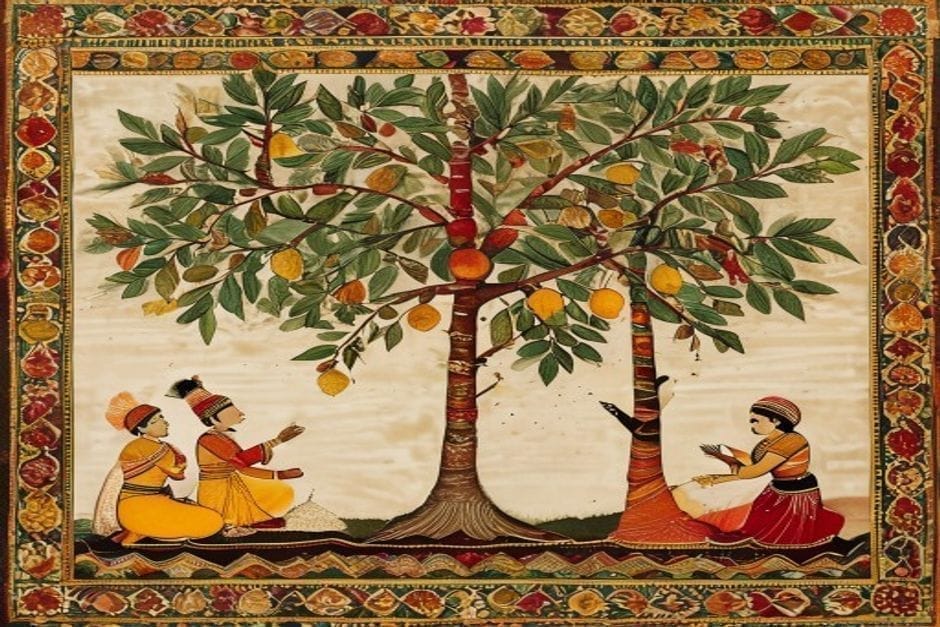
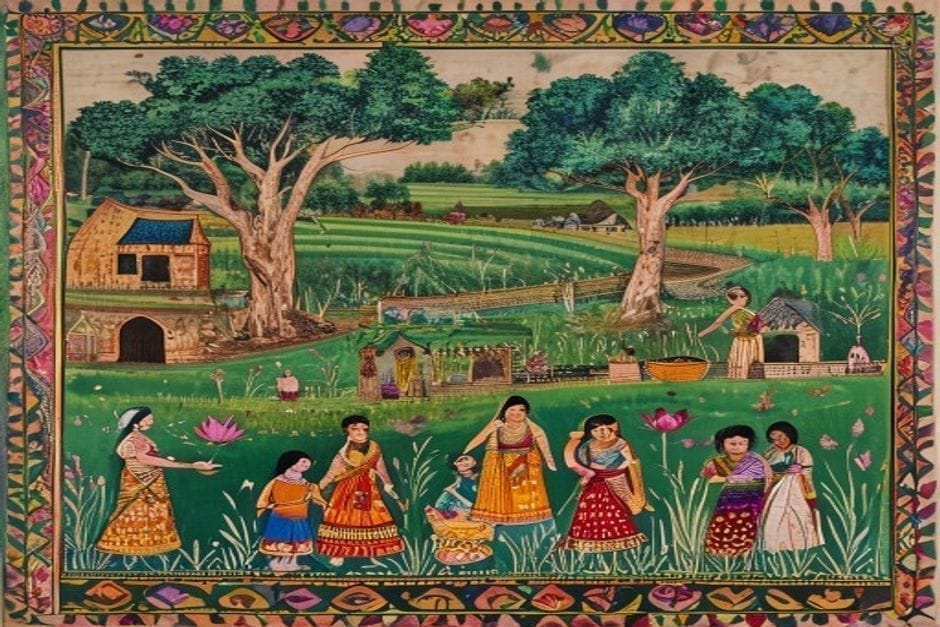
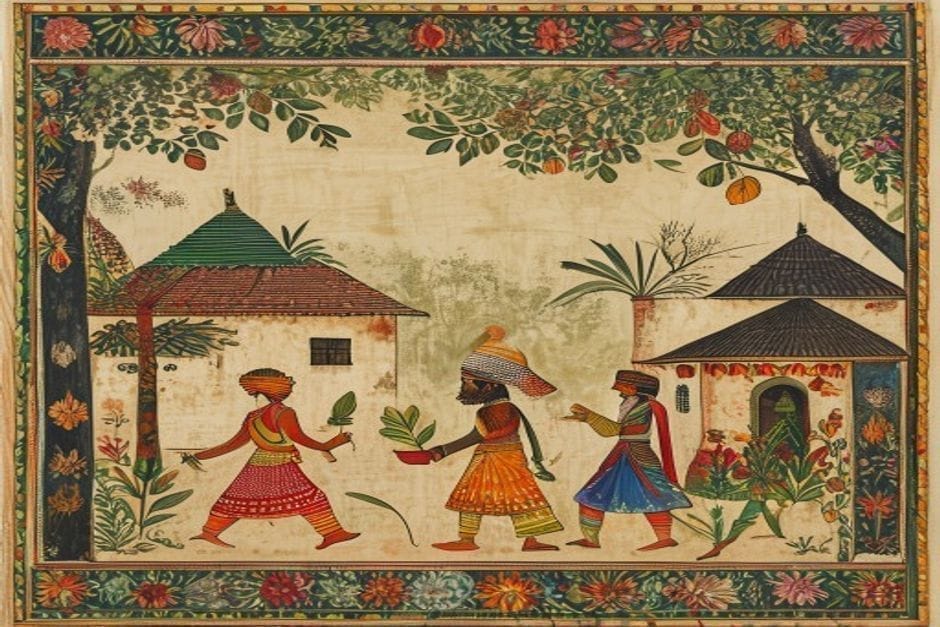
A Maithil marriage opens not with horoscopes but with people. A trusted go-between — the Agua or Ghatak, who carries in his head the standing, lineage and means of dozens of families — proposes a match and shuttles between the two households; the errand itself is called ghatkaiti.
The one rule that governs everything is exogamy: bride and groom must be of the same caste but a different gotra. Unusually for a North-Indian Hindu wedding, the stars are not consulted to fix the match — lineage, not the kundali, decides. Once both sides are interested, the families take the lineage details to a genealogist before anything is promised.
विधि · The rite, step by step
- A family approaches a Ghatak, or the Ghatak brings a proposal, describing each household’s lineage, reputation and means.
- He carries the offer back and forth between the two homes until both sides are willing to look closer.
- Dekha-dekhi (ghardekhi) follows — elders visit to see the home, the family and the prospective bride or groom.
- The match is tested against the cardinal rule: same caste, different gotra. Only then do the families take the lineage to a Panjikar.
Across communities Both Maithil Brahmins and Karna (Maithil) Kayasthas use the Ghatak-and-lineage system. In modern Bihar and the Nepal Madhesh the Ghatak is increasingly replaced by relatives and matrimonial apps, but the gotra rule endures.
What is used
Sweets & refreshments at the visitsthe families’ lineage knowledge(today) biodata & photographs
Meaning
Same caste, different gotrano horoscope-matchingthe trusted go-between