Stage 1 of 4 · The serpent worship
The serpent worship
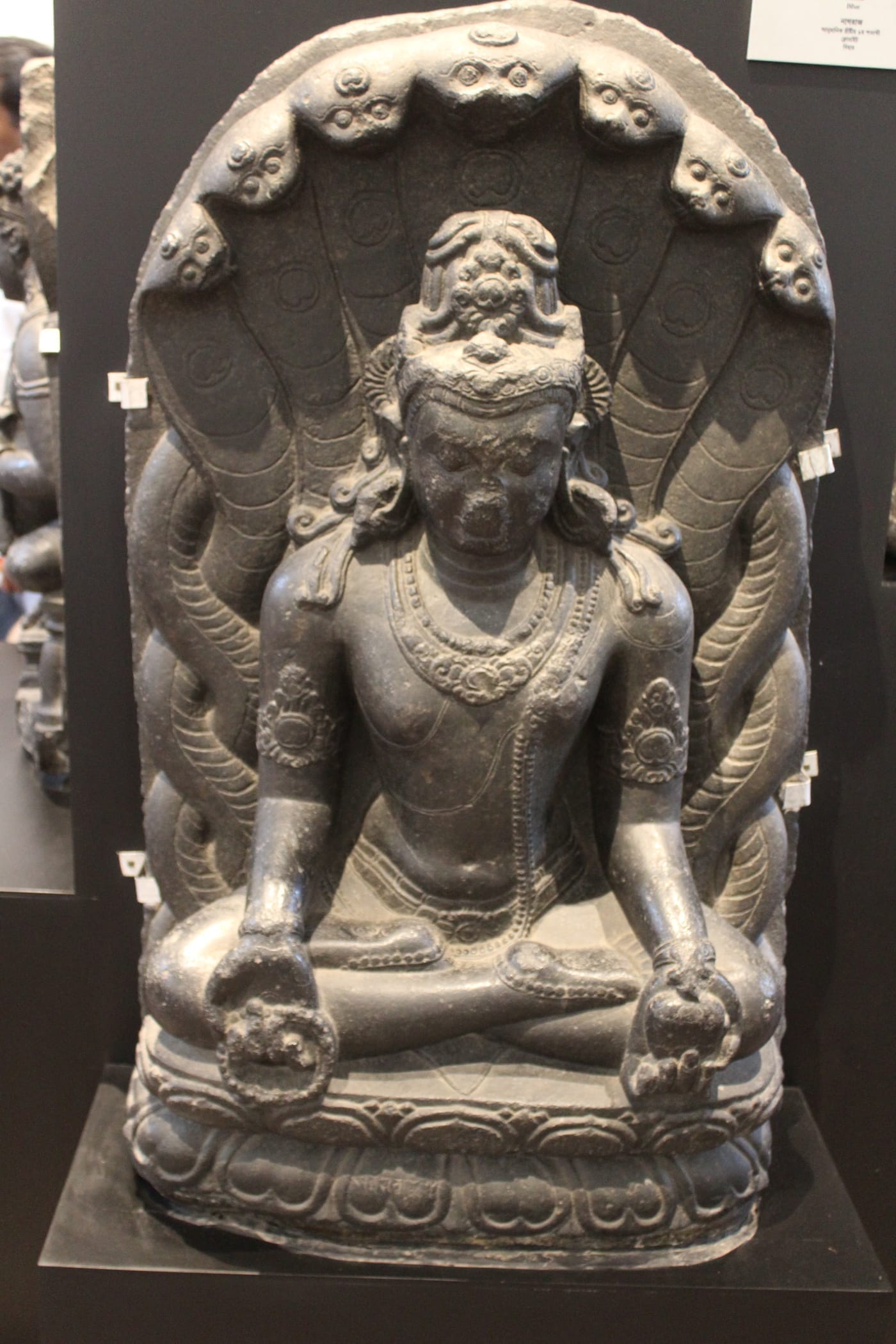
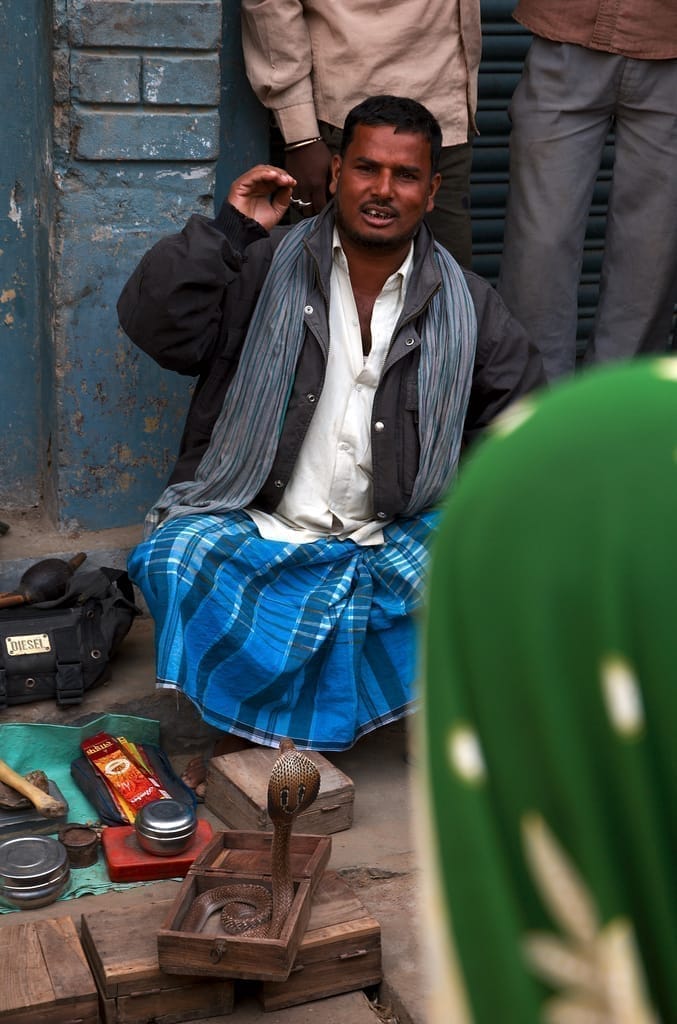
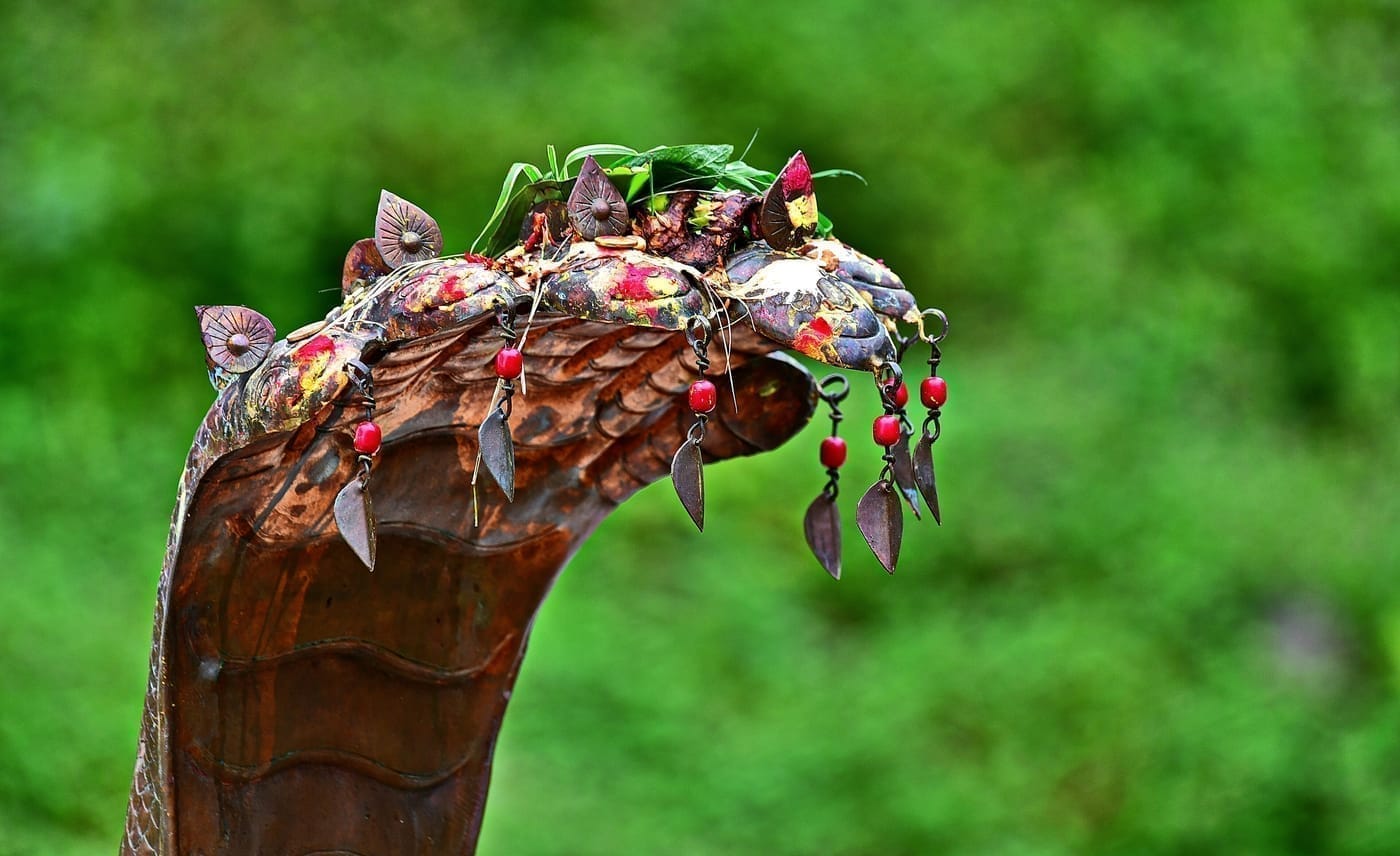
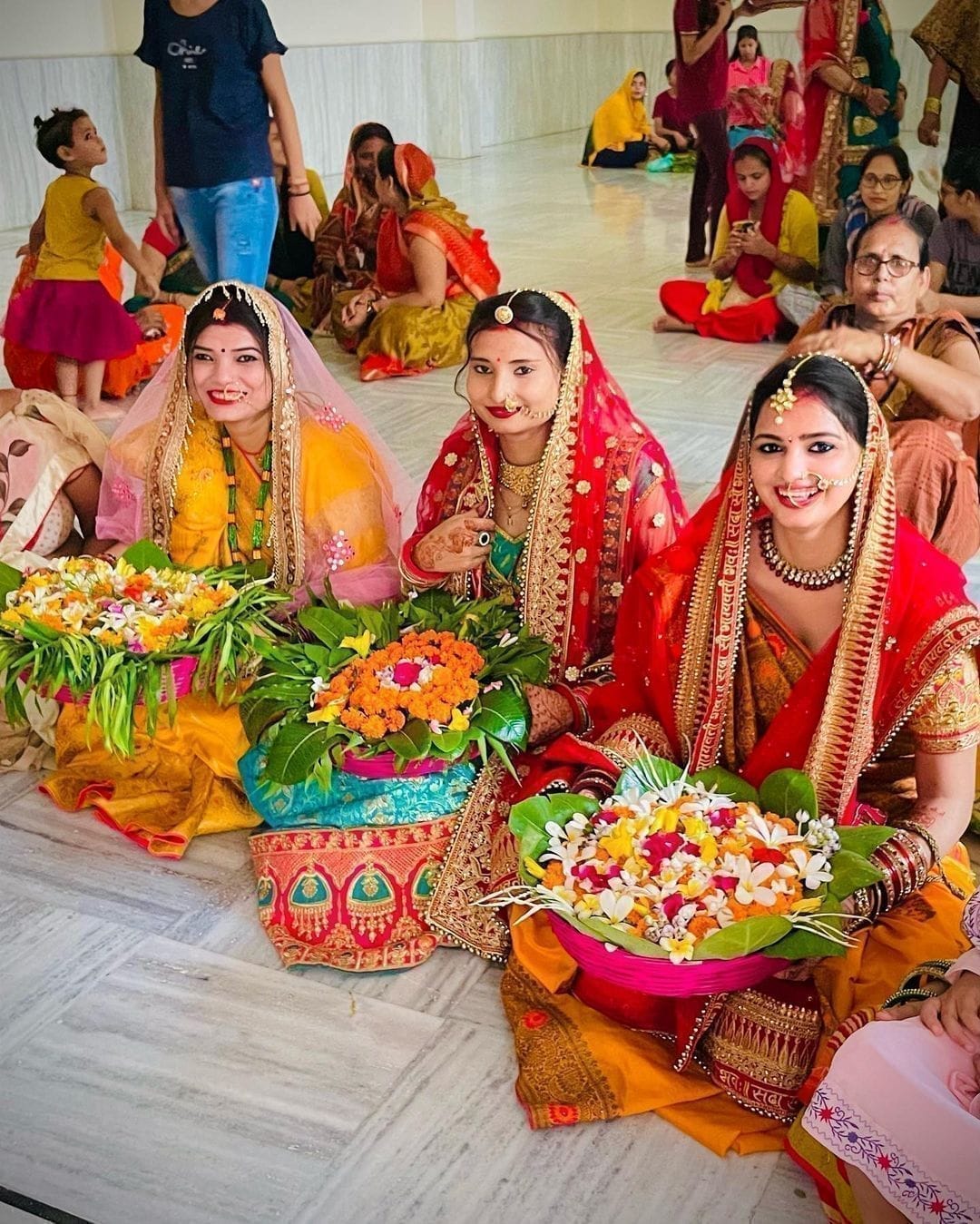
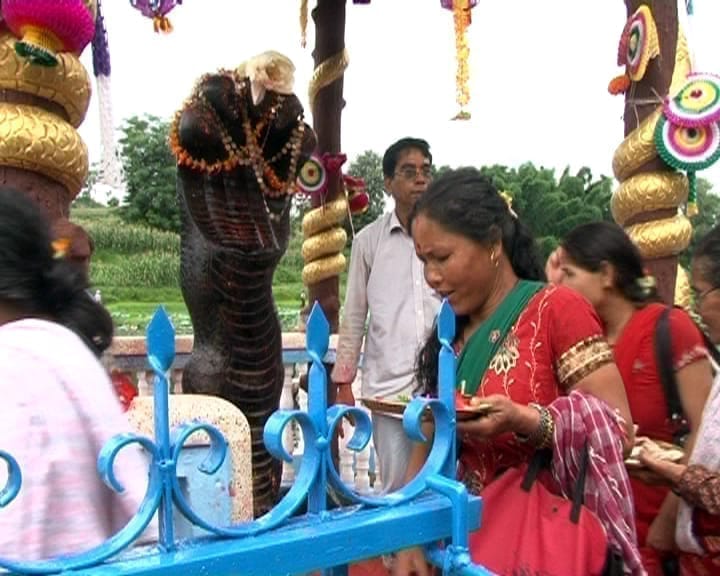
On the Shravan Panchami a nag image — silver, clay, stone or a wall-painting — is bathed first in water, then in milk, and offered flowers, lotus, durva and kheer, at the image, a snake-hole (bambi) or a peepal, or to a snake-charmer’s cobra. Many draw a five-hooded serpent in vermilion and cow-dung beside the door, believed to keep poisonous snakes away.
Worshippers fast, and — crucially — no one digs the earth or ploughs that day, lest a snake be harmed.
विधि · The rite, step by step
- A nag image (silver/clay/stone) is bathed with water, then milk.
- Milk, flowers, lotus, durva and kheer are offered to the image, a snake-hole or a peepal.
- A five-hooded serpent is drawn in vermilion and cow-dung beside the doorway.
- Worshippers fast; digging and ploughing are forbidden that day to avoid harming snakes.
मन्त्र · mantraअनन्तं वासुकिं शेषं पद्मनाभं च कम्बलम्। शङ्खपालं धृतराष्ट्रं च तक्षकं कालियं तथा॥
anantaṃ vāsukiṃ śeṣaṃ padmanābhaṃ ca kambalam · śaṅkhapālaṃ dhṛtarāṣṭraṃ ca takṣakaṃ kāliyaṃ tathā
“Ananta, Vasuki, Shesha, Padmanabha and Kambala; Shankhapala, Dhritarashtra, Takshaka and Kaliya.” — the nine nagas named in worship; reciting them in the morning is said to ward off snake-harm.
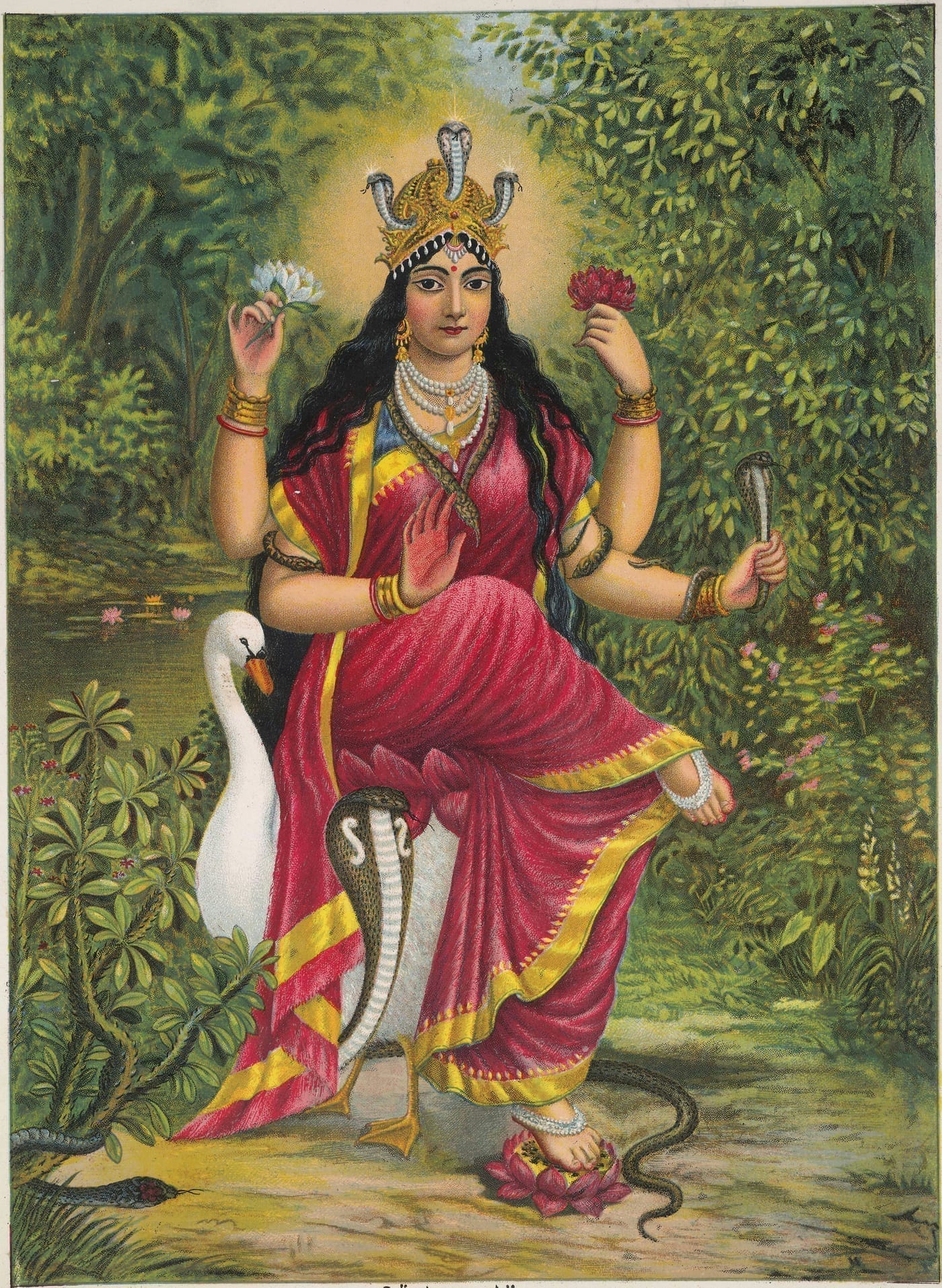
Across communities Mithila/Bihar lean on the goddess Bishahari/Manasa and field-pit offerings rather than western Krishna-Kaliya imagery; in Bihar the day often falls in Krishna Paksha and folds into Madhushravani.
What is used
A silver/clay/stone nag imagemilk, water & kheerflowers, lotus & durvavermilion & cow-dung (door figures)the snake-hole / peepal
Meaning
Milk for the serpentno digging the earththe door-guardian snakeprotection sought