Stage 1 of 4 · Savitri & Satyavan
Savitri & Satyavan — the wife who out-argued Death
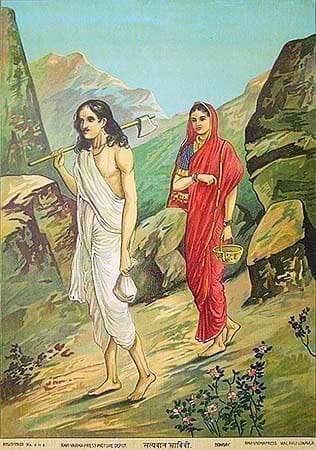
The vrat rests on the Mahabharata tale of Savitri, who chooses the forest-prince Satyavan even after the sage Narada warns he is fated to die within a year. On the fated day, as Satyavan’s soul is taken, Yama himself comes with his noose — and Savitri follows him on foot.
As she walks she speaks such wisdom on dharma that Yama, pleased, grants boon after boon — her father-in-law’s sight and kingdom, sons for her father — until, off-guard, he grants her “a hundred sons.” She then traps him by logic: she cannot bear them without a living husband. Cornered, Death restores Satyavan’s life. She prevails not by grief but by reasoned argument.
विधि · The rite, step by step
- Savitri chooses Satyavan despite Narada’s warning that he will die within a year.
- Three days before the day she begins a severe fast (the triratra vow).
- When Satyavan dies and Yama takes his soul, Savitri follows, discoursing on dharma.
- Pleased, Yama grants boons; trapped by her logic, he restores Satyavan’s life and long years.
Across communities The legend is identical across India and Nepal; only the calendar day and the tree-vs-grindstone focus differ. Tamil Nadu honours the same Savitri as Karadayan Nonbu.
What is used
Narada’s prophecythe one-year countdownYama’s noosethe four boonsthe banyan by which Satyavan revived
Meaning
Devotion + wisdom defeating deaththe pativrata idealwon by argument, not tears