Stage 1 of 4 · The lamp-pot
The jhijhiya — a holed pot cradling a flame
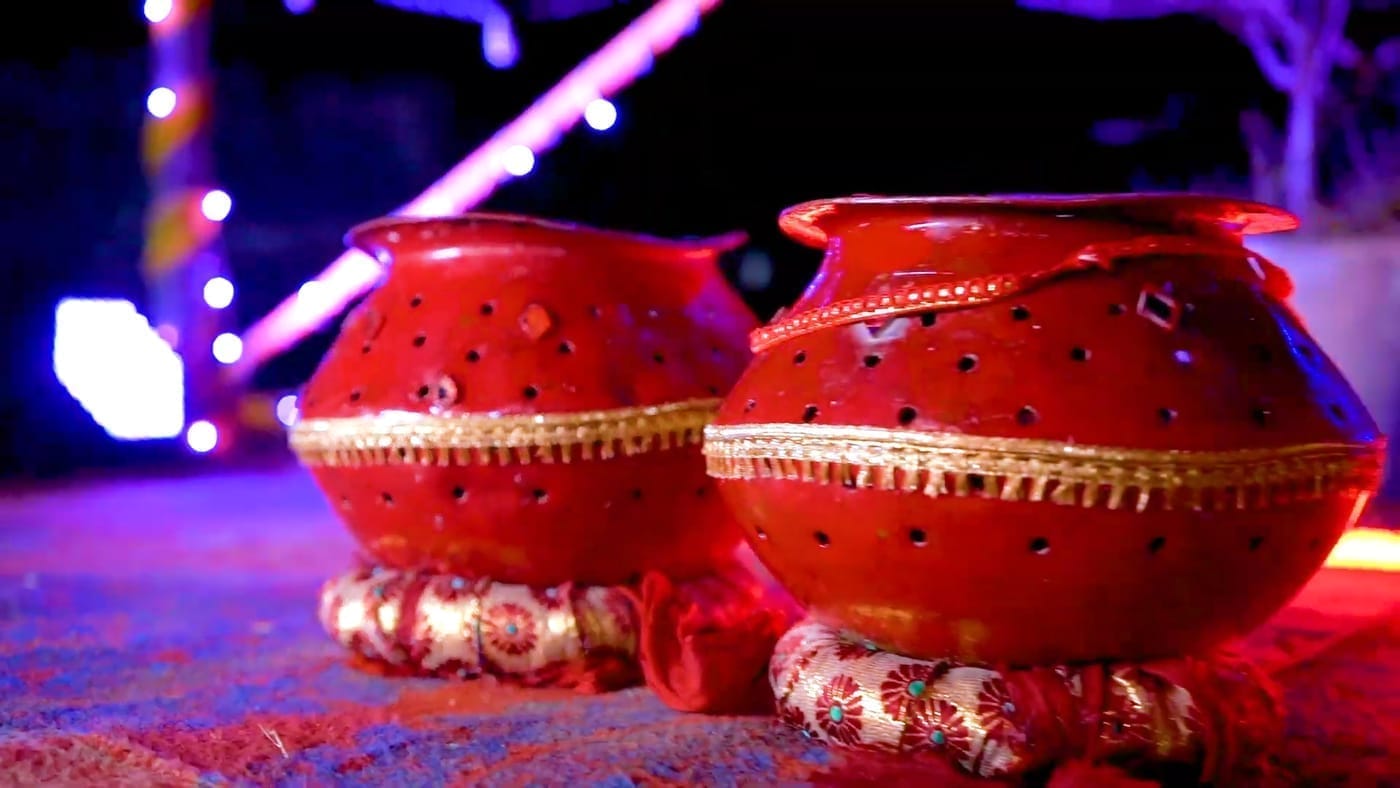
Before Dashain a fresh earthen pot is got from the potter and pierced all over with many small holes, painted, and steadied with a little clay or water. A small oil lamp is lit inside, so the flame flickers out through every hole — the image that gives the dance its name (jhijh, a flickering light).
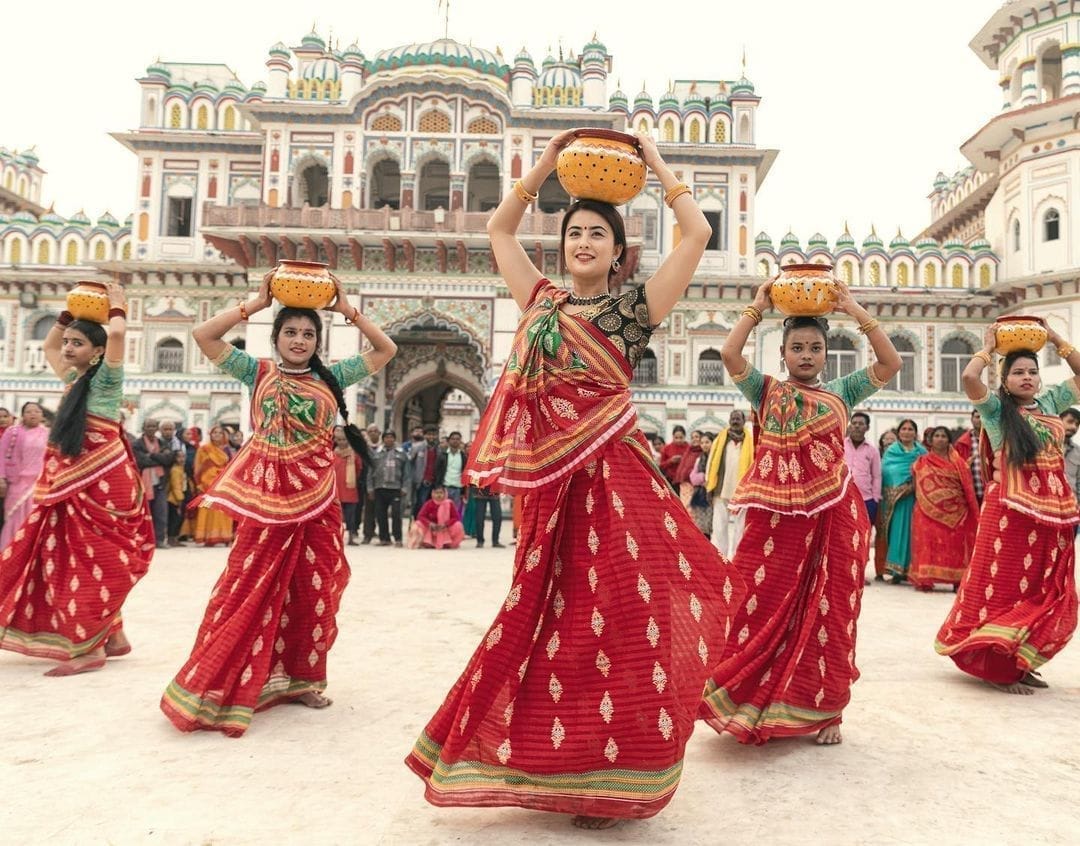
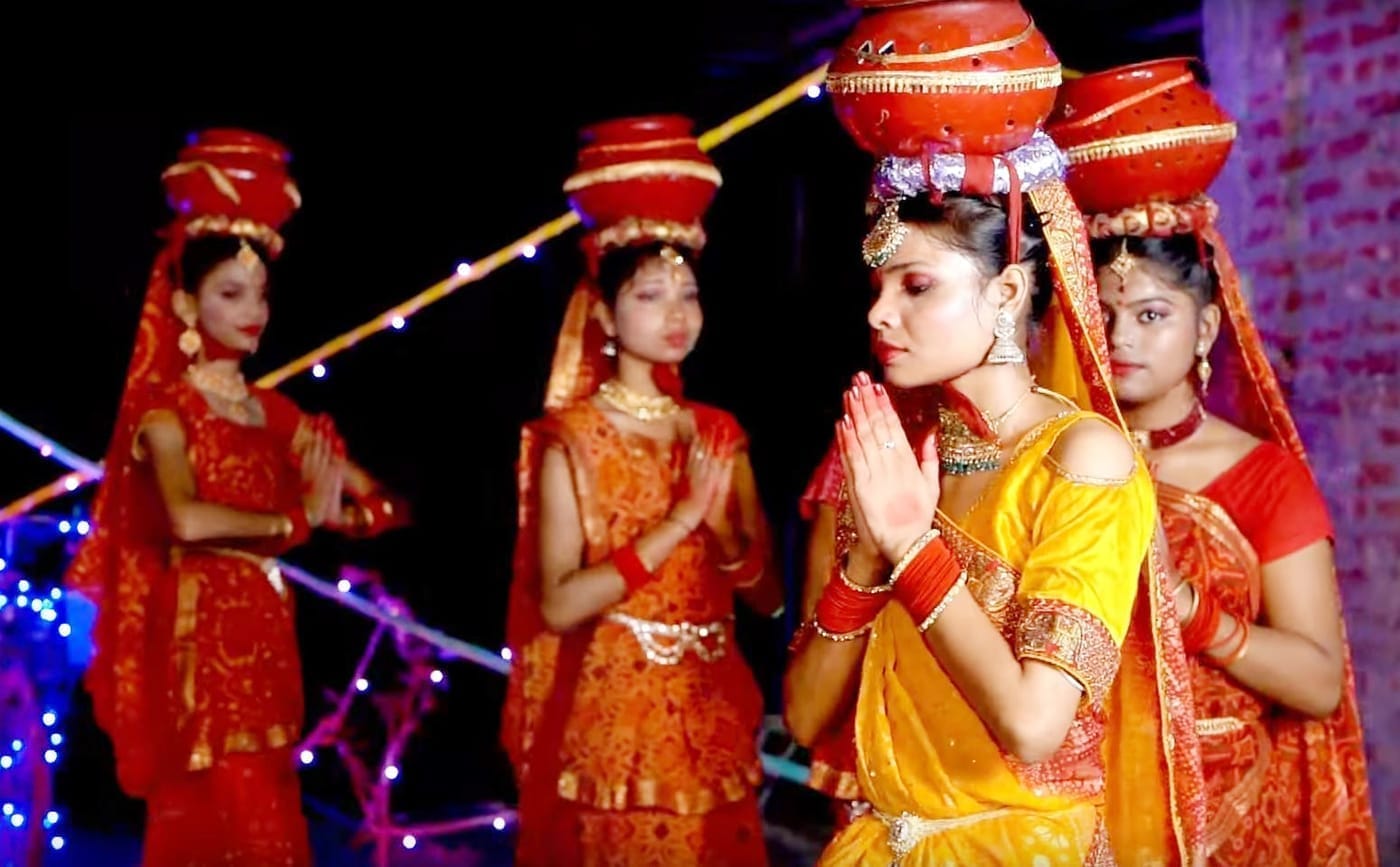
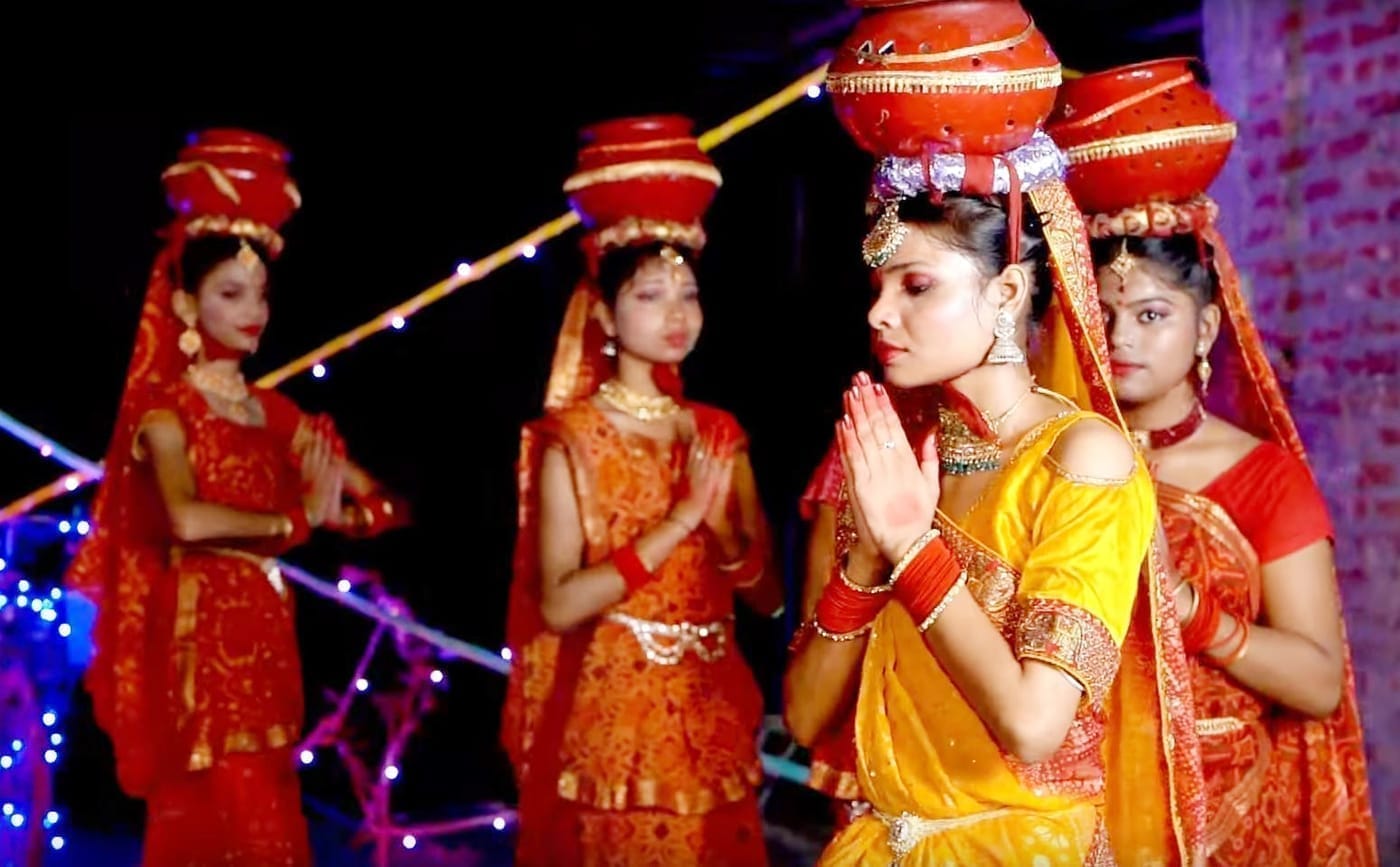
The lit pot is then balanced on a woman’s head without a hand to hold it as she joins the dance; girls often go house-to-house collecting the lamp-oil. At the close, on Vijayadashami, the pots are covered in red cloth and immersed or broken in a pond.
विधि · The rite, step by step
- A fresh earthen pot is obtained from a potter and pierced all over with many small holes.
- It is painted and steadied with a little clay or water at the base.
- A small oil lamp is lit inside so light flickers out through every hole.
- The lit pot is balanced on the head; at the cycle’s end the pots are immersed or broken in a pond.
Across communities Pots are usually earthen (brass in some Nepal accounts); the hole-count is “many/countless” and treated as significant chiefly through the anti-witch belief.
What is used
The pierced earthen pot (jhijhiya)the oil lamp (diya) & wickclay/water ballastred cloth (for the closing immersion)
Meaning
The holed cosmic potthe flame within (Durga’s Shakti)light through countless holesthe closing immersion