Stage 1 of 5 · Birth · Sohar
Birth & the Sohar songs
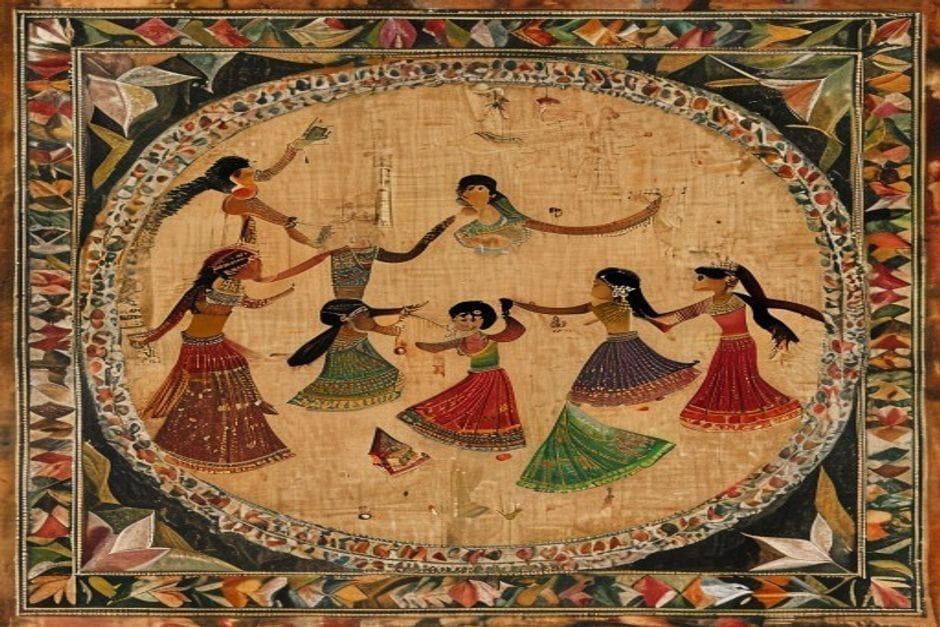
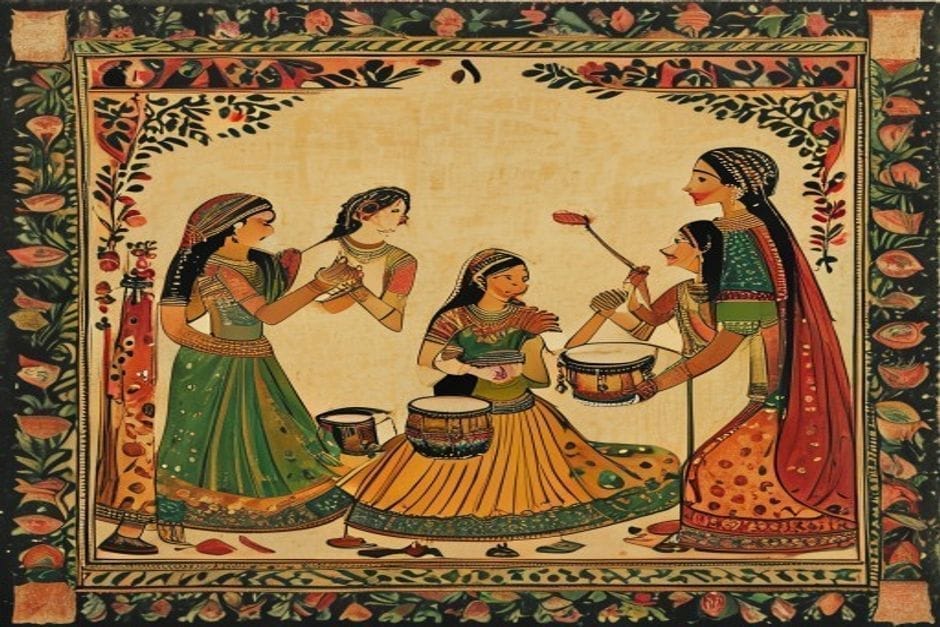
When the news of a birth reaches the household, the welcome is sound: by tradition a conch (shankh) is blown — today often the rhythmic beat of a metal plate — and the women of the house and neighbourhood gather to sing Sohar, the Maithili birth-song genre.
The singing runs through the whole lying-in period, from the birth through the days that follow. The songs are thanksgiving as much as celebration: they deify the newborn as an incarnation of Rama or Krishna, both blessing and protecting the child. Where the formal Vedic rites are men’s, this is wholly women’s territory.
विधि · The rite, step by step
- The birth is announced with an auspicious sound — a conch, or the beating of a metal plate.
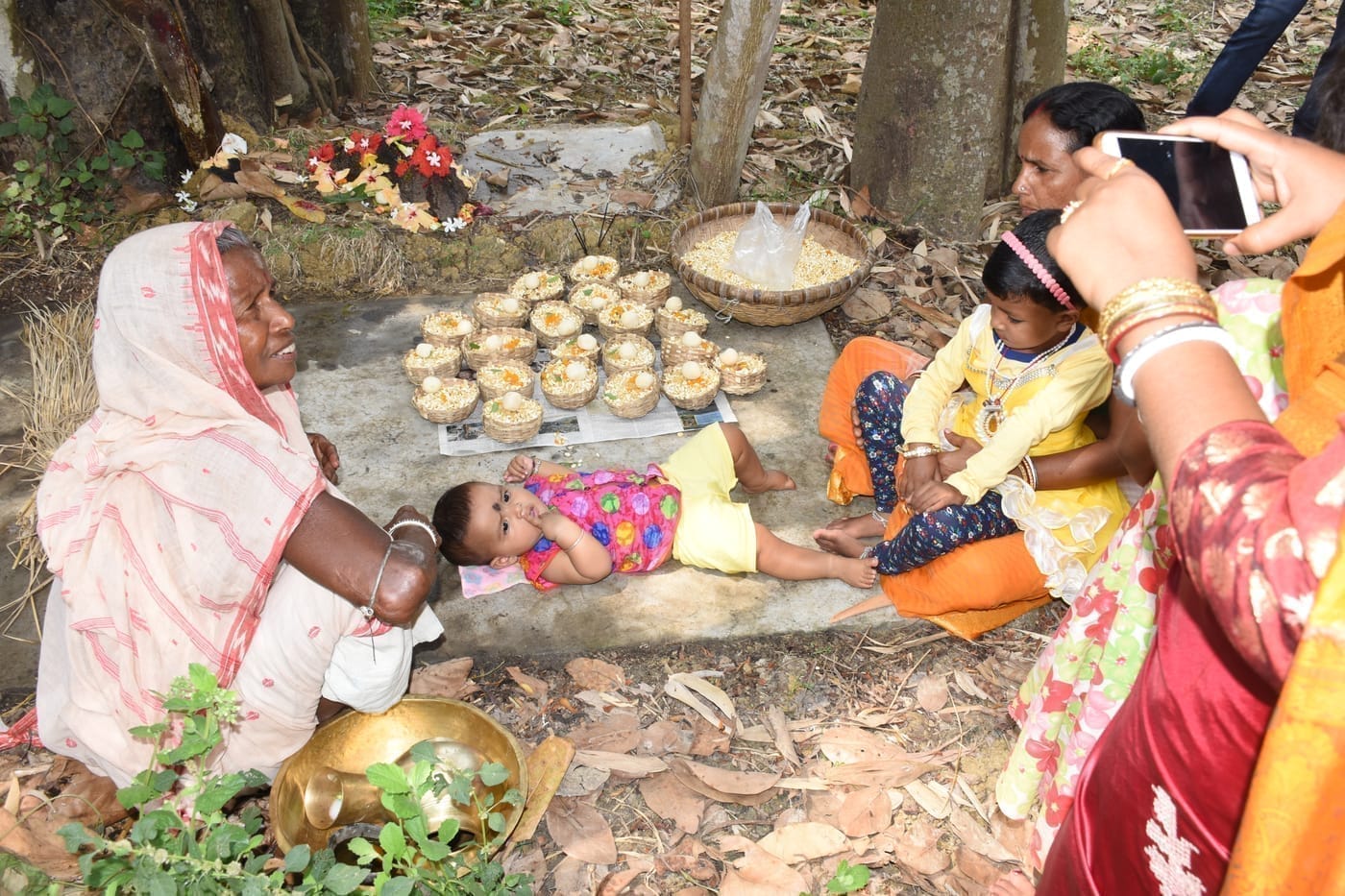
- Women of the household and neighbourhood gather in or near the birthing room.
- They sing Sohar, framing the birth against the births of Rama and Krishna, through the days of seclusion.
गीत · Songs of this moment
- Ram-janam Sohar“jāhi din rām janam lel, dhartī ānand bhel he” — “on the day Rama was born, the whole earth was filled with joy”
- Krishna Sohar“devakī ke kokhiyā se janmal kṛṣṇa kanhaiyā re” — the birth of Krishna sung over the newborn
- Sita-janam Sohara modern Maithil Sohar that celebrates a daughter’s birth (Janaki Navami) — countering the genre’s old preference for sons
Across communities Sohar is shared across the Maithili, Bhojpuri, Magahi and Awadhi belts (regional, not Maithil-exclusive). Scholars note an old gender bias — few Sohar celebrate a girl — though modern composed Sohar deliberately do. Hospital births and recordings (Sharda Sinha) have moved much singing out of the birth-room.
What is used
The conch (shankh) or metal platethe dholakthe women’s chorusthe newborn as Rama/Krishna
Meaning
Thanksgiving, not just joythe child deified as Rama/Krishnaa wholly women’s rite