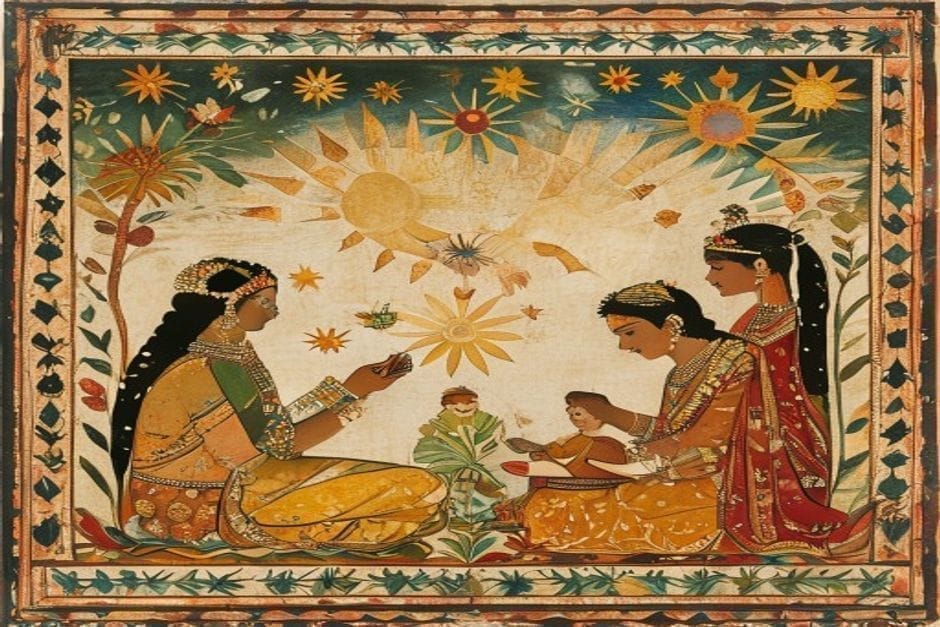
Stage 1 of 5 · The muhurta
Choosing the auspicious time
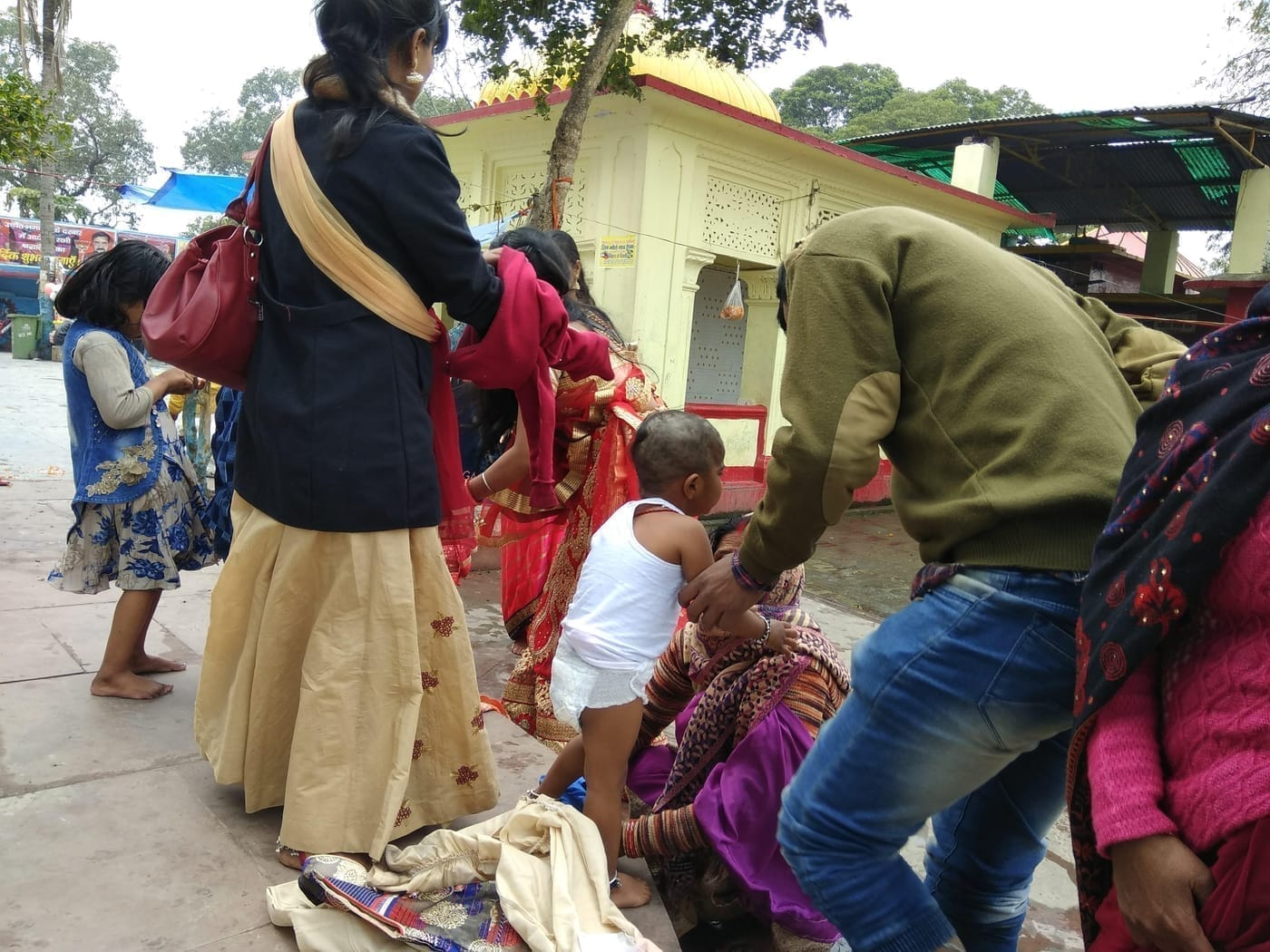
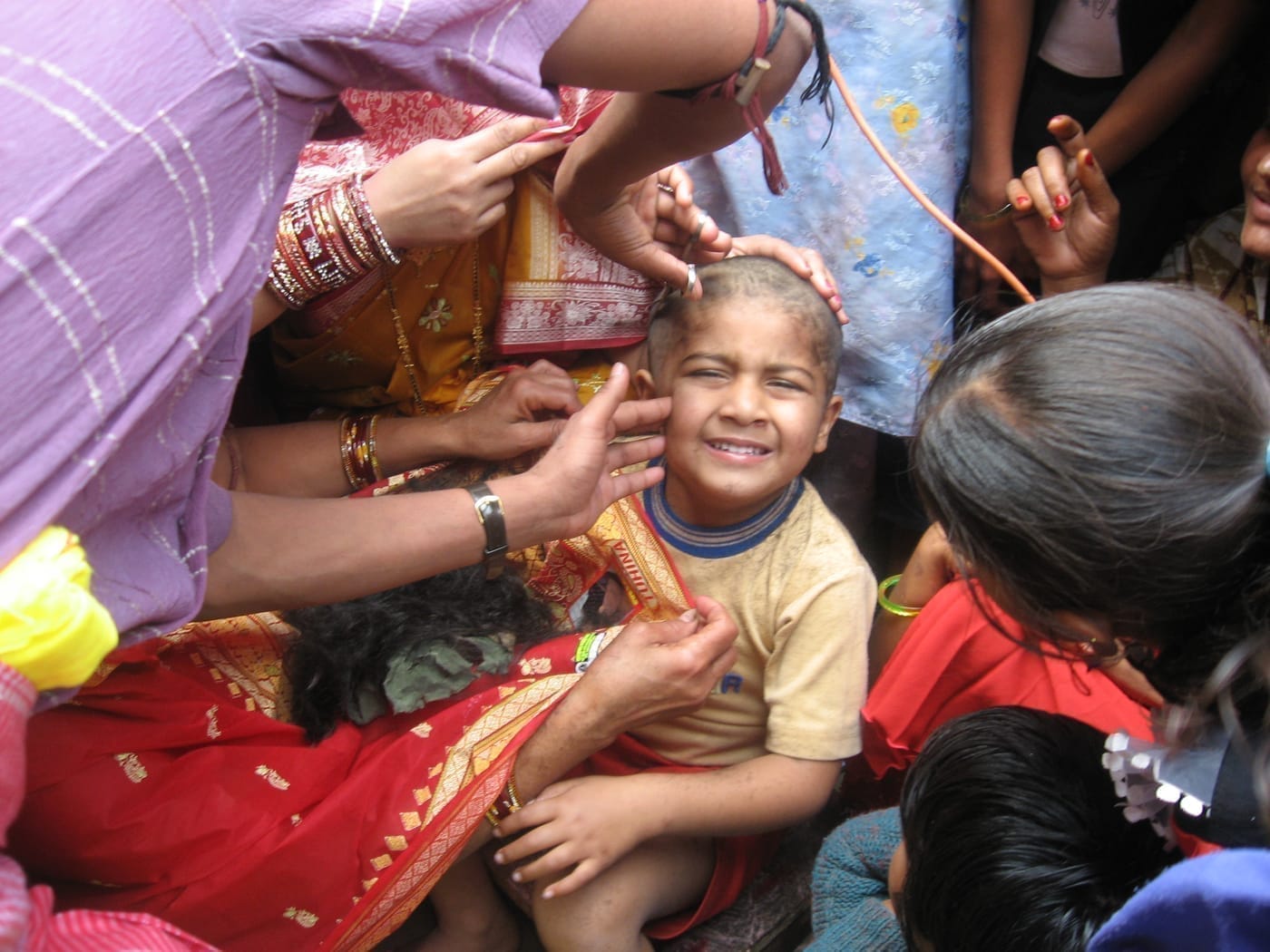
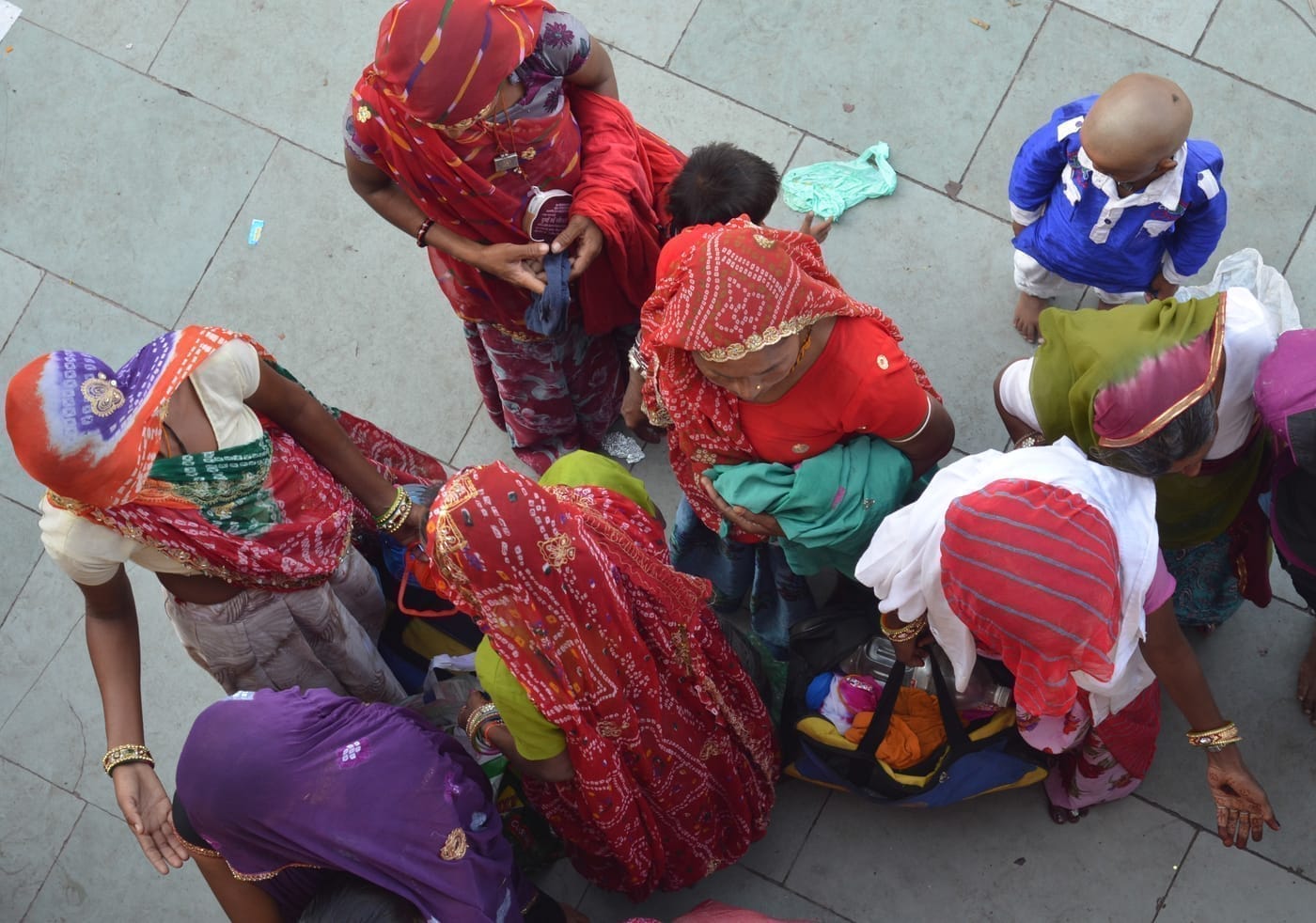
The Mundan — Chudakarana, the eighth of the sixteen samskaras — is held in an odd year of the child’s life: most often at age one, three or five, by tradition up to seven. The family priest reads the Maithil panchang and fixes an auspicious muhurta, screening for a favourable nakshatra.
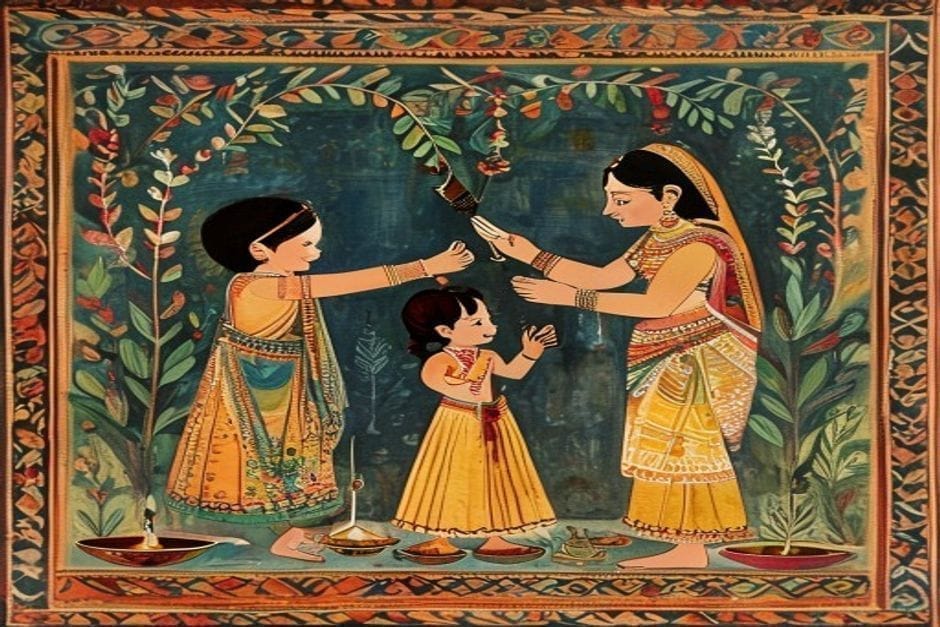
On the morning, the parents take a sankalp — a vow naming the gotra, the child and the deity, declaring the rite is done for the child’s long life and brilliance. Where the family once vowed the first hair to a goddess (a manauti, often to Uchchaith Bhagwati), that vow is invoked and the Kuldevi’s blessing sought before any hair is touched.
विधि · The rite, step by step
- The mundan is fixed for an odd year — usually age 1, 3 or 5 (up to 7).
- The priest consults the Maithil panchang for an auspicious tithi, day, hour and nakshatra.
- The parents take a sankalp — a vow naming gotra, child, deity and purpose.
- Any earlier vow (manauti) to a Kuldevi is invoked, and the goddess’s blessing sought.
गीत · Songs of this moment
- Gosauni & Pitar notak geetopening songs that “invite” the household goddess (Gosaun) and the ancestors (pitar) to the rite
Across communities The odd-year preference is pan-Hindu; the Mithila twist is that many families time the mundan to a vow-fulfilment trip to a Devi-sthan. Nepal-side Maithils use the same Maithili panchang.
What is used
The panchang (almanac)water & kusha for the sankalpsupari, rice & flowersthe manauti (vow to the Devi)
Meaning
The panchang & muhurtathe sankalp vowthe Kuldevi’s permission