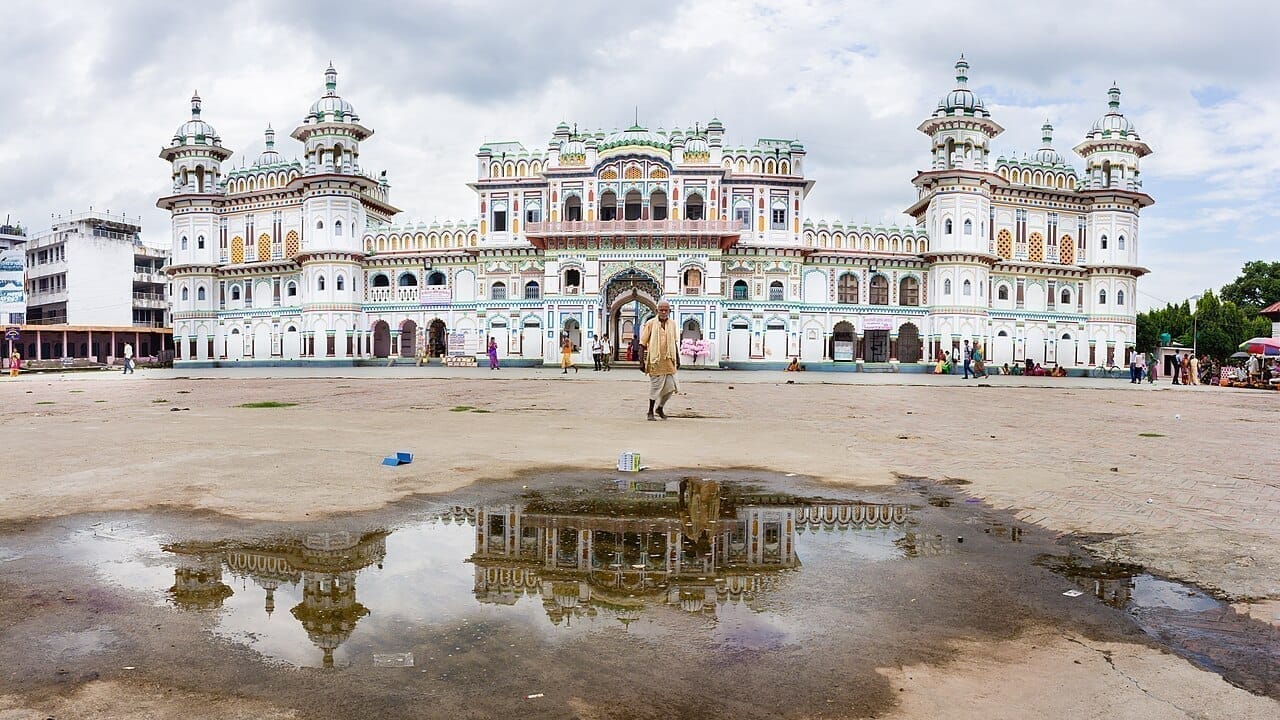
For most of its history Mithila was a single cultural and political world, not the border country it can look like today. Its ancient capital was at Janakpur in what is now Nepal; its medieval golden age, the Karnat dynasty, ruled from Simraungadh, a city that the modern frontier now cuts in two. The line itself is recent and external: it was drawn by the Treaty of Sugauli (1816) that ended the Anglo-Nepalese War, splitting the Maithili heartland between British India and the Kingdom of Nepal.
Yet the culture never split. The same Maithili language — with its Tirhuta script and the poetry of Vidyapati — is spoken on both sides; the Madhesh province of Nepal and the districts of north Bihar share one literature and one accent. The festival calendar runs seamlessly across the border: Chhath, Sama-Chakeva, Jur Sital and Vivaha Panchami are kept identically in Madhubani and in Janakpur. So are the rites — the Kohbar painting, the Panji genealogies, the paag and dhoti; and so is the food, the maachh-paan-makhaan of both plains.
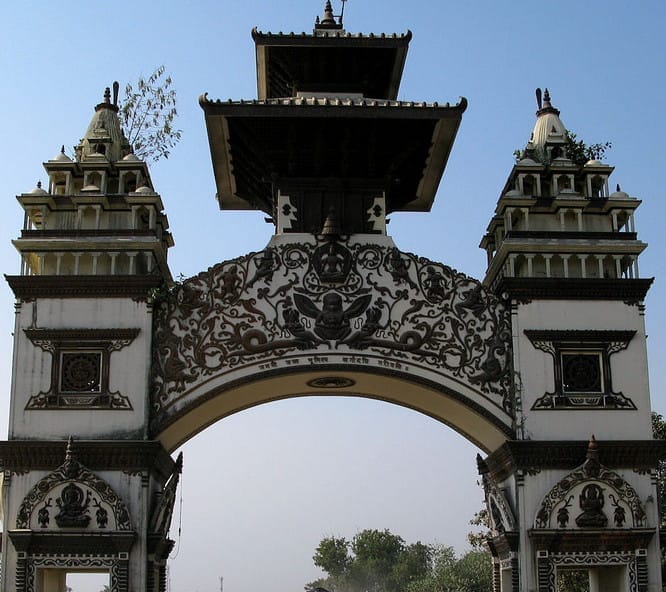
Above all there is Sita. Mithila is her land: born of the furrow at Sitamarhi in India, married at Janakpur in Nepal, she binds the two nations into a single sacred geography that pilgrims still walk in the Mithila Madhya Parikrama, crossing the open border on foot. Families, marriages and markets cross daily through Jaynagar, Raxaul–Birgunj and Bhittamod. To a Maithil, the border is a fact of passports, not of belonging: the homeland is one, and it is called Mithila.