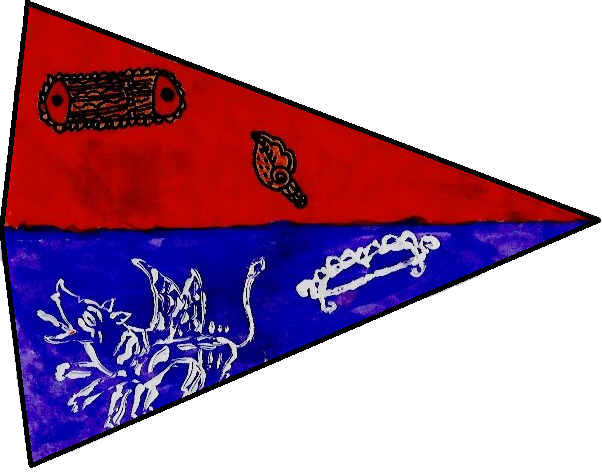
Modern Mithila’s political story begins with the carving-out of Bihar. Announced at the Delhi Durbar of December 1911 and effected on 22 March 1912, the new province of Bihar and Orissa was separated from the Bengal Presidency. Almost immediately, Maithil leaders argued that their Maithili-speaking country was distinct from both Bengal and the Bihari heartland — a case strengthened by Sir George Grierson’s Linguistic Survey, which had documented Maithili as a language in its own right. The demand for a separate Mithila unit thus dates back more than a century, to the very moment Bihar was born.
In the colonial period the cause was carried partly by the Darbhanga Raj. In 1921, Maharaja Rameshwar Singh of Darbhanga submitted a memorial to the Governor seeking recognition of Mithila as a distinct entity. These early efforts produced no new province, but they established Mithila’s regional identity as a recurring theme in the politics of north Bihar — one revived after independence and again after the linguistic reorganisation of states in the 1950s, when Lakshman Jha gave the demand its modern organisational form from 1952.
The movement’s central cultural victory came with the language. After decades of campaigning by Maithili writers and organisations, Maithili was added to the Eighth Schedule of the Constitution by the 92nd Amendment: passed by Parliament in December 2003 and brought into force in January 2004 (along with Bodo, Dogri and Santhali). Recognition gave Maithili official standing in education, examinations and public life, and is widely seen as a turning point in securing the language’s future. (Maithili had already won separate Sahitya Akademi recognition in 1966.)
The demand for a separate Mithila state itself remains unrealised. It gained fresh energy after the creation of Jharkhand in 2000 showed that Bihar could be divided, and organisations from cultural bodies to the Mithila Student Union have pressed the case on grounds of linguistic identity, cultural distinctiveness and the relative under-development of the Maithili districts. The demand resurfaced prominently in the 2020s, alongside calls for classical-language status for Maithili — but no bill to create the state has been introduced, and governments have favoured cultural recognition over redrawing the map.
The making of modern Mithila is therefore a story of identity rather than borders: a region that did not become a province in 1912 or after, but that secured constitutional status for its language in 2003–04 and continues to articulate, through the statehood demand, an enduring sense of itself as a distinct land within the Indian union and across the open border into Nepal’s Madhesh.