Stage 1 of 4 · The famine
Janaka’s plough
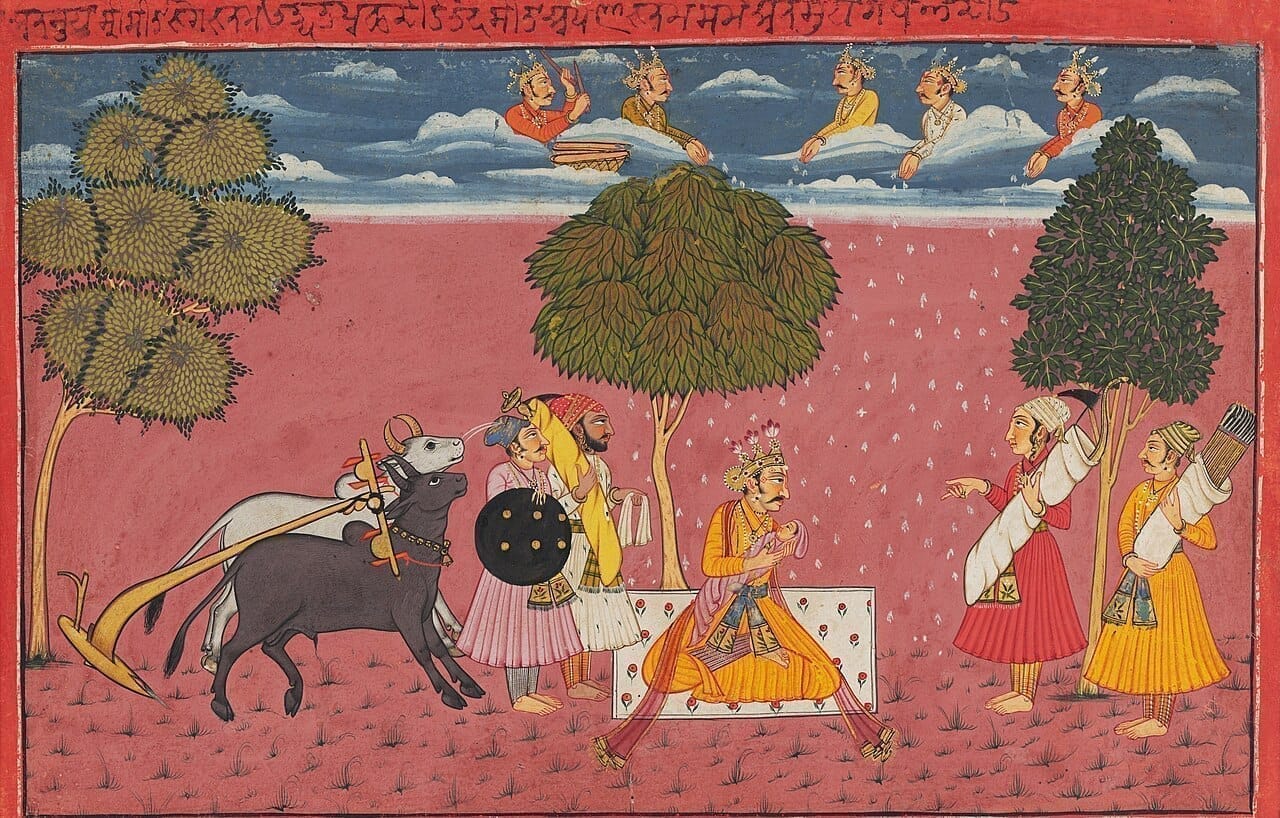
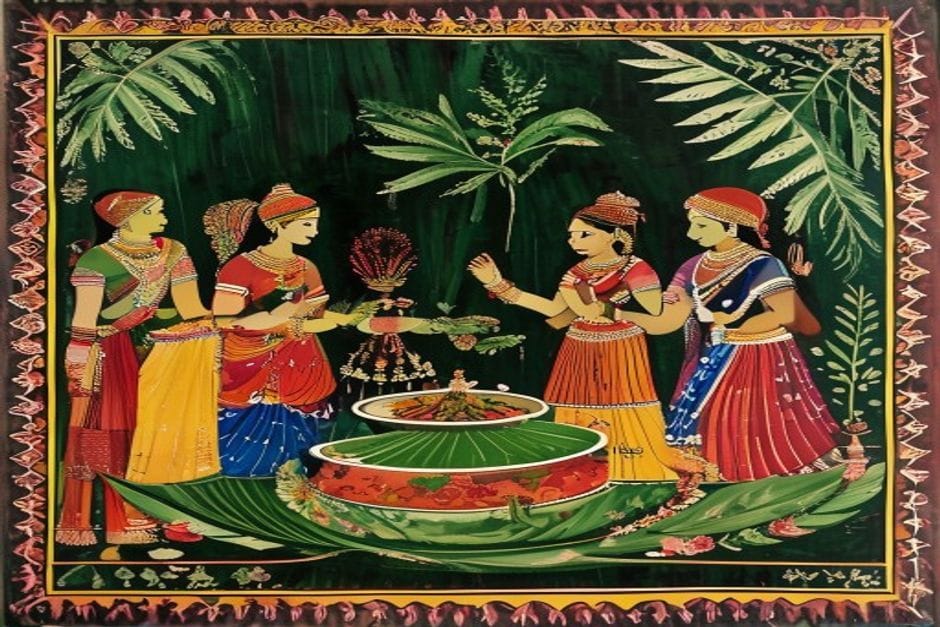
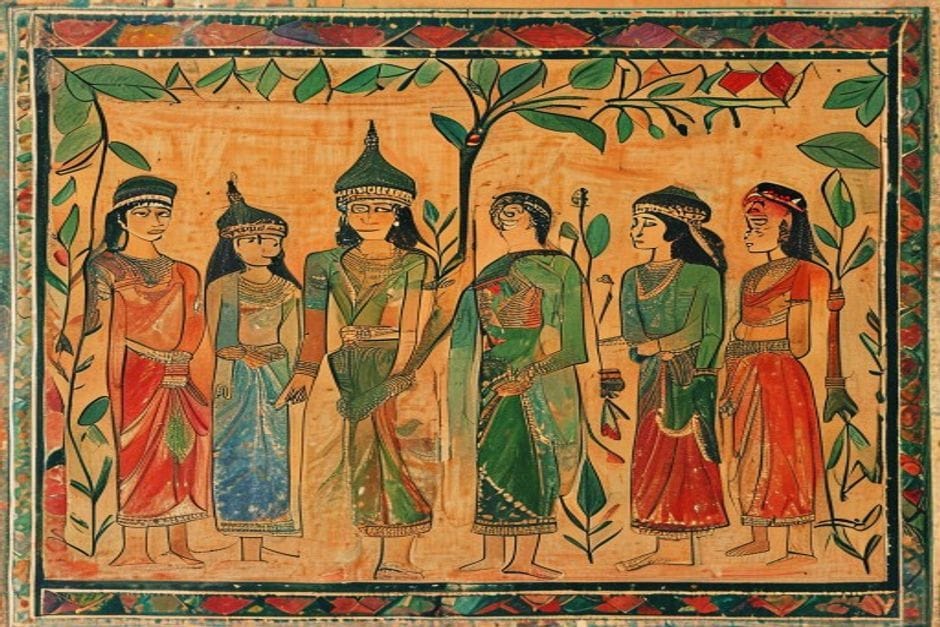
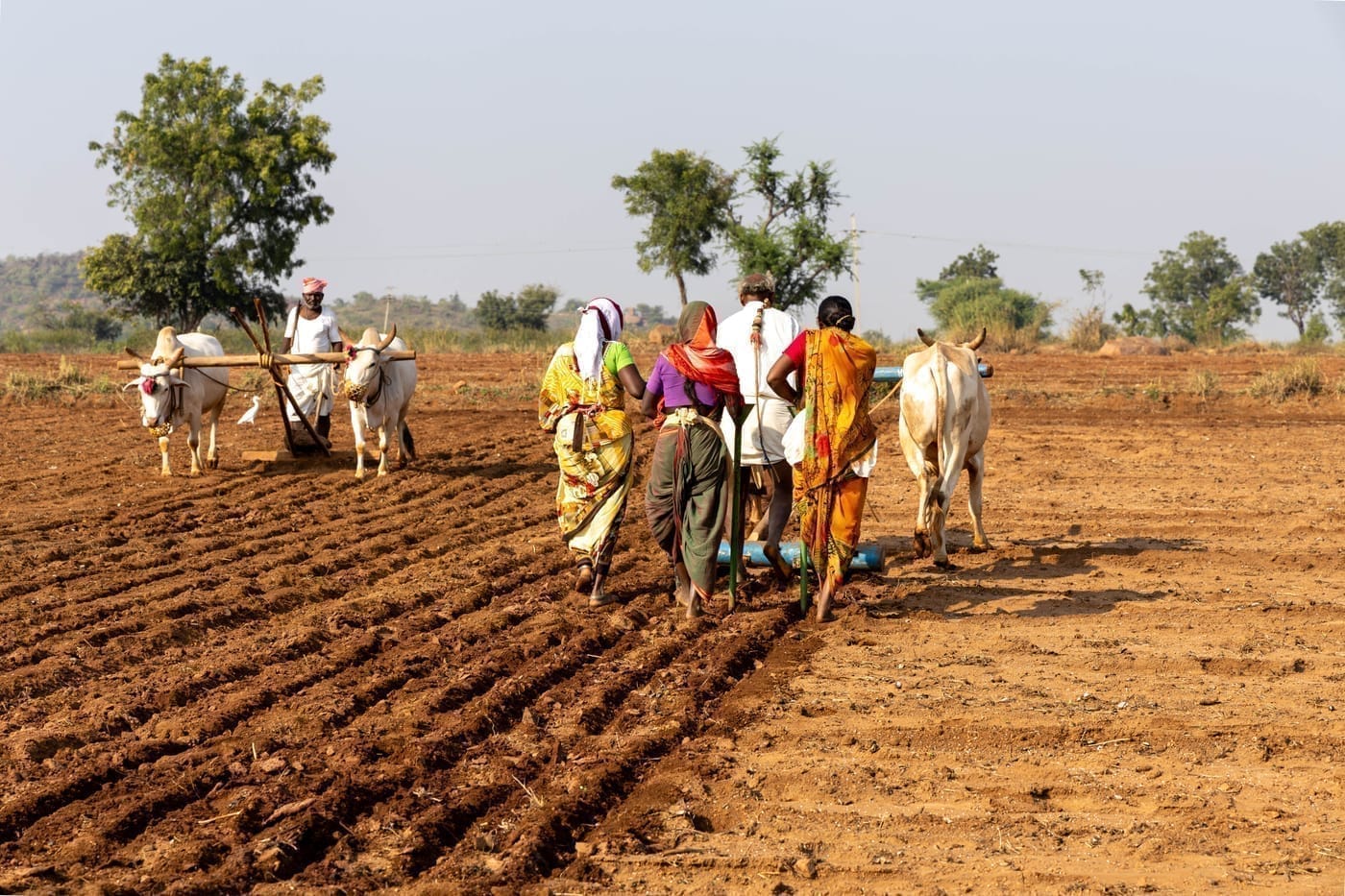
By the Ramayana tradition Mithila suffered a long famine, so King Janaka, on his sages’ counsel, undertook a great yajna and — consecrating its ground — went to plough the barren field himself (by tradition with a golden plough) to call back the rains.
The act sets the scene for Sita’s appearance. It is an epic, devotional account rather than dated history — and the famine and golden-plough details belong to the popular retelling more than to a single verse.
विधि · The rite, step by step
- A long famine grips Mithila; the sages advise King Janaka to perform a great yajna for rain.
- Consecrating the sacrificial ground requires ploughing the earth, which the king performs himself.
- Tradition holds he drove a golden plough across the barren field.
- As he ploughs, the share strikes a buried object — setting the scene for Sita’s appearance.
Across communities The drought motivation is standard in devotional retellings; the academic summary frames the ploughing simply as part of a yajna. Some recensions make Sita Janaka’s biological daughter and omit the furrow.
What is used
The plough (hala) & ploughsharethe yajna fire-altarthe parched, consecrated field(by tradition) a golden plough
Meaning
The faminethe king at the ploughthe yajna for rainthe furrow to come